
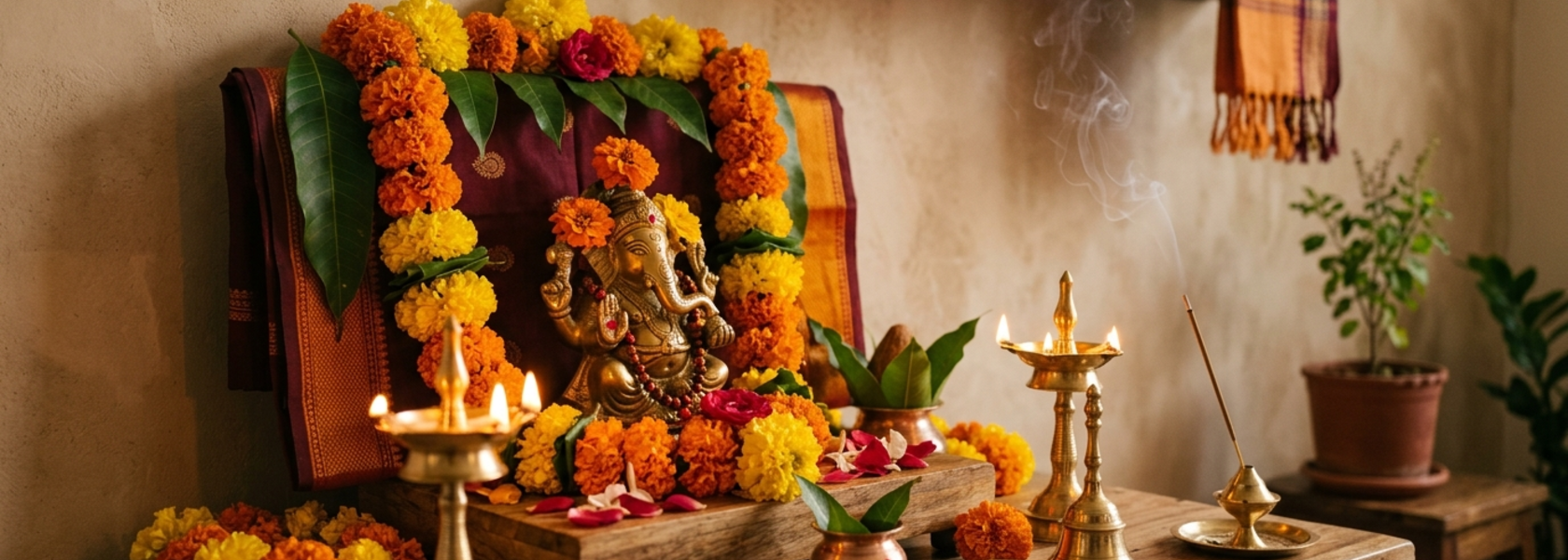
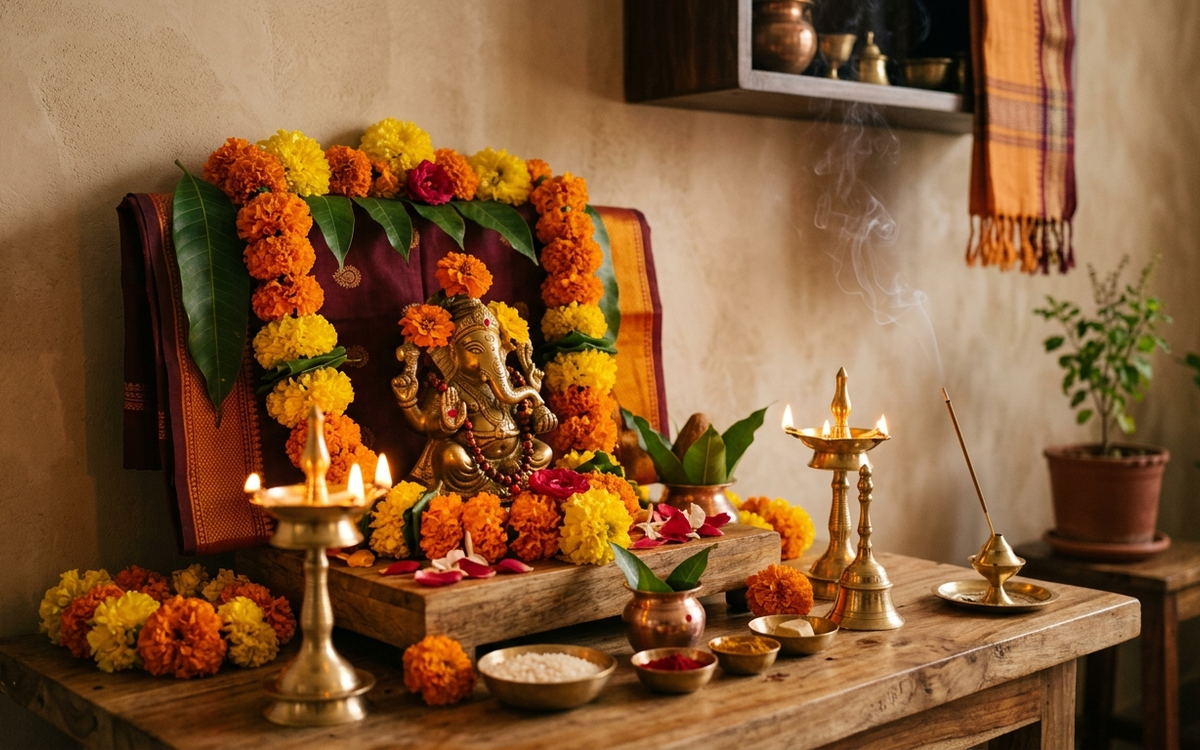
Indian households have long integrated sacred items into living spaces. From the quiet morning bell of the family mandir to the warm glow of an evening oil lamp, devotional elements ground the home in rhythm and cultural tradition. Today, incorporating spiritual home decor into modern interiors provides both visual balance and a dedicated focus for daily contemplation.
The Purpose of Devotional Elements in Daily Living
In traditional Indian architecture and home design, sacred objects serve as physical markers for daily pauses. A thoughtfully arranged altar corner or living room niche establishes an immediate sense of stillness. Devotional home accents do not simply fill empty corners. They serve as tactile anchors for family prayer, meditation, and quiet reflection amidst busy schedules.
Whether residing in an apartment or a large family residence, designating a space for devotion helps maintain continuity with time-tested customs. The interplay of natural metals like brass, resonant wood, and warm fabrics reflects regional craft traditions that have thrived across centuries.
Selecting and Placing Sacred Murtis
The central feature of many home shrines is the sacred murti. Traditional craft centers across India, such as Vrindavan, Thanjavur, and Moradabad, continue to shape deities using classic metalcasting traditions. For family shrines celebrating daily seva, families often choose a pure brass Thakurji murti cast by experienced metal artisans.
When placing murtis in your home, consider these practical principles:
- Position the primary altar along the north or east direction where morning sunlight enters naturally.
- Ensure sacred idols rest on an elevated wooden chowki or cloth aasan rather than directly on the bare floor.
- Keep proportional spacing between different murtis to allow ease during daily abhishek and alankaar.
- Select solid metals like brass or bronze that endure daily bathing and cleaning routines.
Creating Sacred Warmth with Traditional Lamps and Diyas
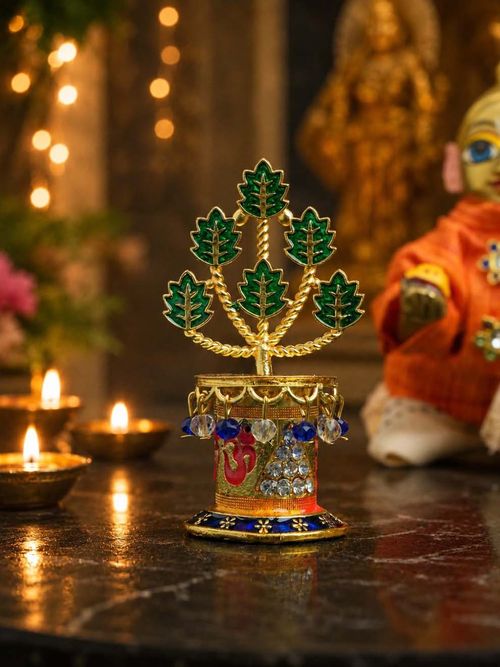
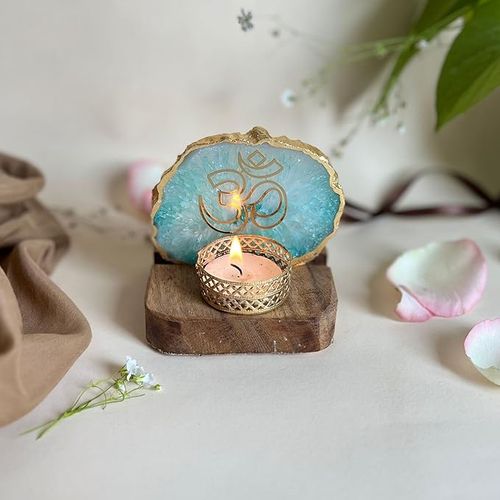
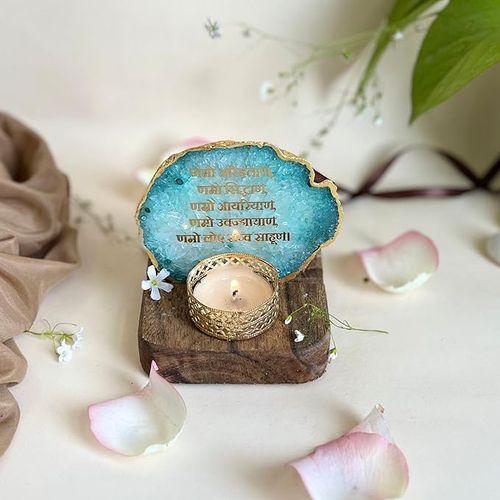
Light holds a central place in Indian ritual practices. The daily lighting of the deepak at dusk (sandhyavandanam) marks the transition from daytime activity to evening calm. Lighting a handcrafted brass diya creates a soft, natural radiance that artificial fixtures cannot duplicate.
Brass lamps range from compact tabletop deepams for daily aarti to ornate multi-tiered hanging lamps. Selecting suitable pieces from a traditional diya collection allows you to illuminate doorways, window alcoves, and mandir shelves according to the needs of each space.
Sacred Wall Accents and Geometric Art
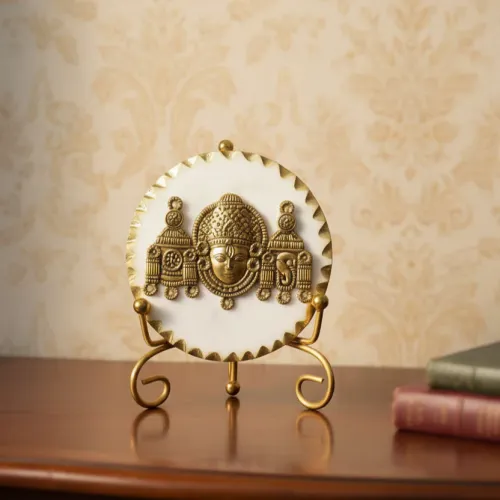
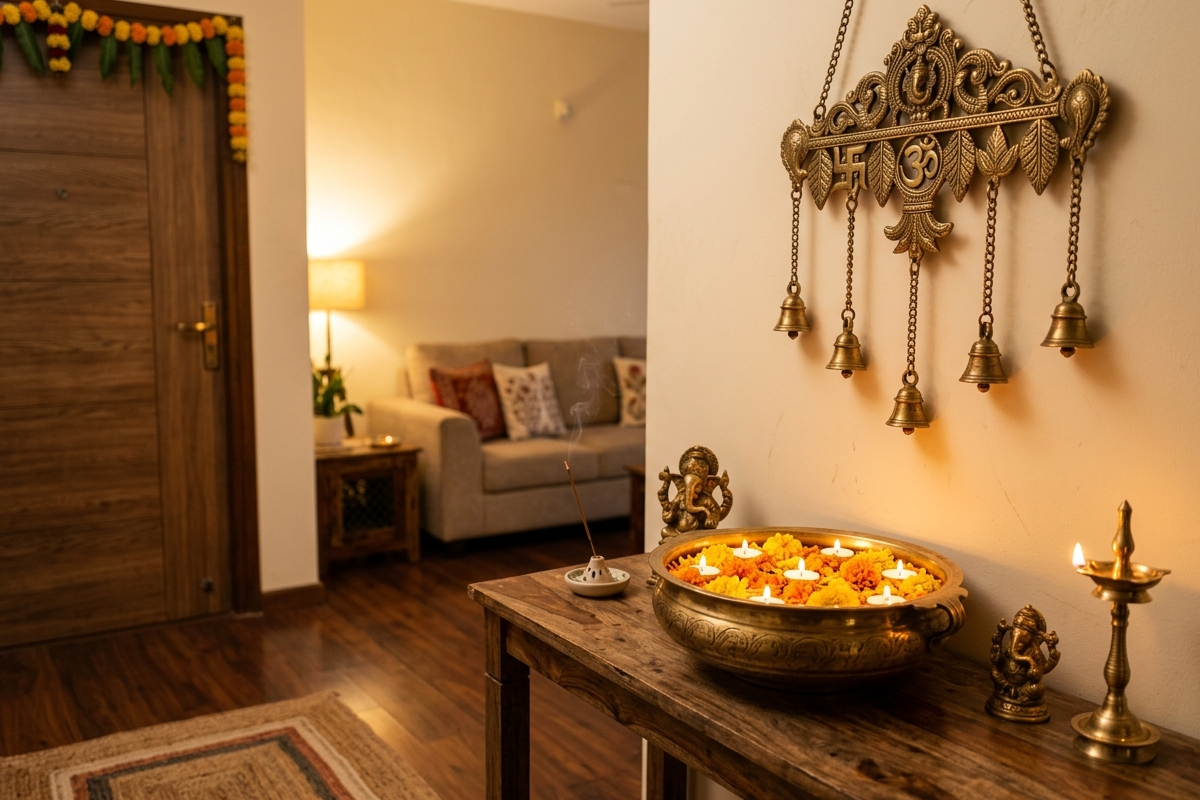
Wall spaces offer an ideal canvas for devotional expression without cluttering floor surfaces. Hand-cast brass wall hangings featuring auspicious bells, temple arches, and sacred iconography bring depth to entryways and passageways. The gentle chime of hanging bells when opening doors provides a pleasant acoustic cue throughout the day.
In addition to deity forms, classical sacred geometry represents an ancient strand of devotional art. Placing a three-dimensional brass Shree Yantra on a tabletop or wall bracket brings classical geometric symmetry into your daily living space.
Atmosphere and Aromatic Accents
Fragrance is an integral dimension of the Indian devotional environment. Traditional dhoop, sambrani, and floral incense sticks purify the home atmosphere and signal the commencement of prayer. Using dedicated incense burners and holders prevents ash dispersion and protects delicate furniture surfaces from heat damage.
Complementing incense with an urli bowl filled with fresh water and floating marigold petals creates an inviting atmosphere at the entrance of your home. This custom, widely practiced across southern and western India, combines natural florals with reflective water surfaces to welcome guests with traditional warmth.
Care and Maintenance of Sacred Metal Decor
Proper maintenance preserves the finish and longevity of traditional brass and copper ritual decor. Over time, exposure to moisture, incense residue, and oil causes natural oxidation. The following table provides guidance for maintaining various devotional decor materials:
| Material | Cleaning Method | Care Precaution |
| Polished Brass | Tamarind pulp or Pitambari powder with warm water | Avoid steel wool and abrasive synthetic pads |
| Antique Finish Brass | Soft dry microfiber cloth and neutral mineral oil | Do not use acidic lemon or vinegar solutions |
| Carved Wood | Dry dusting with a soft natural bristle brush | Keep away from excessive moisture and oil drippings |
| Clay and Terracotta | Gentle wiping with a slightly damp cloth | Allow to dry fully before refilling with oil or wax |
Integrating devotional home decor allows you to build a living environment that honors Indian heritage while meeting the functional demands of modern life. Simple, high-quality pieces chosen with care establish a home ambience that remains balanced, welcoming, and rooted in tradition.