

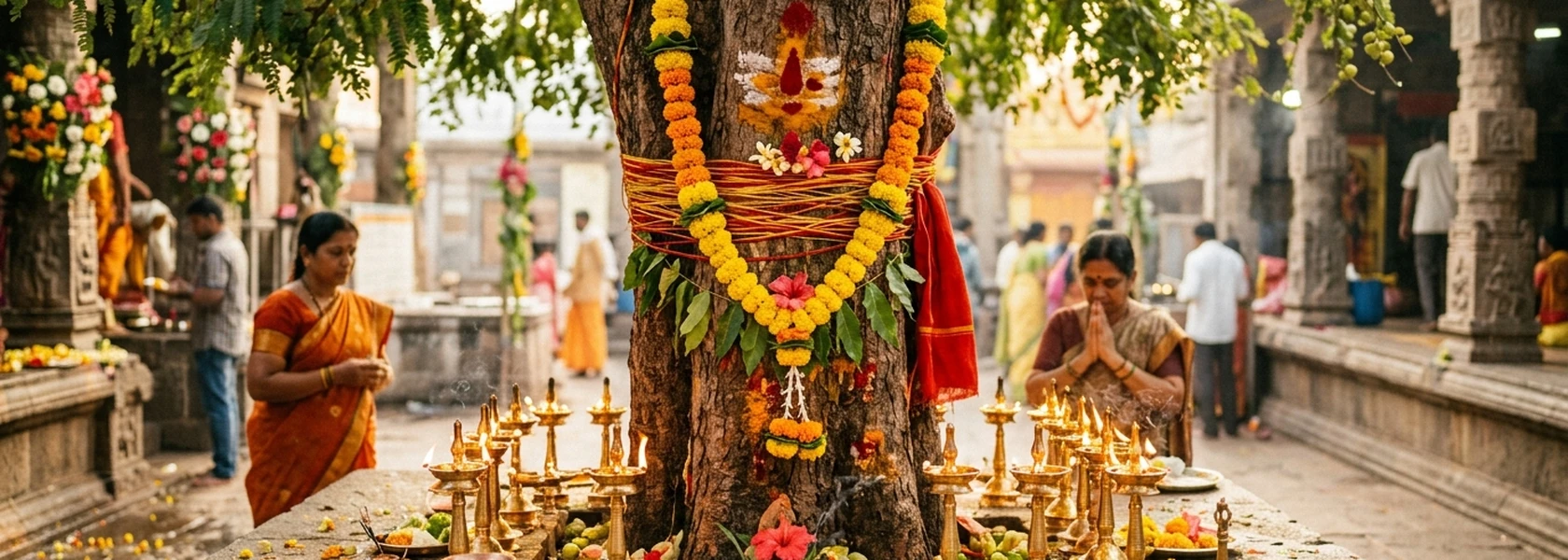
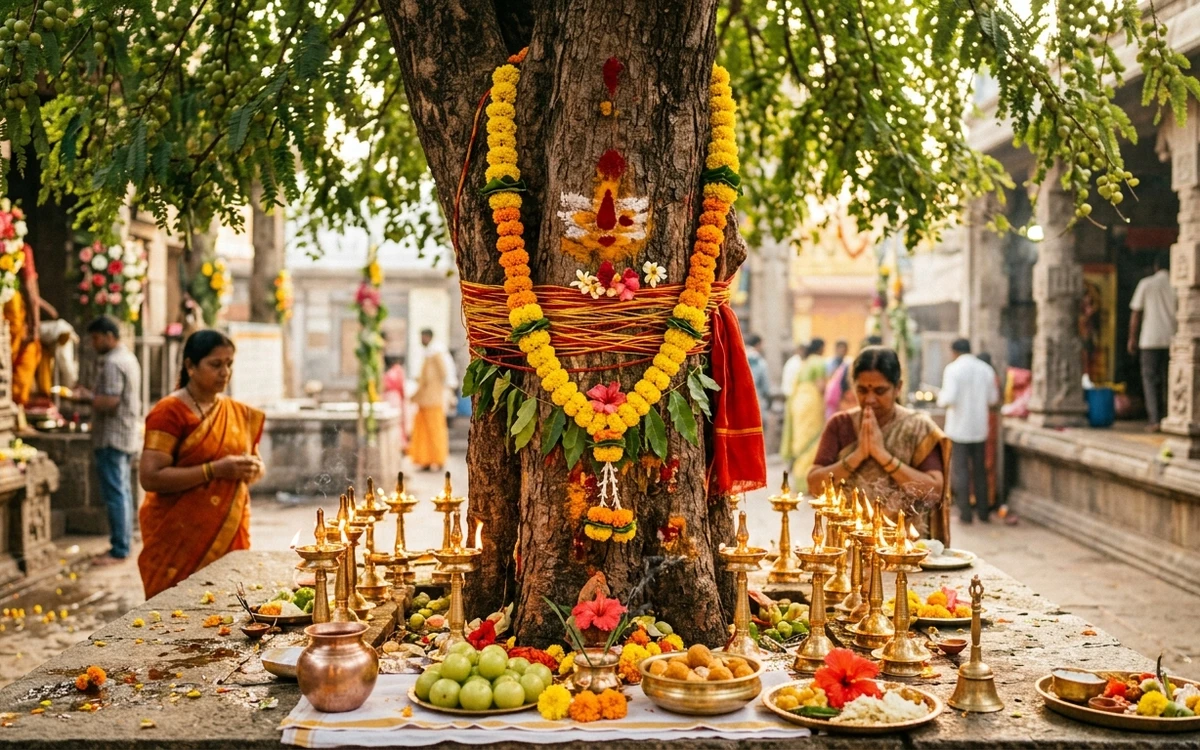
Akshaya Navami falls on the ninth lunar day of Shukla paksha in the month of Kartika. Revered across India as Amla Navami and Kushmanda Navami, this day is dedicated to Lord Vishnu and the worship of the sacred Amla tree. In 2026, the Vedic Panchang marks Akshaya Navami on Wednesday, November 18, under the Shatabhisha nakshatra. Following the traditional akshaya navami puja vidhi helps families conduct their home worship with devotion, precision, and scriptural authenticity.
The Sanskrit word Akshaya signifies that which does not decay or diminish. Spiritual traditions hold that devotional actions performed on this tithi, including japa, meditation, and charity, produce enduring merit. Devotees gather near an Amla tree, wrap sacred thread around its trunk, and prepare food in its shade. Arranging your puja essentials with care ensures that your household observes this sacred festival with calm attention and pure intent.
Spiritual Significance of Akshaya Navami and Amla Worship
According to the Padma Purana, the Amla (Indian gooseberry) tree holds divine energy. Scriptural lore recounts that Lord Vishnu and Goddess Lakshmi reside within the branches and roots of the Amla tree during the month of Kartika. Worshipping the tree on Shukla Navami yields the spiritual fruit of visiting sacred pilgrimage centres.
Ancient texts also connect this day with the start of the golden age known as Satya Yuga. For this reason, scholars refer to Akshaya Navami as Satya Yugadi. Because the day marks the beginning of cosmic truth and righteousness, devotees use this occasion to renew their moral commitments and forgive past grievances.
Another major observance is Kushmanda Daana. The Vishnu Dharmottara Purana records that Lord Vishnu defeated the demon Kushmanda on this tithi, from whose hair sacred pumpkin creepers grew. Devotees offer ripe pumpkins filled with coins or grains to temples and seekers. This act of charity symbolizes the surrender of inner ego and the cultivation of generosity.
Panchang Timings and Muhurat for Akshaya Navami 2026
Vedic tradition determines festival observances by Udaya Tithi, the lunar tithi active at sunrise. The astronomical coordinates below are calculated for New Delhi for Wednesday, November 18, 2026.
| Panchang Attribute | Details for November 18, 2026 |
| Festival Date and Day | November 18, 2026 (Budhawara / Wednesday) |
| Tithi | Navami (prevails throughout the day and night) |
| Paksha and Lunar Month | Shukla Paksha, Kartika Month (Amanta and Purnimanta) |
| Sunrise (New Delhi) | 06:45 AM |
| Sunset (New Delhi) | 05:26 PM |
| Nakshatra | Shatabhisha (active all day until 06:10 AM next morning) |
| Auspicious Morning Labh Choghadiya | 06:45 AM to 08:05 AM |
| Auspicious Morning Amrit Choghadiya | 08:05 AM to 09:25 AM |
| Auspicious Midday Shubh Choghadiya | 10:46 AM to 12:06 PM |
| Abhijit Muhurat | 11:44 AM to 12:27 PM |
| Rahu Kalam (Inauspicious window) | 12:06 PM to 01:26 PM |
The morning hours between 06:45 AM and 12:06 PM offer the most auspicious windows for conducting Amla tree worship and family prayers. Devotees should avoid initiating new sankalpa rituals during Rahu Kalam from 12:06 PM to 01:26 PM. If you live outside Delhi, please adjust for your local sunrise timings.
Essential Samagri for Akshaya Navami Puja Vidhi
Gathering all required samagri in advance allows you to carry out the morning rituals with an undisturbed mind. Devotees who prefer ready assortments often use complete pooja kits to secure pure ritual ingredients in one package.
- Fresh Amla tree sapling in a pot or access to a mature Amla tree in a garden.
- Pure raw cotton thread (kachha soot or mouli) dyed with turmeric or kumkum.
- Brass or copper kalash filled with clean water, a few drops of Ganga jal, and fresh mango leaves.
- Raw cow milk, honey, and ganga jal for performing the tree root abhishekam.
- Pure chandan (sandalwood paste), red kumkum, turmeric powder, and unbroken raw akshat rice.
- Fresh yellow marigold flowers, fragrant rose petals, and tulsi leaves.
- Pure cow ghee and long cotton wicks for lighting brass oil lamps.
- Fresh amla fruits, seasonal fruits, and sweets made of milk for naivedya.
- Kushmanda (ash gourd or white pumpkin) and dry food grains designated for charity.
- Natural dhoop sticks and pure camphor tablets for deep aradhana and concluding aarti.
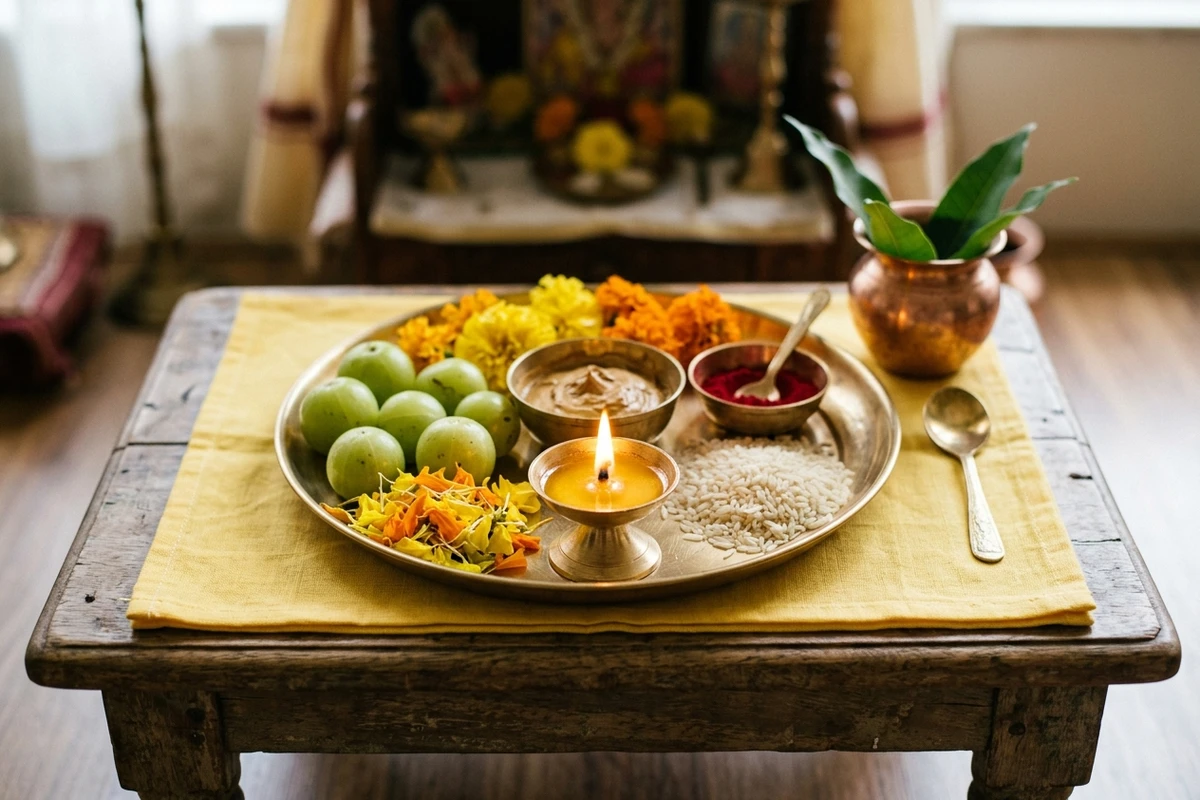
Arranging the chandan, akshat, fresh flowers, and sweets on a dedicated brass plate from the pooja thali collection keeps your altar orderly. Lighting pure incense like Sri Sri Chandan Dhoop Sticks creates a gentle sandalwood fragrance that helps the household focus during morning meditation.
Step-by-Step Akshaya Navami Puja Vidhi for Home Worship
Performing the puja with sincerity and mindful attention brings deep peace to the home. Follow these sequential steps to perform the vidhi either near a garden Amla tree or with a potted sapling.
Step 1: Morning Holy Bath and Sankalpa
Wake up during Brahma muhurat, before sunrise. Clean the house and take a bath with fresh water mixed with a few drops of Ganga jal. Put on clean garments. Devotees traditionally wear yellow clothes because yellow represents the Pitambara robes of Lord Vishnu and suits the festive spirit of Kartika.
Sit facing East on a clean mat. Take a little water in your right palm from a brass spoon, add a grain of akshat and a yellow flower petal, and recite the Sankalpa: Mama sarva papa kshaya purvaka, Shri Lakshmi Narayana preeti kamarthe, Akshaya Navami vratam amla vriksha pujanam cha aham karishye. This pledge expresses your intention to dedicate the day to spiritual remembrance and righteous actions.
Step 2: Altar Setup and Lighting the Sacred Lamp
Clean the ground around the base of the Amla tree. Spread a clean yellow or red cloth on a low wooden stool next to the trunk. Place a small picture or metal idol of Lord Vishnu and Goddess Lakshmi on the stool. Positioning brass oil lamps such as the 4 Pc Brass Lotus Diya Oil Lamp Set on either side of the deity ensures a steady, warm illumination throughout the rituals.
Pour pure cow ghee into the lamps, insert cotton wicks, and light them with devotion while reciting the traditional prayer: Deepo jyotir param brahma deepo jyotir janardana. The flame represents inner wisdom and dispels inertia from the mind.
Step 3: Amla Tree Worship and Parikrama Ritual
Offer fresh water mixed with raw milk to the base of the tree as an offering of gratitude. Apply sandalwood paste, turmeric, and kumkum to the lower trunk. Sprinkle unbroken akshat rice and lay fresh yellow marigold flowers and rose petals at the roots.
Devotees now perform the sacred Parikrama. Take a spool of raw cotton thread (kachha soot or mouli) and hold one end against the tree trunk. Walk around the tree in a clockwise direction, wrapping the thread around the trunk. Devotees complete eight or one hundred and eight rounds while chanting the divine names of Shri Vishnu. If space around the tree is limited, take seven gentle steps in place while holding the thread with reverence.
Step 4: Mantra Japa and Akshaya Navami Vrat Katha
Sit quietly near the tree and recite the sacred mantra: Om Namo Bhagavate Vasudevaya. Using a tulsi mala, complete at least one round of 108 repetitions. Devotees may also recite the Vishnu Sahasranama.
Gather your family members to listen to the Akshaya Navami Vrat Katha. The story tells of a devout merchant who dedicated himself to righteous living and generous charity, demonstrating that true wealth lies in kindness and spiritual contentment. Conclude the prayer by offering naivedya of fresh amla fruits, kheer, and sweets, followed by a gentle camphor aarti.
In the evening, lighting brass or clay lamps from the diya collection around your home threshold and balcony maintains a warm, peaceful glow across your living space.
Step 5: Kushmanda Daan and Charity
The merit of Akshaya Navami is closely tied to selfless charity. On this afternoon, prepare the Kushmanda (white pumpkin) for donation. Families cut a small opening in the top of the pumpkin, place a coin along with dry fruits inside, and offer it to a spiritual seeker or needy family.
In addition to pumpkin donation, giving food grains, pulses, and warm blankets to underprivileged people on this day is considered especially beneficial. Scriptural teachers remind us that sharing your blessings without expectation of praise transforms ordinary charity into true sadhana.
Vana Bhojan: Dining Under the Amla Tree
One of the most cherished customs of Akshaya Navami is Vana Bhojan, also known as Dhatri Bhojan. Families and neighbors gather in gardens or orchards to prepare and share their meal under the shade of an Amla tree. In northern and central India, people cook simple satvik dishes such as baati, dal, rice, and amla chutney directly under the open sky.
Before eating, the first portion of food is offered to the tree and Lord Vishnu as naivedya. The family then sits on floor mats and eats together in a cheerful atmosphere. Ayurvedic treatises highlight that spending time under the Amla canopy during early winter improves vitality and calms the nervous system. The community meal strengthens family bonds and encourages shared gratitude for nature.
Frequently Asked Questions About Akshaya Navami
What should you do if an Amla tree is not available near your home?
If you do not have an Amla tree in your garden, you can bring a small potted Amla sapling home and place it in your balcony or puja room. Worship the sapling with full sincerity following the same vidhi. If even a sapling is unavailable, place a fresh amla fruit near the idol of Lord Vishnu on your altar and perform the prayers.
Why is dana performed on Akshaya Navami considered so meritorious?
The word Akshaya means inexhaustible. Ancient scriptures teach that charity performed on this day yields fruits that do not decay with time. Donating food grains, warm clothing, and pumpkins to seekers purifies the mind and invites peace into the household.
What kind of food should be prepared for Vana Bhojan?
Meals prepared for Vana Bhojan must be completely satvik, cooked without onion or garlic. Traditional options include khichdi, poori with potato sabzi, baati and dal, rice kheer, and fresh amla murabba or chutney. The food is shared with family, neighbors, and guests with joy.
Can devotees observe a complete fast on Akshaya Navami?
Yes, many devotees observe a waterless fast or phalahar fast throughout the day until sunset. Others take a single satvik meal after completing the midday tree worship and aarti. Devotees should choose a fasting discipline suited to their personal health and daily duties.