
Bhai Dooj arrives on the second lunar day of Shukla paksha in the sacred month of Kartika, marking the loving culmination of the Diwali festival cycle. In 2026, the Vedic panchang records Bhai Dooj on Wednesday, November 11. On this auspicious day, sisters welcome brothers into their homes, prepare sanctified meals, and perform the sacred tilak ceremony. Learning the authentic bhai dooj puja vidhi ensures that families observe every step with traditional discipline, honoring bonds that trace back to ancient Puranic narratives.
Known in scriptures as Yama Dwitiya or Bhratri Dwitiya, this festival holds distinct spiritual weight in Sanatana Dharma. According to the Skanda Purana and Narada Purana, Yamuna Mata welcomed her brother Yamaraj to her dwelling on Kartika Shukla Dwitiya after repeated invitations. Deeply pleased by her devotion, Yamaraj granted a boon that any brother who visits his sister's home, receives her affectionate tilak, and eats food prepared with her own hands will gain protection and freedom from fear. Setting up your altar with items from the verified pooja essentials catalog allows families to observe these rituals with calm focus.
Auspicious Muhurat and Tithi Timings for Bhai Dooj 2026
Observing the sacred tilak within the sanctioned tithi window conforms with classical Shastra guidelines. For the 2026 observance in Delhi and surrounding regions, the panchang outlines the following precise astronomical timings:
- Festival Date: Wednesday, November 11, 2026 (Budhawara).
- Kartika Shukla Dwitiya Tithi Culmination: 03:53 PM (15:53 IST) on November 11, 2026.
- Nakshatra Timings: Anuradha nakshatra continues until 11:38 AM, followed by Jyeshtha nakshatra.
- Sunrise: 06:40 AM IST and Sunset: 05:29 PM (17:29 IST).
- Morning Auspicious Choghadiya Windows: Labh from 06:40 AM to 08:01 AM, Amrit from 08:01 AM to 09:22 AM, and Shubh from 10:43 AM to 12:05 PM.
- Afternoon Auspicious Choghadiya Windows: Char from 02:47 PM to 04:08 PM, and Labh from 04:08 PM to 05:29 PM.
- Inauspicious Rahu Kalam Window: 12:05 PM to 01:26 PM (avoid initiating rituals during this interval).
Essential Samagri Checklist for Bhai Dooj Puja Vidhi
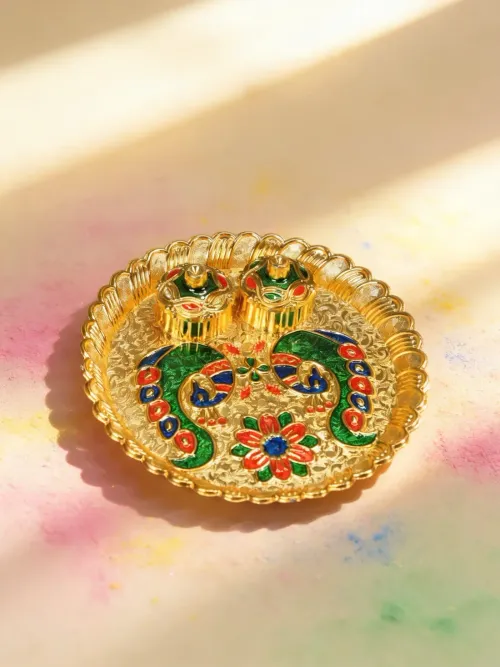
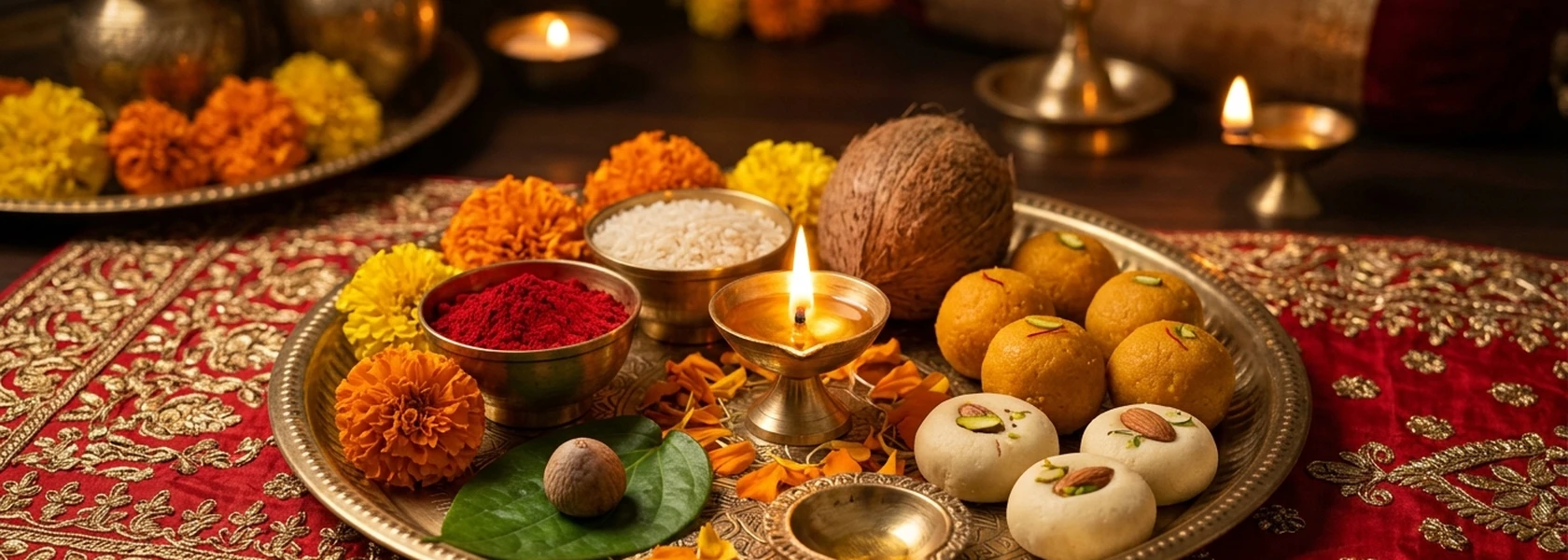
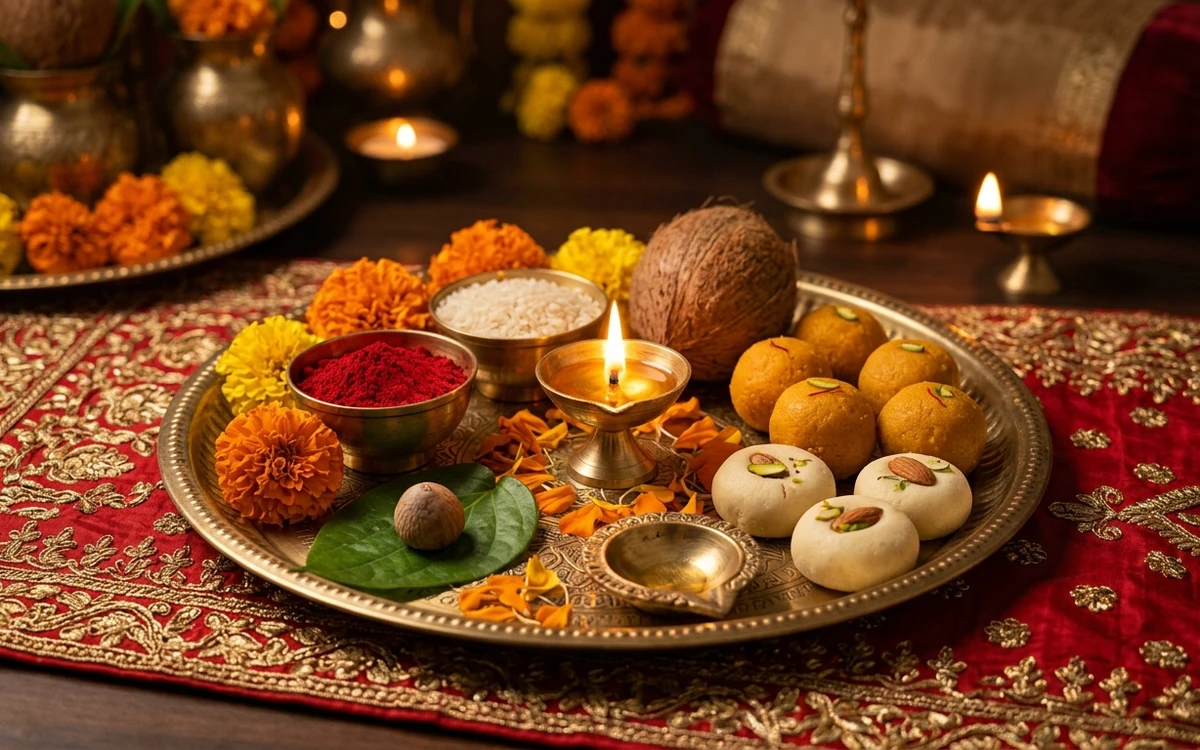
Gathering every puja samagri item early in the morning prevents interruptions during worship. A dedicated metal platter holds the sacred substances in orderly fashion. Devotees often select a piece like the Small Pooja Thali Special Kanha Ji Seva to arrange their ritual powders, unbroken akshat rice, wicks, and sweets cleanly.
- Shuddh Roli and Vermilion Kumkum: Natural red powder applied as the central mark on the brother's forehead.
- Akshat: Whole, unbroken raw white rice grains mixed with a drop of water and roli, symbolizing completeness and prosperity.
- Pooja Thali: A brass or silver plate to accommodate lamps, sweets, water cups, and tilak bowls.
- Ghee Diya: A metal oil lamp filled with pure cow ghee and round cotton batti to perform clockwise aarti.
- Dry Coconut (Gola / Nariyal): A whole dried coconut fruit presented to the brother after the tilak as a token of protection.
- Kalawa (Mauli): Red and yellow sacred cotton thread tied around the brother's right wrist.
- Mitha Prasad: Traditional sweets such as peda, batasha, or ladoos to sweeten the brother's mouth.
- Betel Leaves and Supari: Fresh betel leaves (paan) with whole betel nuts for formal ritual offering.
- Ganga Jal: Sacred water for achamana and sprinkling across the worship area.
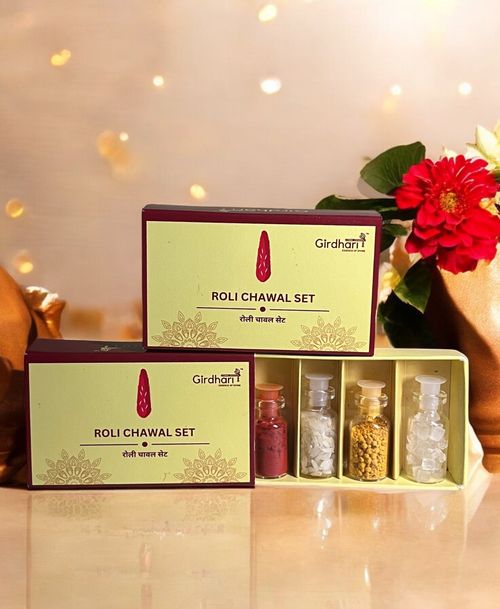
High quality powders remain central to a dignified ritual. You can rely on the Girdhari - Essence of Divine Roli Chawal Set, 5 gm Each, Pack of 4, Ideal for Gifting, Raksha Bandha to provide pure sacred vermilion and clean rice grains for family rituals.
| Samagri Element | Sacred Purpose | Preparation Advice |
| Roli Kumkum | Center tilak on Ajna chakra | Mix with a drop of Ganga jal in a clean brass katori. |
| Akshat Rice | Adorns the wet tilak paste | Select unbroken grains only. Discard cracked pieces. |
| Ghee Lamp | Dispels darkness via aarti | Use four-wick or single-wick brass diya with pure cow ghee. |
| Dry Coconut Gola | Symbol of longevity and good health | Wrap with sacred red mauli thread before handing over. |
| Mitha Prasad | Sweetening after prayers | Offer homemade sweets or mawa peda free from artificial colors. |
Step-by-Step Bhai Dooj Puja Vidhi at Home
Performing the puja systematically maintains sacred decorum. The traditional vidhi contains distinct stages: cleansing the ritual space, seating the brother, offering invocations to Yamaraj and Yamuna, applying the tilak, and sharing consecrated meals.
1. Purifying the Altar and Setting the Seating
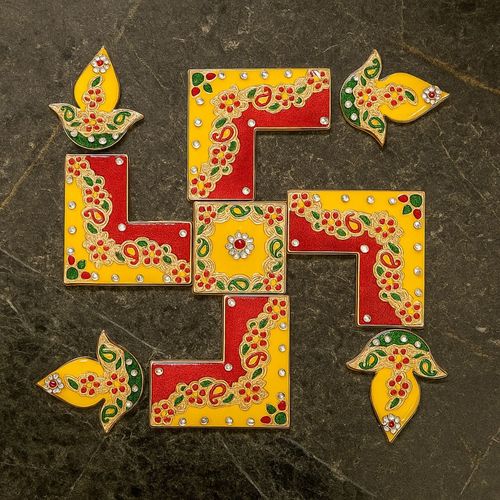
Early in the morning, sweep and mop the home mandir or courtyard. Sprinkle drops of Ganga jal across the floor while reciting the Gayatri mantra. Lay out a wooden chowki or clean wool asan for the brother to sit upon. According to Vastu traditions, the brother must sit facing north or east during the ceremony, never facing south. Create an auspicious threshold design using natural rice powder or place a Swastik Meena Stone Rangoli near the seating area to establish a festive atmosphere.
2. Lighting the Sacred Ghee Lamp
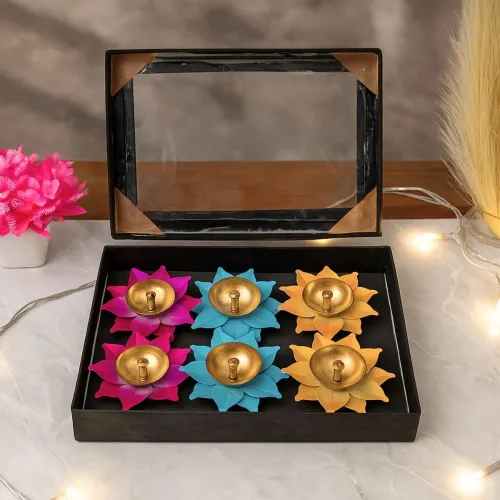
Light an oil lamp on the puja thali before beginning any direct interactions. Devotees frequently use sets like the 6 Pc Brass Lotus Diya Oil Lamp Set to place steady lamps around the altar. Offer prayers to Lord Ganesha first, seeking freedom from obstacles, followed by prayers to Yamuna and Yama.
3. The Sacred Tilak Application Ritual
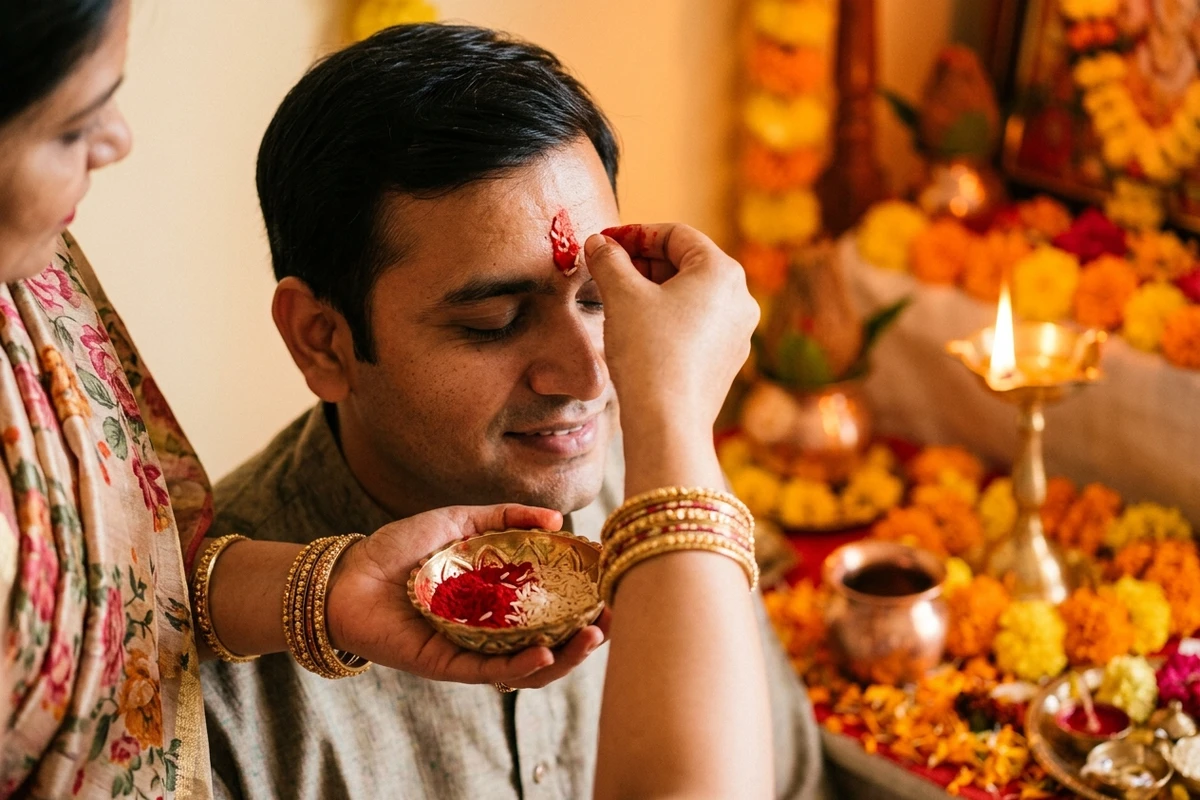
The sister takes a pinch of roli mixed with water or chandan paste using the ring finger of her right hand. She applies an upward stroke on the center of her brother's forehead, activating the Ajna chakra. Immediately afterward, she presses whole white akshat grains onto the wet paste. In many family traditions, sisters also apply a subtle paste of ground dried betel nut or chandan across the palms of the brother's hands, tying the sacred mauli thread around his right wrist while praying for his safety.
4. Coconut Offering and Aarti
After applying the tilak, the sister places a dry coconut gola into her brother's cupped hands. The dry coconut represents brotherhood, longevity, and wish-fulfillment. Next, the sister lifts the brass thali from the pooja thali collection and performs a clockwise aarti around the brother's face seven times. The light of the ghee flame wards off negative energies and seals the protective prayers uttered during the ceremony.
5. Sweetening and Family Feasting
The sister feeds her brother a piece of sweet prasad with her own hands. In return, the brother touches his elder sister's feet to seek blessings, or blesses a younger sister, offering gifts, clothing, or dakshina as tokens of affection. The scripture specifies that the brother must partake of food cooked by his sister on this day. In families where sisters reside far away, brothers travel to visit them or arrange dedicated feasts to fulfill this central injunction of Yama Dwitiya.
Regional Variations of Bhai Dooj Across India
While the spirit of fraternal protection remains constant, different regions observe unique customs rooted in local cultural traditions:
- Bhai Phonta in Bengal: Sisters observe a strict morning fast until they apply a tilak made of sandalwood paste, kajal, and curd using their little finger, reciting sacred verses wishing immortality upon their brothers.
- Bhau Beej in Maharashtra and Goa: Brothers sit on wooden seats called paats, surrounded by colorful rangoli borders. Sisters perform aarti with a silver or brass lamp and serve sweet basundi or shrikhand puri.
- Bhatru Dviteeya in South India: Families worship Lord Yama and Chitragupta, offering sesame seeds and water tarpan before conducting ceremonial home meals.
- Bhai Tika in Nepal and Himalayan Belts: Sisters apply a distinctive seven-color vertical tika on their brother's forehead, presenting garlands made of everlasting globe amaranth (makhamali) flowers.
Frequently Asked Questions About Bhai Dooj Puja Vidhi
When is Bhai Dooj observed in 2026?
Bhai Dooj falls on Wednesday, November 11, 2026. The Dwitiya tithi of Kartika Shukla paksha runs through the afternoon, culminating at 03:53 PM IST.
Which direction should the brother face during the tilak?
The brother should sit facing either north or east. Facing south is considered inauspicious for the recipient during tilak ceremonies.
Why is dry coconut given to brothers on Bhai Dooj?
The dry coconut, known as gola or nariyal, represents longevity, spiritual fullness, and constant affection. Handing the coconut into the brother's open hands seals the sister's prayer for his protection.
What should someone do if they do not have a sister?
The Skanda Purana states that a person without an immediate sister can visit a cousin, maternal aunt, or elderly female relative. Alternatively, one can offer worship to the sacred Yamuna river, a cow, or Mother Earth as a spiritual sister before sharing food.