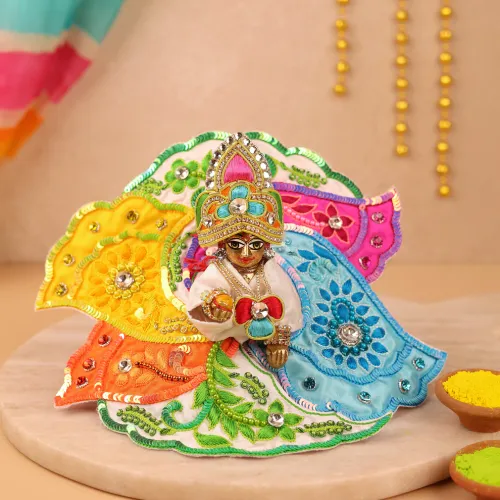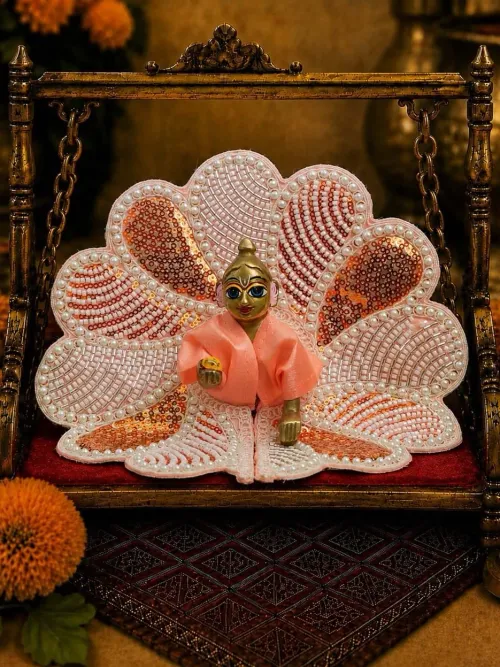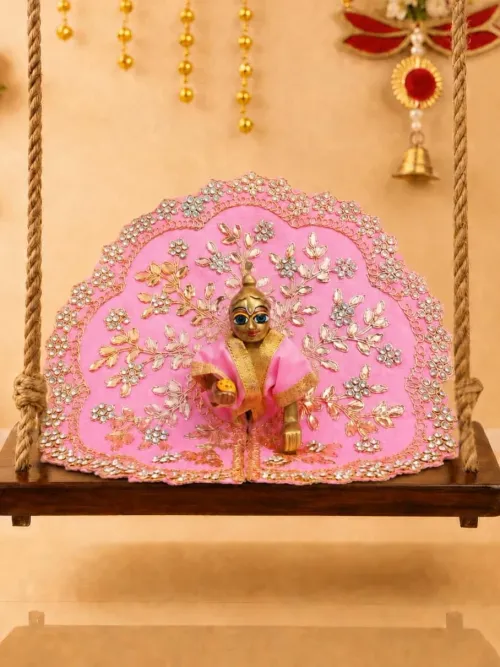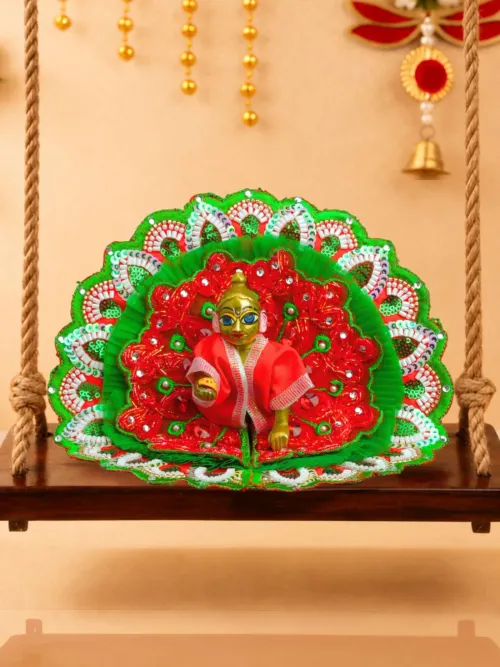

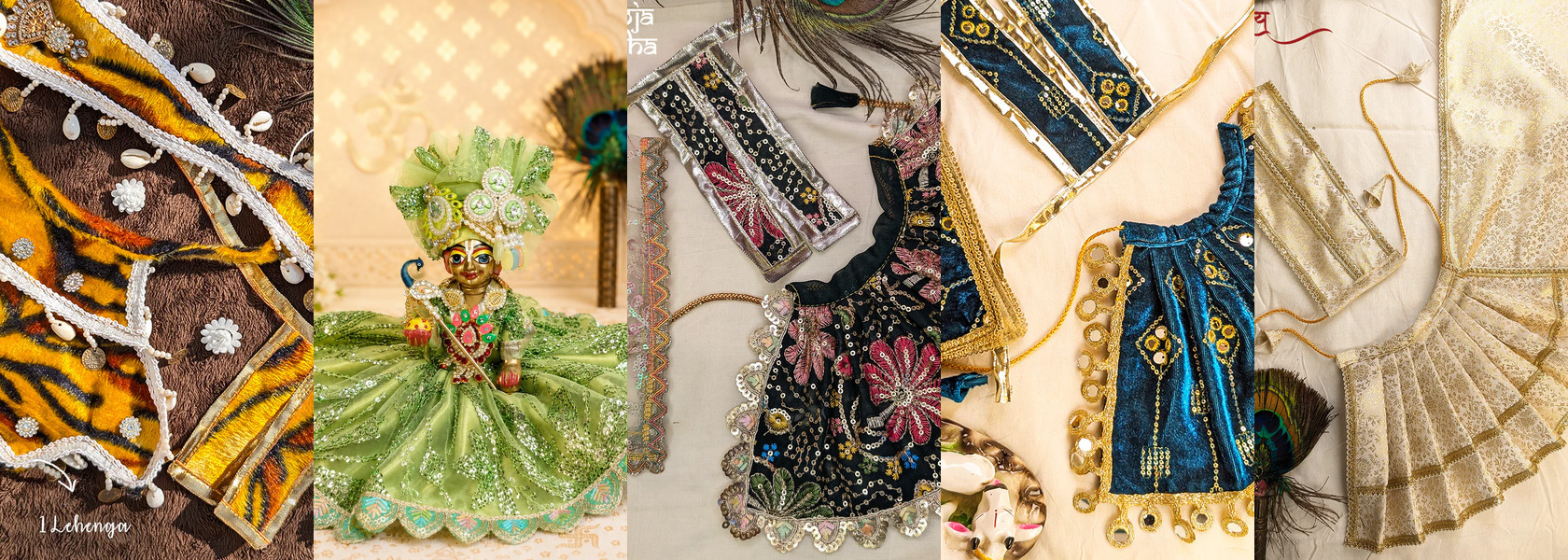
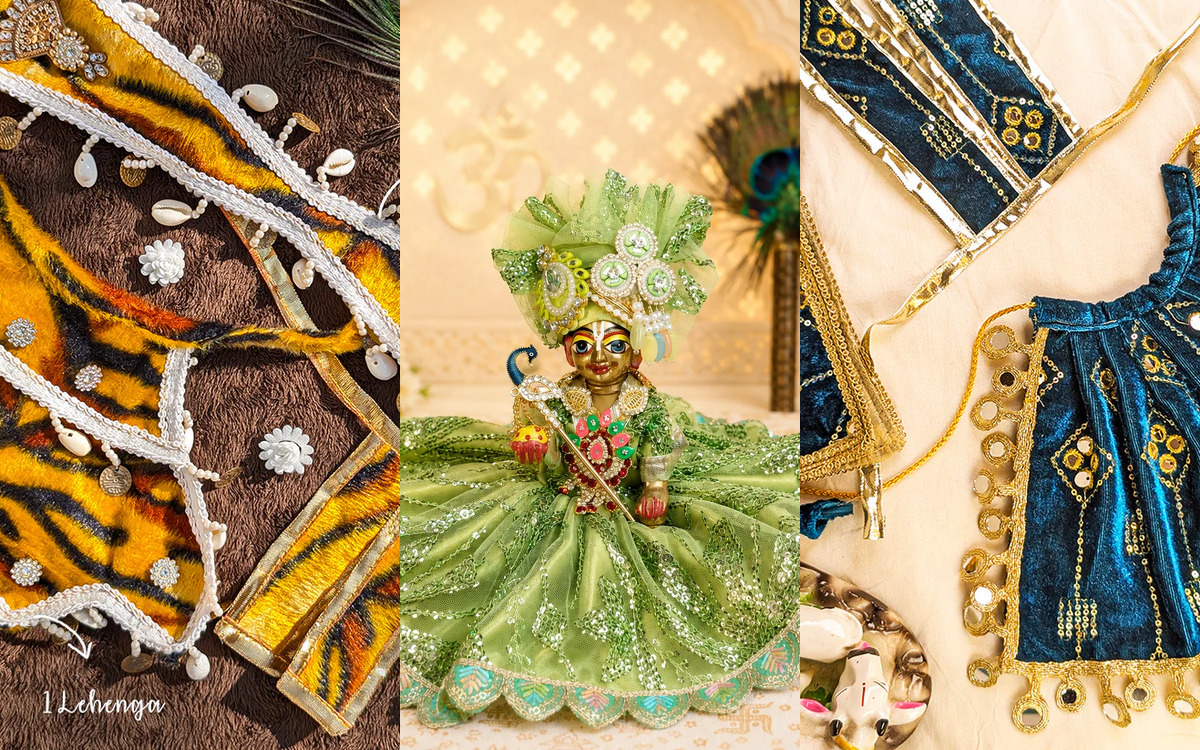
Every color in Sanatan puja traditions carries theological meaning, mood, and seasonal alignment. Devotees offer fresh garments during daily seva to honor the qualities of each deity. When you dress home altar murtis with intention, you create an environment of focus and spiritual discipline. Discovering our sacred deity poshak collection helps you choose appropriate fabrics and colors for morning and evening worship.
Traditional shastras recommend specific textiles and tones for different deities, days of the week, and annual festivals. Wearing fresh garments cleanses the altar energy and establishes a meditative routine for family members. Understanding the symbolic language behind each hue allows you to perform daily alankaar with deeper awareness and reverence.
Golden Yellow for Lord Krishna and Knowledge
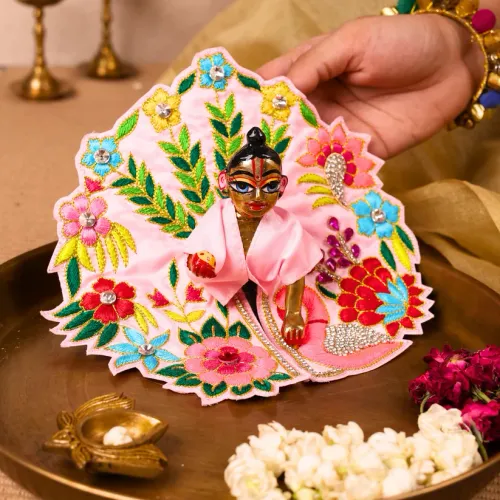
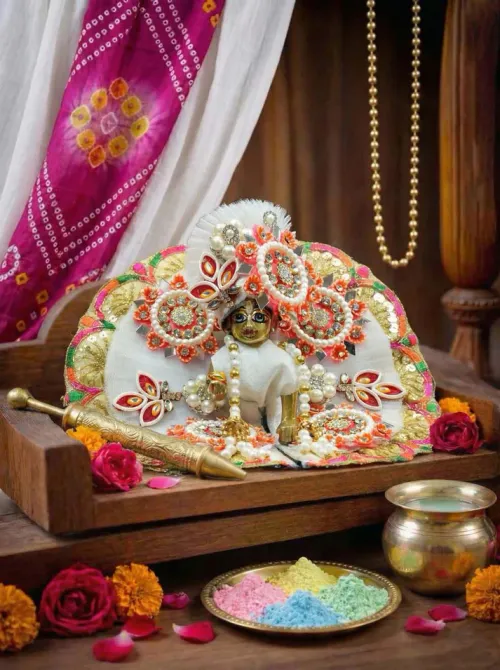
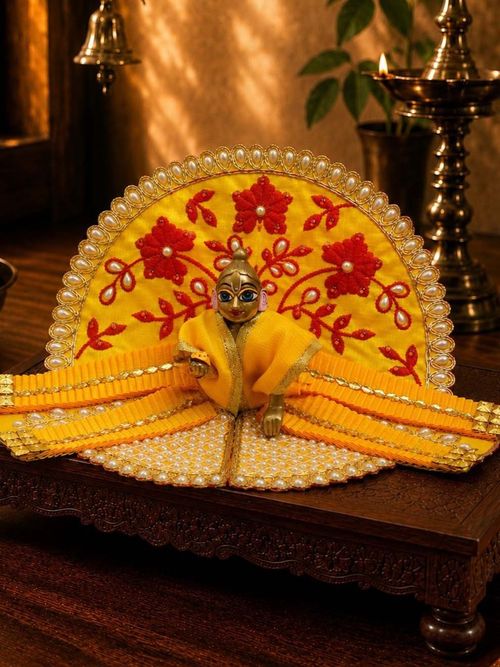
Yellow, known as Pitambara, connects directly to Lord Krishna and Lord Vishnu. The color signifies spiritual wisdom, intellect, and satva guna. In temples across Vrindavan and Mathura, priests adorn Bal Gopal and Krishna murtis in rich yellow silks for Thursday worship and festive mornings. You honor this divine association by adorning your deity with a vibrant yellow Vasant Leela poshak crafted with golden zari borders.
Basant Panchami, Janmashtami afternoon darshans, and Ekadashi observances traditionally call for radiant yellow fabrics. The warm golden tone brightens the sanctum and helps your family focus on divine knowledge and clarity during mantra japa. Explore dedicated Laddu Gopal dress sets tailored for daily alankaar and morning aarti.
Auspicious Red for Mata Rani and Divine Energy
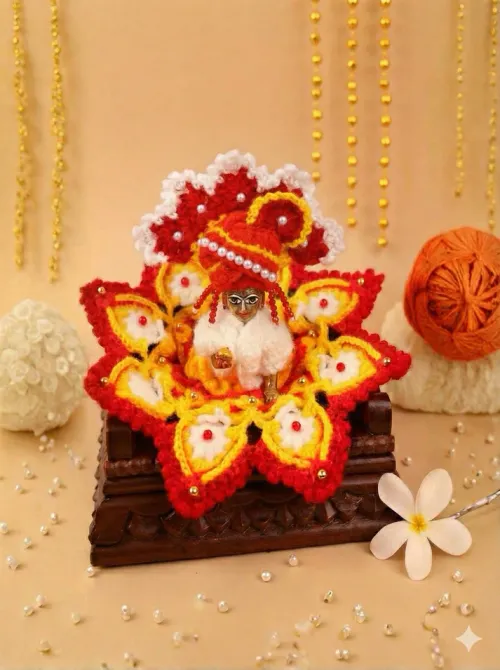
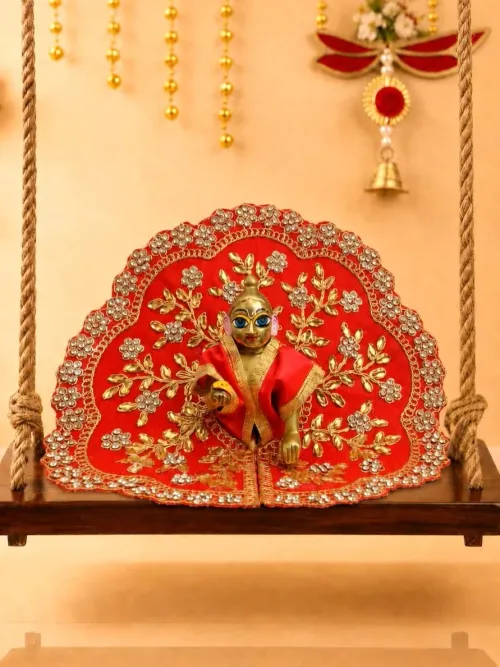
Red represents Shakti, dynamic strength, and auspicious celebration. In Shakta traditions, red belongs to Durga, Lakshmi, and Kali. The color symbolizes protection, vitality, and intense devotion. Devotees choose crimson and scarlet garments for Friday puja, Navratri festivities, and Diwali Lakshmi pujan. Presenting a hand-finished embroidered Mata Rani lehenga elevates the altar atmosphere during Chandi path recitations.
Red silk and velvet fabrics hold sacred fragrances like chandan, attar, and rose water during ritual worship. Adorning the goddess in auspicious red outfits invokes warmth and devotion across your home. Select authentic garments from our range of traditional Mata Rani dresses for regular Friday shringar and festive occasions.
Serene White for Purity and Surrender
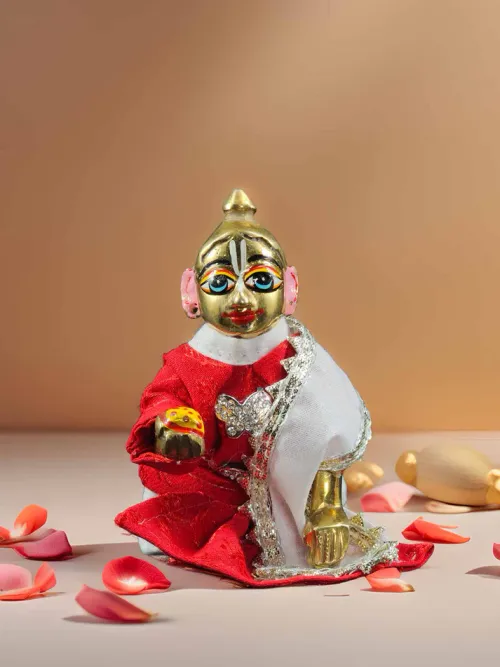
White garments embody Shanti, absolute purity, and spiritual surrender. Purnima observances, Sharad Purnima night vigils, and summer deity seva traditionally feature pure white cotton and brocade silk. The color reflects quiet contemplation and detachment from material distractions. For everyday summer comfort, dress your deity in a breathable Kanak Viraasat kurta pajama made from fine cotton fabric.
Saraswati puja also incorporates pure white and ivory tones to represent spotless wisdom and the arts. Pairing white fabrics with subtle silver trim creates a tranquil sanctum that calms the senses during evening meditation and study hours.
Verdant Green for Renewal and Monsoon Worship
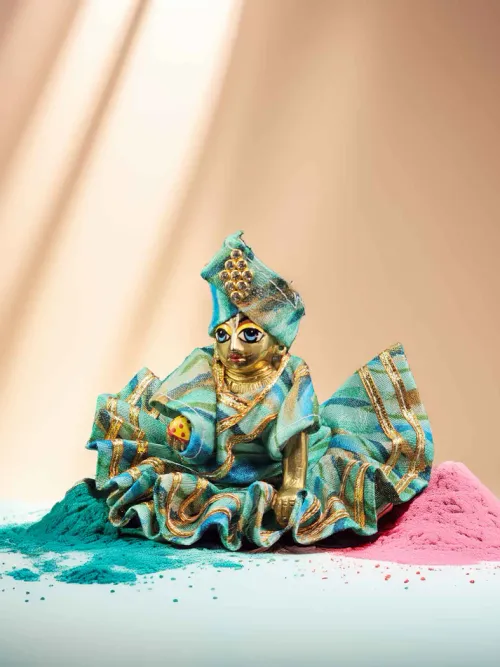
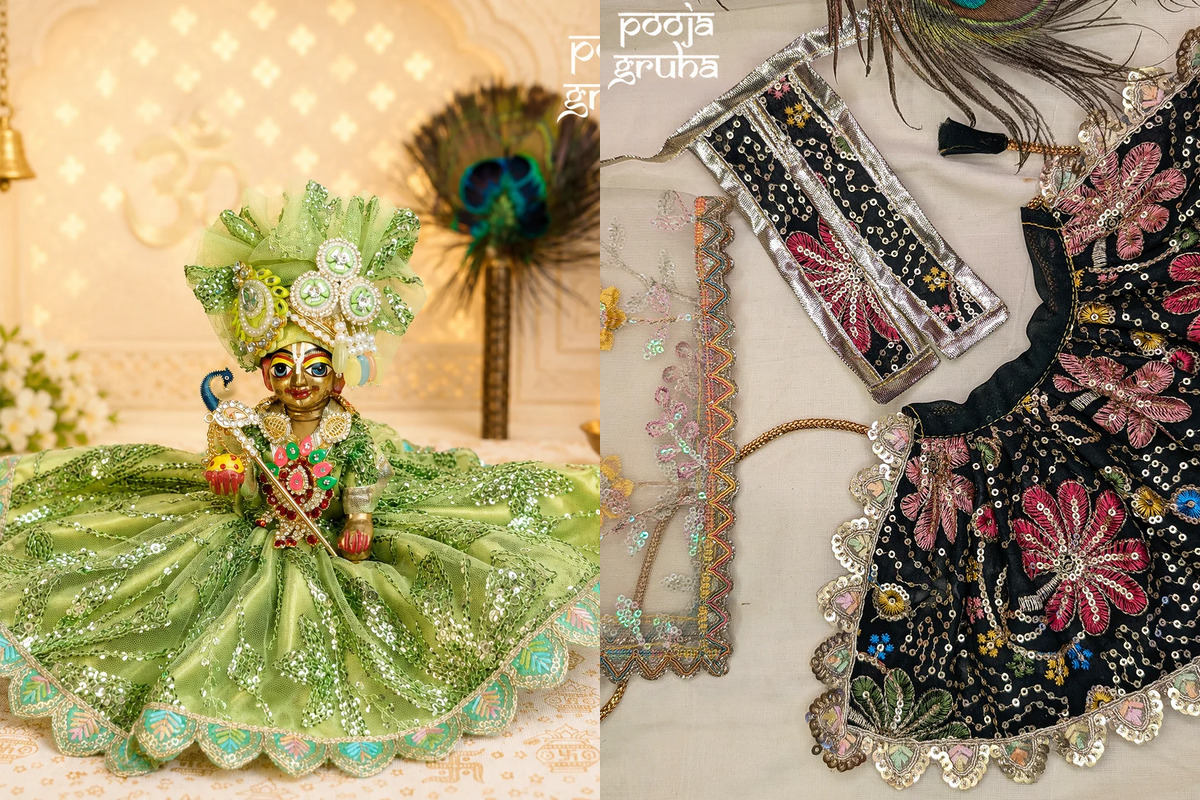
Green symbolizes life, growth, nature, and emotional harmony. In the sacred month of Shravan, temples dress deities in emerald green to honor Lord Shiva, Parvati, and the renewal of monsoon rains. Green also honors the sacred Tulsi plant and marks festive Wednesday worship. Offering green silk poshaks maintains seasonal harmony in your home temple.
Devotees often combine green clothing with fresh bilva leaves, tulsi manjaris, and jasmine garlands. The cool tone soothes the mind and provides visual relief during warm afternoon contemplation.
Royal Blue for Infinity and Cosmic Depth
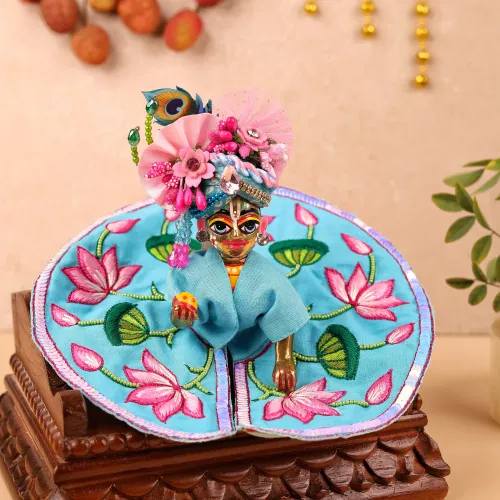
Blue carries associations with Lord Krishna, Rama, and Shiva as Neelkanth. The color signifies the vast sky, the deep ocean, and boundless divine grace. In traditional Indian iconography, blue represents stillness and inner truth. Dressing Bal Gopal or Radha Krishna in royal blue velvet or brocade during evening shayan creates a dignified and reverent visual center.
Blue fabrics contrast strikingly against brass and marble murtis. When paired with pearl necklaces, silver flutes, and fragrant champa flowers, blue attire inspires silent awe during night prayers.
Daily Care Practices for Sacred Deity Poshaks
- Wash deity garments separately using gentle herbal washes or mild water rinses.
- Store seasonal poshaks in dry cotton pouches away from dampness and direct sunlight.
- Rotate colors based on weekly planetary associations and festive lunar tithis.
- Inspect golden zari and bead borders regularly to prevent snagging during alankaar.
- Replace worn ritual garments promptly before significant festival celebrations.
Aligning your deity poshak selections with traditional color symbolism turns daily morning seva into a structured spiritual discipline. Choose well-crafted natural fabrics that respect traditional guidelines and enrich your home altar.