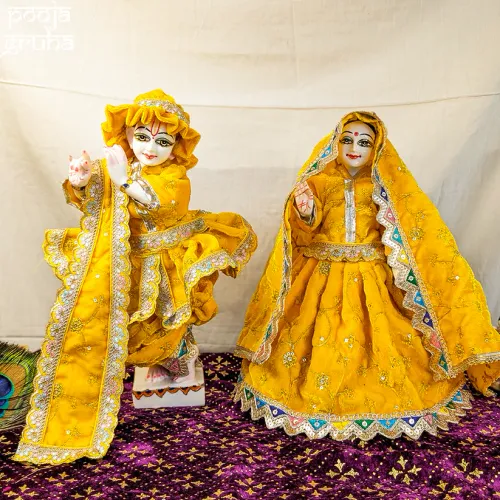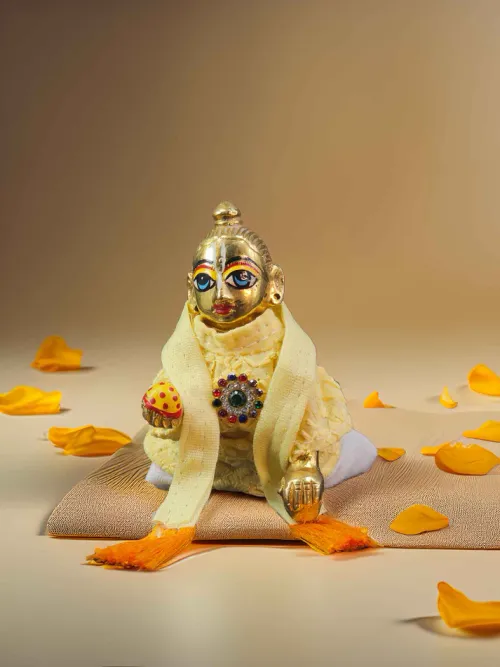

Govardhan Puja occurs annually on Pratipada tithi of Shukla paksha during the month of Kartika, right after Diwali. In 2026, the Panchang marks Govardhan Puja on November 10 under the Vishakha nakshatra. Families assemble in open courtyards and home shrines to honor Shri Krishna lifting the sacred Govardhan hill. Following the correct govardhan puja vidhi brings order to your family worship and honors ancient Braj traditions with sincere reverence.
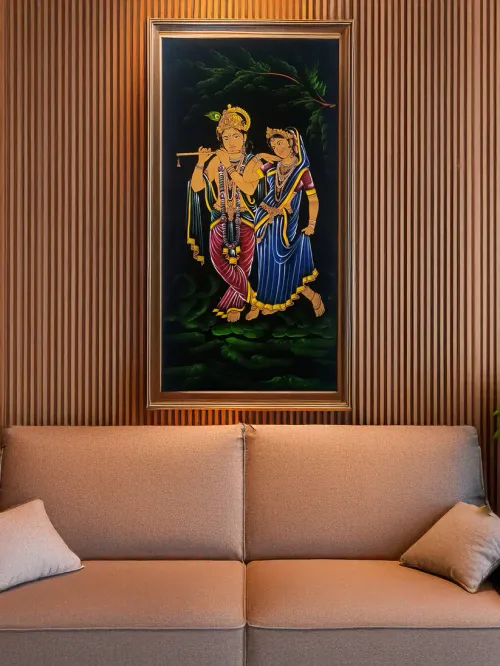
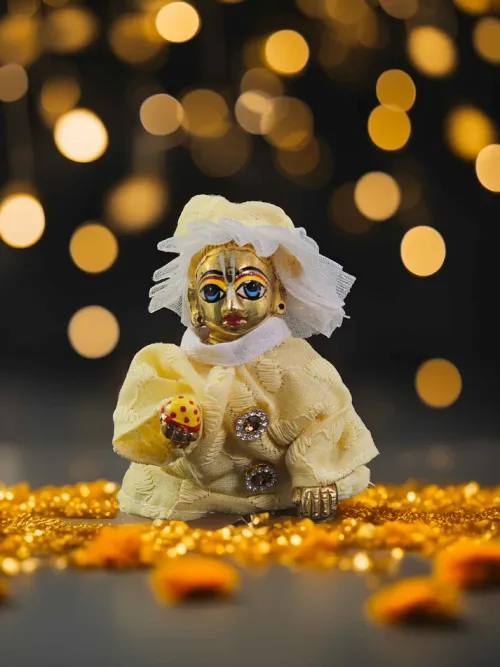
The festival marks Krishna teaching the residents of Gokul to worship natural elements rather than conducting yajnas out of fear. By lifting Govardhan Parvat on his little finger for seven days, Krishna sheltered cows, cowherds, and forest creatures from torrential rains. Devotees commemorate this divine protection through Annakut offerings, Gau Mata seva, and Parikrama. Preparing your altar with verified Krishna worship essentials helps you organize the ceremony without last-minute haste.
Essential Samagri Checklist for Govardhan Puja Vidhi
Assembling all ingredients on the morning of Pratipada keeps your attention on devotion during worship hours. Devotees arrange the base ritual items on a dedicated JAIPUR ACE Beautiful Om Carving Pure Brass Pooja Thali with Accessories Set of 5 Pcs 100% Brass 11 to keep powders, wicks, and offerings organized.
- Clean Gomaya (fresh cow dung) to form the symbolic Govardhan Parvat hillock on clean ground.
- Pure desi cow ghee, round cotton wicks, and clay or brass lamps for deepa aradhana.
- Roli, unbroken raw akshat rice grains, chandan paste, and turmeric powder for tilak.
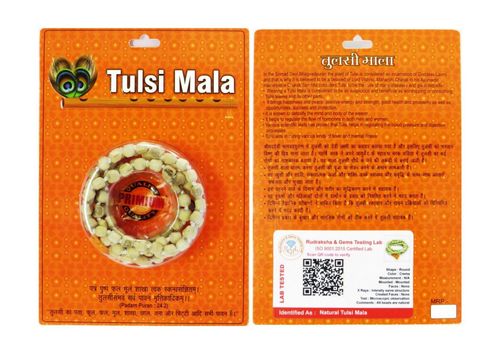
- Fresh orange and yellow marigold garlands, sacred tulsi leaves, and seasonal flowers.
- Ganga jal in a clean brass lota for consecration and sprinkling.
- Red mauli kalawa thread, betel leaves, whole supari, and cloves.
- Kheer, batasha, seasonal sweets, and ingredients for traditional Annakut kadhi and anna bhog.
Purifying the ritual area before shaping the hillock is an essential preliminary step. Devotees diffuse natural incense sticks from the panchgavya agarbatti collection to cleanse the surrounding air and prepare a pure devotional space for family members.
| Ritual Element | Traditional Role | Practical Guidance |
| Gomaya Hillock | Forms the sacred physical hill | Shape cleanly on an outdoor patio, balcony, or clean wooden plank. |
| Akshat and Roli | Offered during Pran Pratishtha tilak | Use unbroken raw white rice mixed with natural kumkum. |
| Tulsi Leaves | Mandatory crown on every Annakut dish | Place one fresh leaf on every sweet and cooked dish before bhog. |
| Desi Ghee Diya | Illuminates the Govardhan structure | Position the lamp at the base or navel of the hillock. |
| Brass Bhog Thali | Holds food offerings for Krishna | Arrange regional dishes in individual katoris before offering. |
Step-by-Step Govardhan Puja Vidhi at Home
Following a systematic sequence ensures that each member of your household participates with understanding. The core govardhan puja vidhi divides naturally into preparatory purification, murti shaping, sixteen-step worship, and family parikrama.
1. Preparing the Ground and Shaping the Hillock
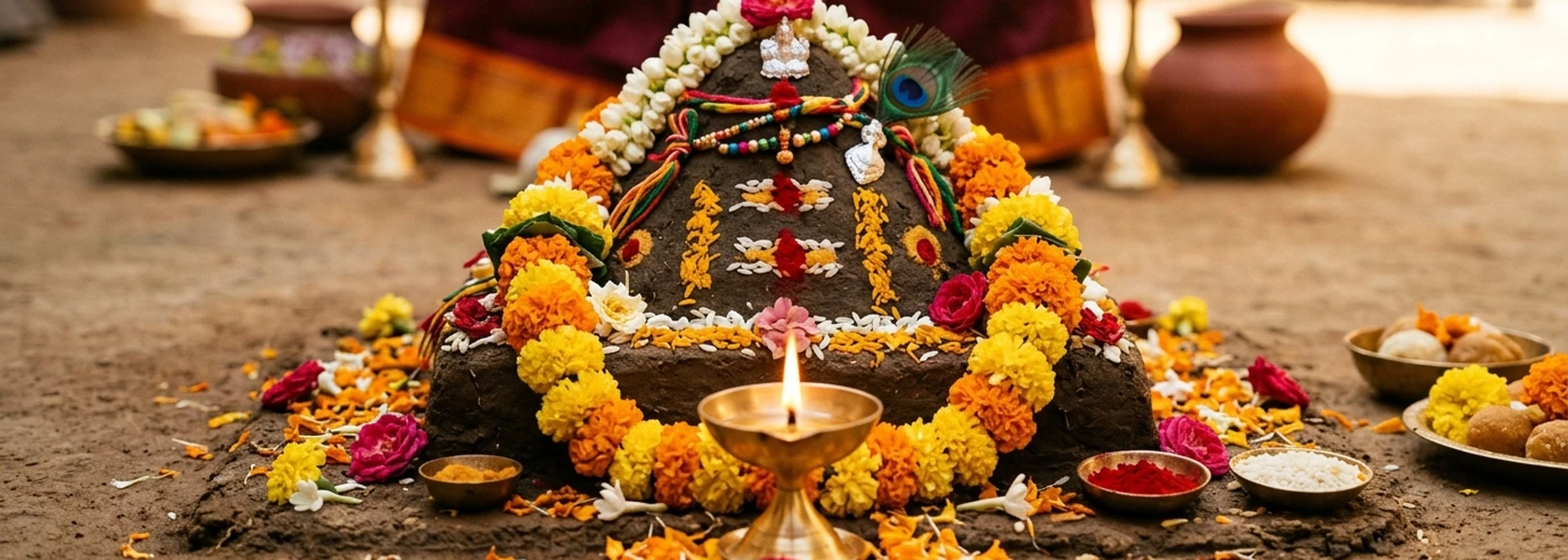
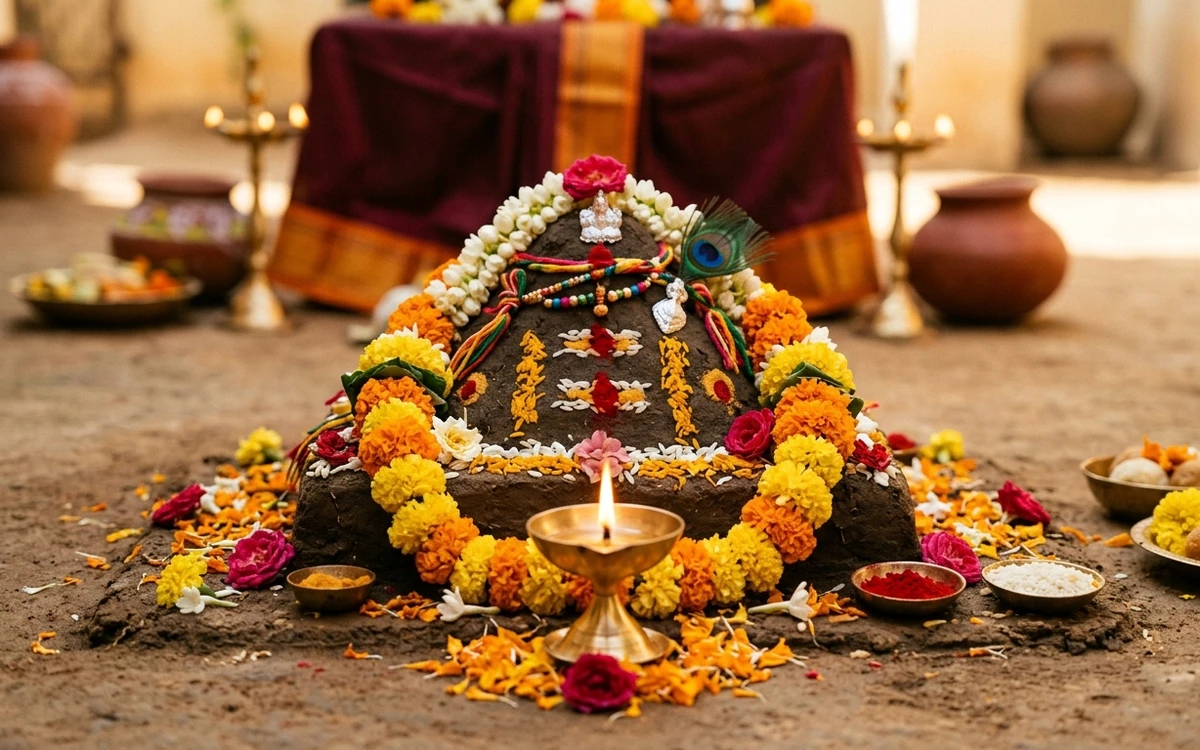
Begin by sweeping and mopping your courtyard, veranda, or terrace altar. If cow dung is not available in urban settings, devotees substitute clean clay or make a symbolic hillock using sugarcane stalks and sweets. Shape the hillock into a horizontal form representing the recumbent Govardhan deity. Devotees decorate the crown with peacock feathers, plant sprigs, and small clay pots representing trees and pastures.
2. Sanctification and Incense Purification
Sprinkle Ganga jal over the shaped figure while chanting the Gayatri or Vishnu mantra. Light herbal cow-dung incense such as Sandal Sheni Dhoop – Organic Panchagavya Incense for Spiritual Harmony (Pack of 4, 12 Pieces Each) to ground the senses and fill your courtyard with clean sandalwood fragrance.
3. Invocation and Shodashopachara Offerings
Apply red roli and chandan tilak to the forehead and body of the Govardhan form. Shower unbroken akshat rice over the structure while invoking Bhagwan Krishna as Govardhan-dhari. Offer fresh yellow marigold malas and place betel leaves with supari at the base. Place raw milk, curd, honey, sugar, and ghee in small brass cups as panchamrit.
4. Annakut Bhog Offering
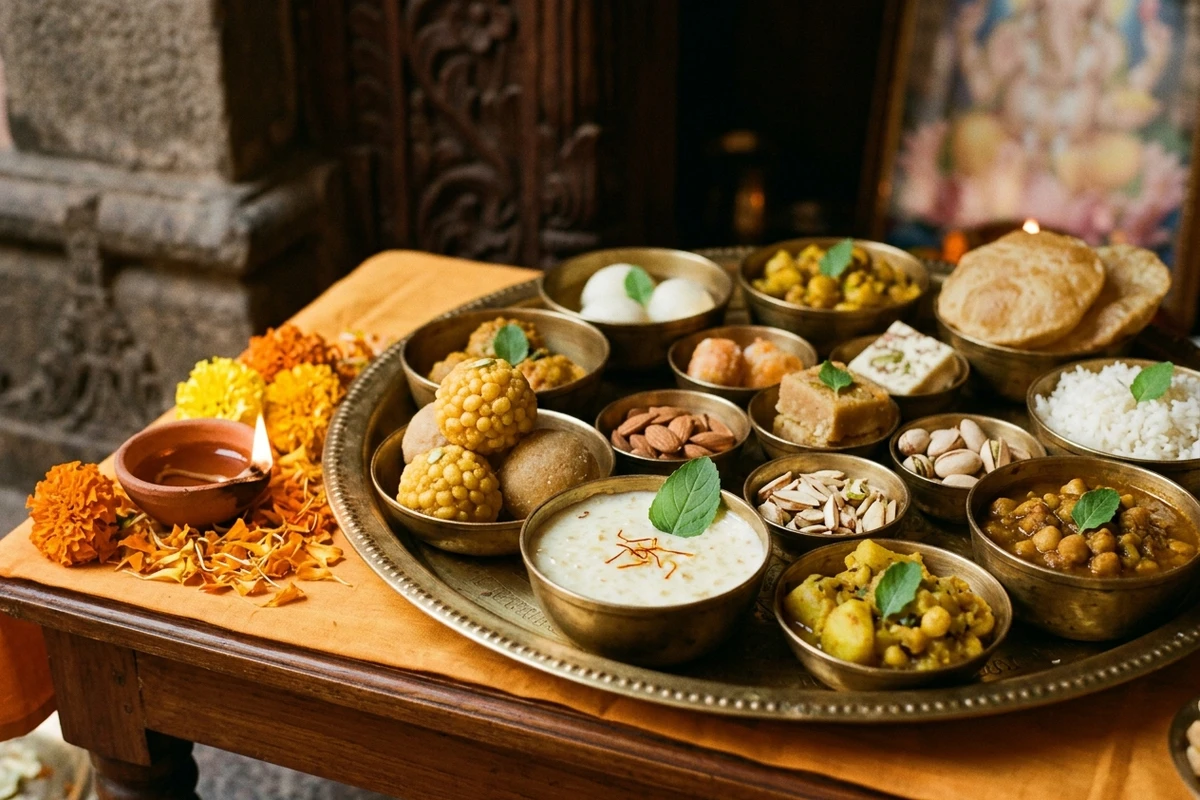
Annakut translates to a mountain of grain. In temple shrines, cooks prepare 56 or 108 distinct food items. At home, families cook a mixed vegetable curry known as Annakut ki Sabzi, featuring every available seasonal vegetable cooked without onion or garlic. Devotees serve this feast on a Pujahome Pure Brass Pooja Bhog Thali/Plate Set for Home Temple Decor Brass set of 5 pcs alongside puris, kheer, makhan mishri, and halwa.
Remember that Krishna accepts offerings only when accompanied by tulsi leaves. Place a fresh tulsi leaf on each bowl in your thali. Recite the Krishna bhog mantra three times, wave your right hand gently toward the deity to offer the aroma, and ring the brass bell continuously.
5. Gau Mata Seva and Animal Reverence
Govardhan Puja is fundamentally linked with the welfare of cows and calves. If you live near a Gaushala or have cows in your locality, visit them after completing home prayers. Bathe the cows, apply roli tilak to their foreheads, garland their necks, and feed them fresh jaggery, green fodder, and wheat rotis. Honoring cattle acknowledges our dependence on dairy animals for nutrition and agricultural sustenance.
6. Family Parikrama and Concluding Aarti
The entire household circumambulates the Govardhan hillock seven times in a clockwise direction. As you walk, pour water slowly from a brass lota along the perimeter path, followed by a trickle of raw milk. Keep essential items from your general pooja essentials within reach so that older family members can complete their prayers comfortably. Conclude by singing Shri Govardhan Maharaj ki Aarti and sharing Annakut prasad with neighbors and friends.
Regional Variations of Govardhan Celebrations
Different parts of India observe Pratipada with unique cultural practices grounded in regional geography:
- Braj Region (Mathura and Vrindavan): Millions perform the 21-kilometer parikrama around Govardhan hill, offering milk and batashas along sacred ponds like Mansi Ganga and Radha Kund.
- Gujarat: The day is celebrated as Bestu Varas, marking the Gujarati New Year. Families dress in new clothes, seek elder blessings, and cook Annakut feasts in local temples.
- Maharashtra: Observed as Bali Pratipada, commemorating the generosity of King Bali alongside traditional husband-wife gift exchanges.
- Punjab and Haryana: Rural households sculpt elaborate miniature cattle models beside the Govardhan figure, celebrating harvest abundance.
Frequently Asked Questions About Govardhan Puja
When is Govardhan Puja celebrated in 2026?
In 2026, Govardhan Puja falls on Tuesday, November 10. The festival takes place during the Shukla paksha Pratipada tithi in the Hindu month of Kartika, accompanied by the Vishakha nakshatra.
Can apartment dwellers perform Govardhan Puja without a courtyard?
Yes. If an open courtyard is unavailable, arrange a clean wooden chowki or large brass plate on your balcony or living room floor. You can shape a small symbolic hillock using pure mitti, wheat dough, or fresh seasonal vegetables, and complete the seven circumambulations around the chowki.
What dishes are essential for Annakut prasad?
Traditional Annakut includes a signature mixed vegetable curry made from local autumn vegetables like radish, brinjal, pumpkin, and spinach. Devotees combine this dish with yellow kadhi, rice, wheat puris, makhan mishri, and milk sweets like peda or kheer. The preparation strictly excludes onions and garlic.
Why do devotees perform seven parikramas during Govardhan Puja?
The seven circumambulations honor the seven days and nights Shri Krishna held Govardhan hill on his finger to protect the people of Braj from Indra's storm. Walking clockwise signifies surrender to divine protection and gratitude for earth's natural bounties.