
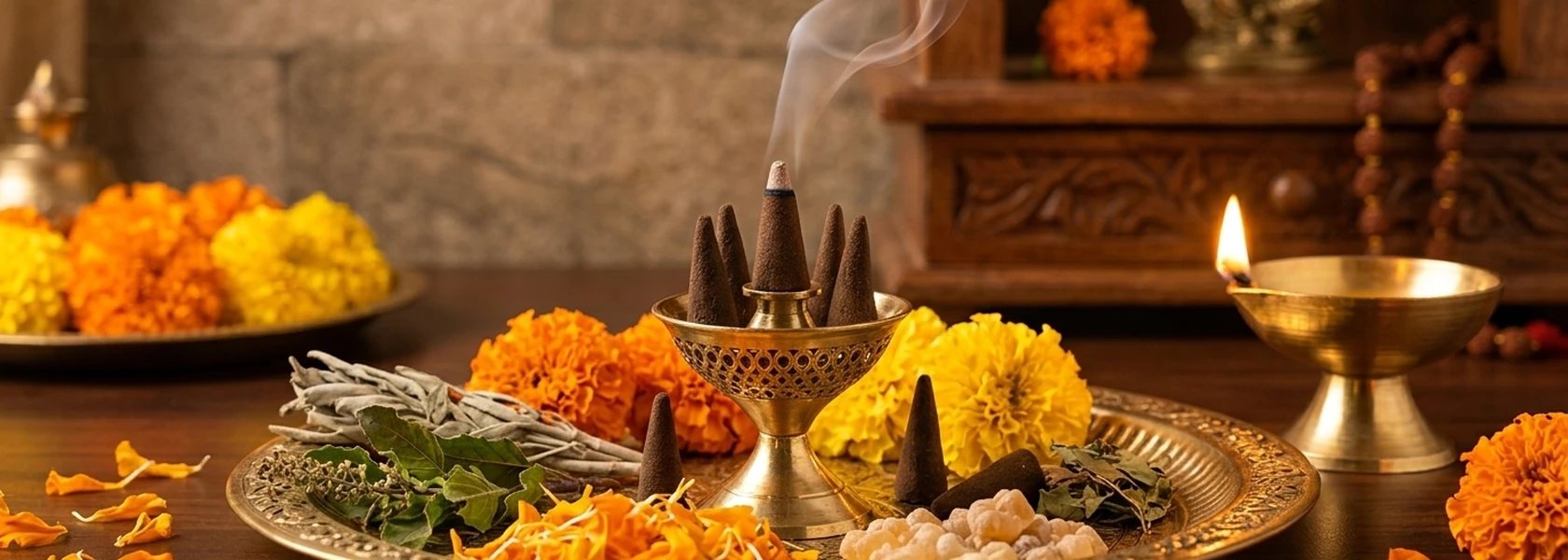
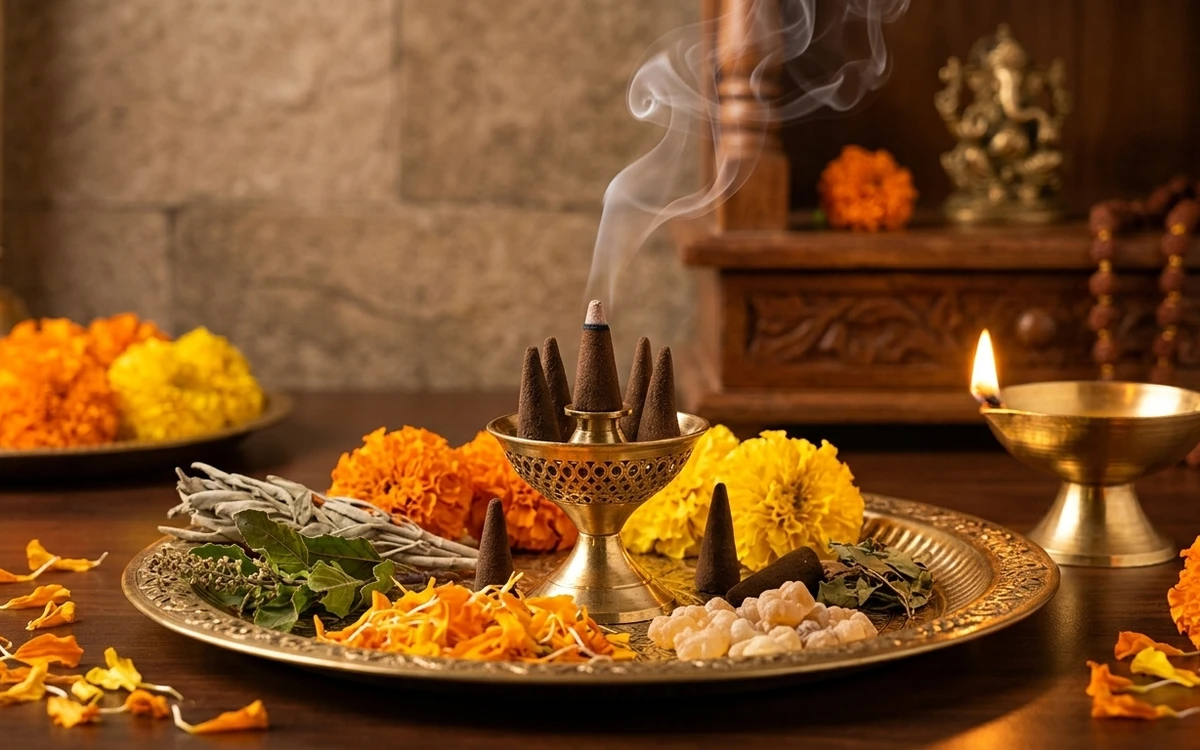
Every morning across millions of Indian households, the daily prayer begins with striking a flame and lighting sacred incense. The fragrant smoke rises toward the home altar, carrying prayers and purifying the domestic atmosphere. In recent years, conscious devotees pay closer attention to what they burn during daily rituals. Traditional worship emphasizes absolute purity in every offering, from fresh flowers to sacred samagri. Choosing herbal, charcoal-free dhoop aligns modern living with ancient Vedic principles of clean, restorative worship.
The Sacred Tradition of Dhoopana in Vedic Rituals
The practice of burning aromatic herbs and tree resins is known in Sanskrit as Dhoopana. Classical Ayurvedic treatises, including the Charaka Samhita and Sushruta Samhita, describe Dhoopana as an essential method for cleansing spaces and promoting physical vitality. Ancient sages gathered wild botanicals like guggul, sal resin, neem leaves, and dry cow dung to prepare medicinal fumigations for dwellings and temples. These natural substances release antimicrobial vapors that cleanse stagnant air without leaving toxic residue.
During Shodashopachara puja, the priest offers dhoop as the eighth formal service to the deity. The offering represents the element of air (Vayu) and honors the omnipresent spirit within creation. When you burn pure botanical dhoop before your home deities, you continue this unbroken Vedic heritage. You invite positive vibrations into your living environment while keeping your household air fresh and breathable.
Understanding the Difference: Charcoal vs Herbal Bases
Many conventional incense products in commercial markets use pulverized charcoal dust as an inexpensive burning substrate. Charcoal allows sticks and cones to burn rapidly and stay lit without extinguishing. However, burning charcoal produces heavy, dark smoke containing carbon monoxide and volatile compounds. This pungent smoke often irritates the eyes, triggers coughing, and masks the true botanical fragrances of essential herbs.
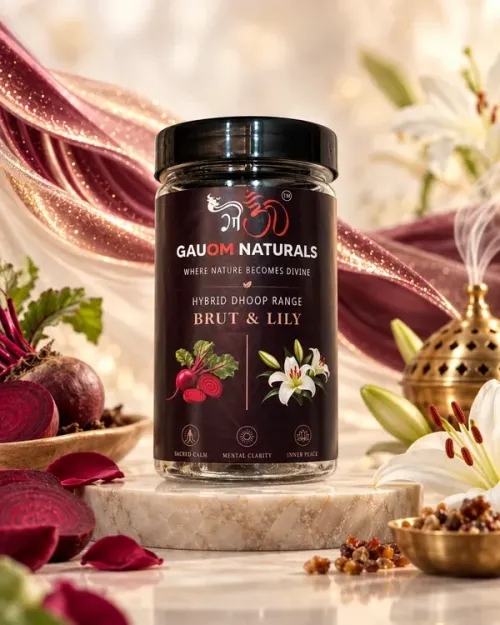
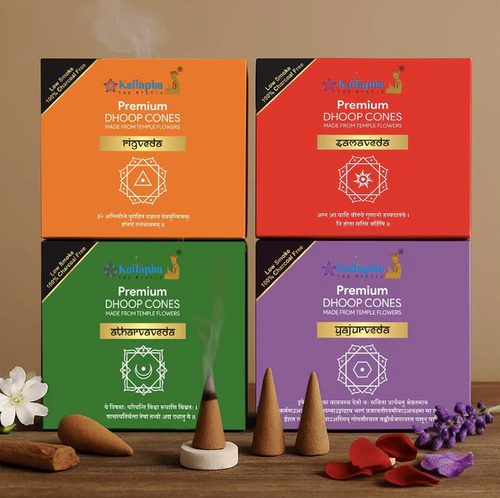
Herbal charcoal-free dhoop replaces industrial carbon with pure botanical binders. Artisans blend dried temple flowers, bark powders, aromatic roots, and sacred resins into cohesive doughs using clean water and natural gums. When lit, charcoal-free cones release light, translucent smoke that disperses smoothly. Choosing handcrafted items like Veda series dhoop cones gives you clean-burning aromatic cones formulated from temple flowers and authentic Vedic herbs.
Core Botanical Ingredients in Charcoal-Free Dhoop
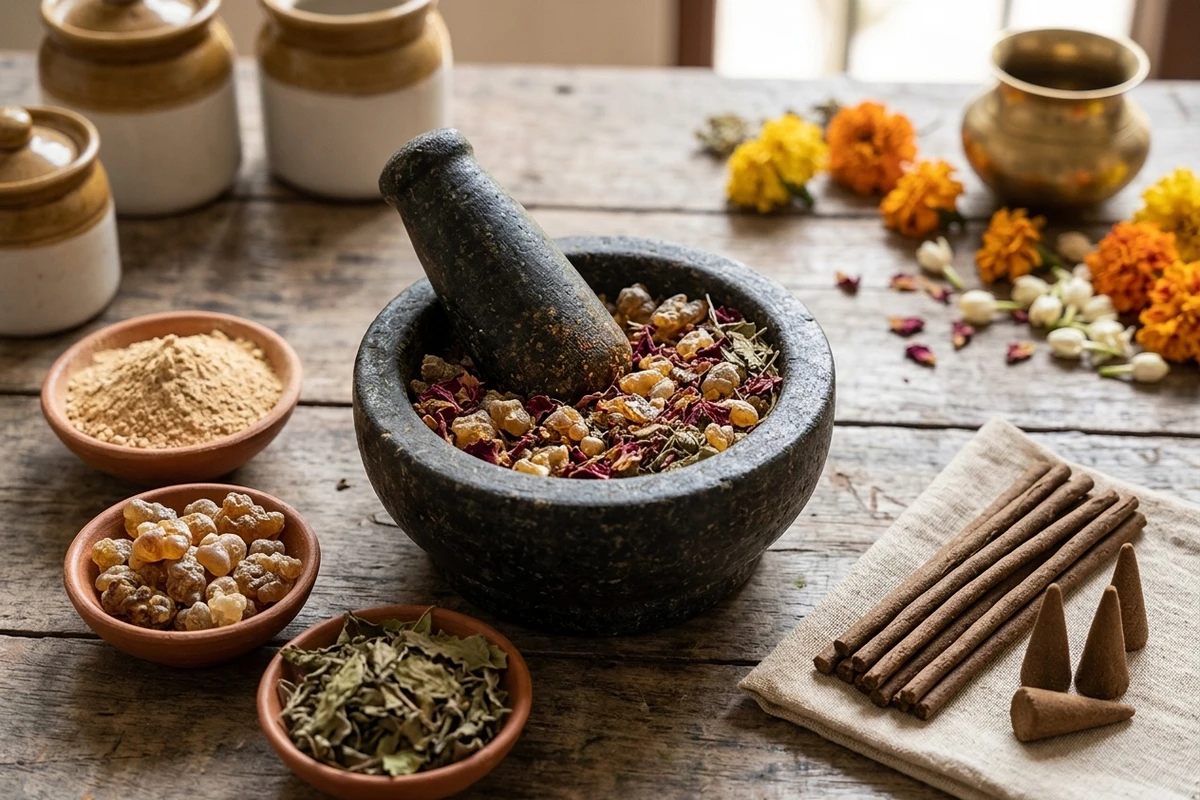
Authentic herbal incense relies entirely on gifts from nature. Each botanical element provides specific energetic and sensory qualities to your home mandir:
- Guggul (Commiphora mukul): A sacred resin collected from arid shrubs, known for its balsamic aroma and deep air-purifying qualities.
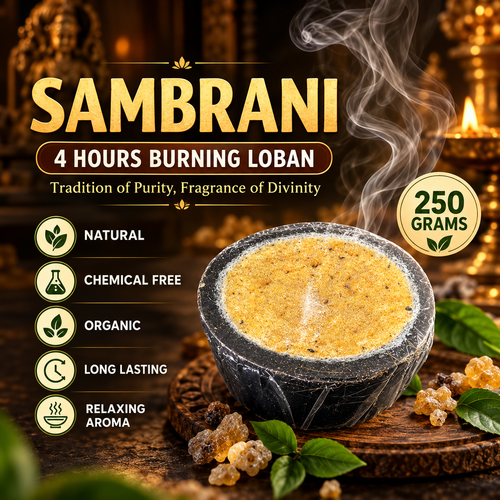
- Loban / Sambrani (Boswellia serrata): A golden frankincense resin that calms restless thoughts and repels insects naturally.
- Dried Temple Flowers: Repurposed marigolds and rose petals that supply natural color, subtle sweetness, and sustainable botanical substance.
- Sandalwood and Cedarwood: Cooling wood powders that ground the nervous system and steady attention during morning contemplation.
- Desi Cow Ghee and Gomaya: Traditional bases used in hawan samagri that support complete, clean combustion.
Low-Smoke Innovations for Urban Homes and Apartments
Modern living arrangements often feature compact urban apartments with limited natural cross-ventilation. Burning heavy, soot-laden charcoal incense in enclosed rooms quickly leaves oily marks on walls and overwhelms sensitive family members. Devotees require solutions that respect sacred traditions while accommodating apartment lifestyles.
Bambooless and charcoal-free designs solve this challenge effectively. The River series low-smoke dhoop batti provides long-burning sticks rolled from holy Himalayan river botanicals without any inner wooden core. Devotees also appreciate bamboo-less incense sticks because traditional scriptures advise against burning bamboo wood. Eliminating bamboo preserves sacred ritual purity and produces minimal, clean-drifting smoke.
Comparing Charcoal-Based and Herbal Charcoal-Free Dhoop
| Attribute | Conventional Charcoal Incense | Herbal Charcoal-Free Dhoop |
| Base Material | Industrial charcoal powder and chemical binders | Dried flowers, herbs, resins, and tree gums |
| Smoke Quality | Dense, pungent, dark smoke prone to eye irritation | Light, white, soothing smoke that clears quickly |
| Aroma Character | Dominated by smoky undertones and synthetic perfume | True botanical scent of resins, woods, and blossoms |
| Indoor Residue | Leaves black soot on mandir walls and brassware | Burns cleanly with minimal powdery ash residue |
| Scriptural Alignment | Modern industrial convenience product | Directly reflects classical Ayurvedic Dhoopana vidhi |
Selecting the Right Accessories for Safe Burning
Lighting dhoop cones requires a stable, heat-resistant surface that safely captures falling embers. A dedicated brass incense and dhoop holder protects your wooden altar surface while elevating your pooja room decor. Devotees can browse our curated sacred incense burners and holders to find backflow diffusers, carved stone trays, and brass stands tailored for both cones and sticks.
For special festive rituals, Ekadashi observances, and family hawan ceremonies, explore our comprehensive dhoop, sambrani, and hawan cups collection. These pre-filled botanical cups deliver rich resin fragrances effortlessly without requiring separate coals or complicated setup.
Four Steps to Incorporate Mindful Incense Into Daily Puja
- Ensure gentle airflow in your prayer room so natural botanical fragrances circulate without stagnation.
- Place your herbal cone or dhoop stick firmly on a stable brass holder or a sand-lined clay dish.
- Ignite the pointed tip with a match, let the flame burn for five seconds, then gently blow it out to establish a steady glowing ember.
- Sit comfortably before your home deity, absorb the calming herbal fragrance, and commence your japa or silent meditation.
Cultivating Daily Purity and Devotion
Your daily pooja is a personal sanctuary from modern noise and distractions. The substances you bring into that sacred space reflect your reverence for the divine and your respect for household health. Switching to herbal, charcoal-free dhoop ensures every breath you take during worship remains pure, uplifting, and aligned with timeless Sanatan traditions.