

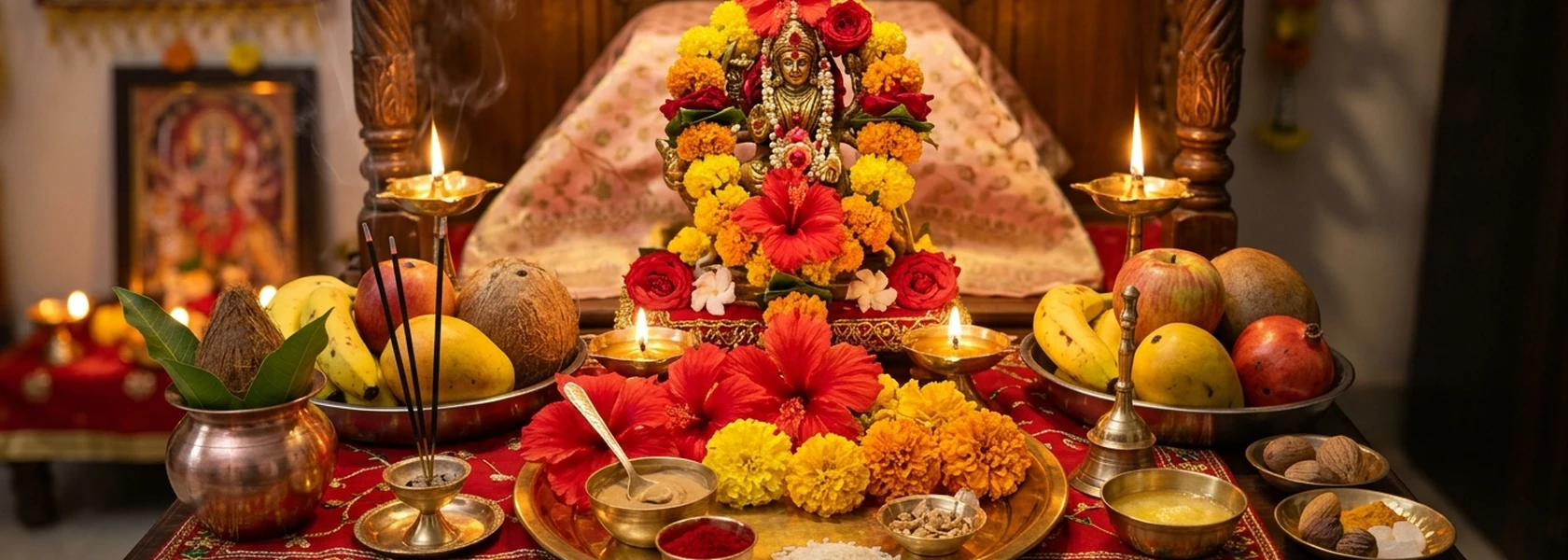
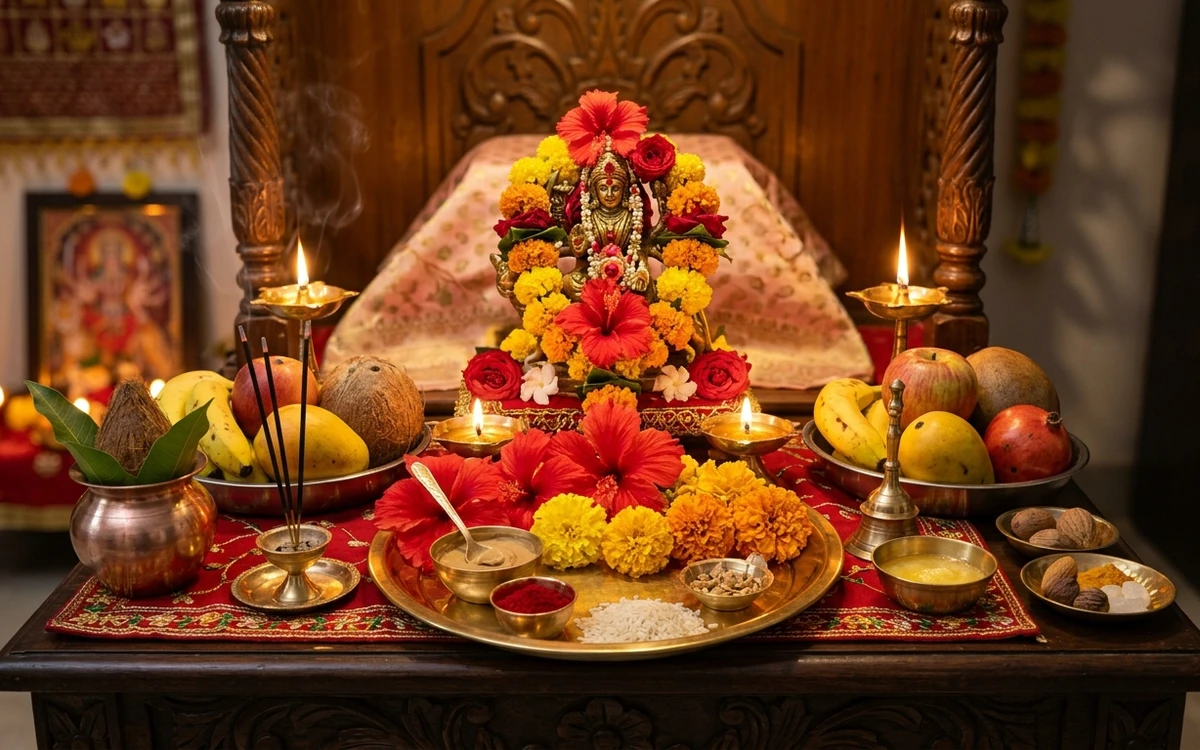
Maha Navami marks the culminating ninth day of Sharad Navratri. Dedicated to Maa Siddhidatri, the ninth manifestation of Goddess Durga, this sacred date represents the victory of spiritual resolve over inner obstacles. In 2026, the Vedic Panchang marks Maha Navami on Tuesday, October 20, corresponding to the Shukla Paksha Navami tithi in the lunar month of Ashvina. Understanding and performing the authentic maha navami puja vidhi brings harmony, spiritual focus, and family well-being into your home.
Across Indian households, Maha Navami is observed with intense devotion through two primary sacred practices: Navami Hawan (sacred fire oblation) and Kanya Pujan (reverence of young girls as living embodiments of the Divine Mother). Preparing your home mandir early in the morning ensures that every ritual proceeds smoothly without haste. A thoughtful approach to your ritual schedule allows every member of your family to participate with stillness and gratitude.
Spiritual Significance of Maha Navami and Maa Siddhidatri
Maa Siddhidatri is the bestower of all siddhis, or spiritual accomplishments. The Markandeya Purana and the Devi Bhagavata Purana describe that Lord Shiva attained half of his divine feminine form, known as Ardhanarishvara, by worshipping Maa Siddhidatri. She is depicted seated on a lotus flower or riding a lion, bearing four arms that hold a conch, discus, mace, and lotus. Her grace grants mental clarity, removes ego, and completes the spiritual vows undertaken during the nine days of Navratri.
Maha Navami also commemorates the decisive victory of Goddess Durga over the demon Mahishasura. Scriptural tradition notes that the fierce battle reached its peak on Navami before final victory on Dashami. For devotees, this battle symbolizes the ongoing effort to overcome personal ignorance, anger, and lethargy. Performing your prayers on this day reaffirms your commitment to righteous actions, selfless living, and sincere devotion.
Panchang Details for Maha Navami 2026
Vedic tradition aligns festival rituals with sunrise tithi (Udaya Tithi). Below are the verified panchang coordinates returned for New Delhi for Tuesday, October 20, 2026. Local sunrise timings differ across India, so please verify your regional city panchang before commencing morning rituals.
| Panchang Element | Details for October 20, 2026 |
| Festival Date and Day | October 20, 2026 (Mangalwara / Tuesday) |
| Tithi | Navami (active at sunrise and throughout daytime) |
| Paksha and Month | Shukla Paksha, Ashvina Month (Amanta and Purnimanta) |
| Nakshatra | Shravana |
| Sunrise (New Delhi) | 06:24 AM IST |
| Sunset (New Delhi) | 05:46 PM IST |
| Primary Deity | Maa Siddhidatri (Goddess Durga) |
| Core Observances | Navami Hawan, Kanya Pujan, Ayudha Puja |
The morning hours following sunrise offer the ideal period for concluding Navratri fasting, performing the home hawan, and welcoming young girls for Kanya Pujan. Devotees who observed strict fasting during the nine days conclude their discipline after the completion of Kanya Pujan and prasad distribution.
Essential Samagri Checklist for Maha Navami Puja Vidhi
Gathering your samagri in advance prevents last-minute distractions during sacred rituals. Many households prefer pre-assembled assortments such as verified complete pooja kits to ensure no traditional ingredient is missing.
- Clean wooden chowki with a fresh red or yellow altar cloth.
- Brass or clay idol or framed image of Maa Durga and Maa Siddhidatri.
- Brass kalash filled with clean water, a betel nut, coin, mango leaves, and a sacred coconut wrapped in red mouli.
- Roli (kumkum), turmeric powder, unbroken akshat rice, and pure sandalwood paste.
- Fresh red hibiscus flowers, yellow marigold garlands, and bilva leaves.
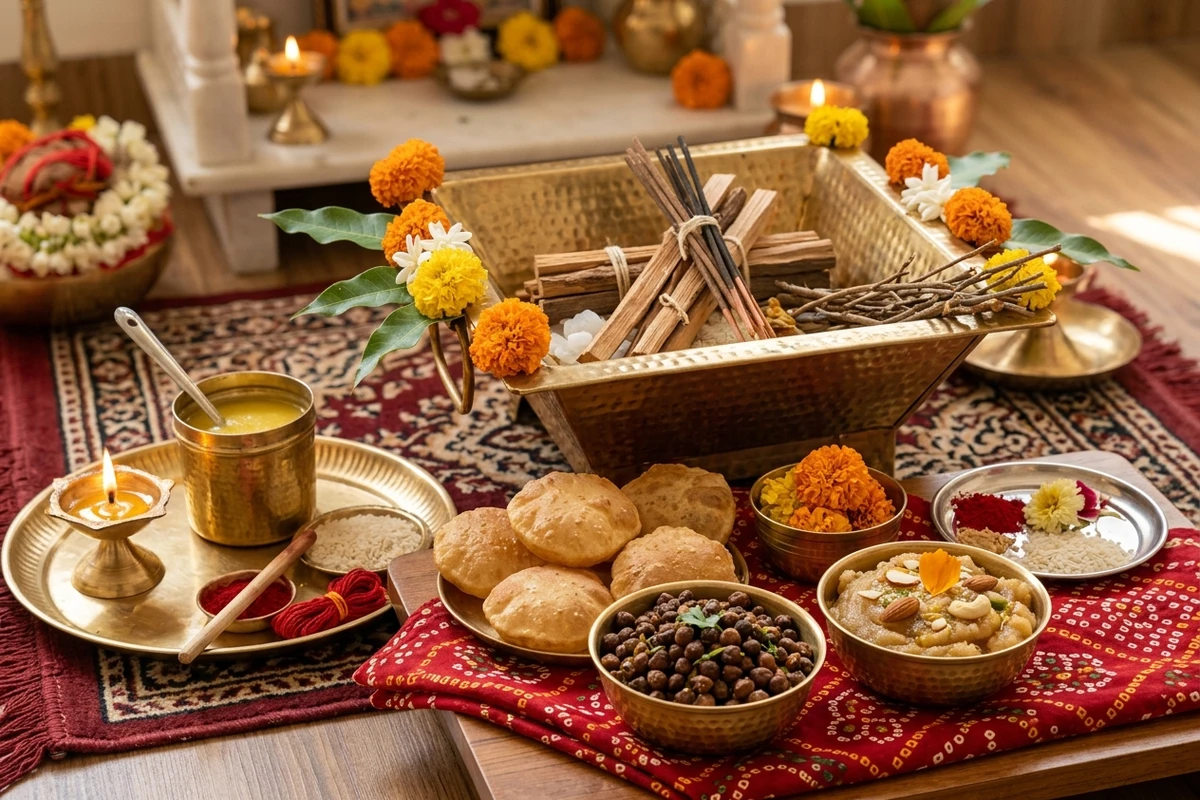
- Brass hawan kund, dry mango wood twigs (samidha), dry coconut halves (gola), and organic hawan samagri mixture.
- Pure cow ghee and a brass ghee spoon for offering oblations into the sacred fire.
- Pure bhimseni camphor tablets and cotton wicks for deep aarti.
- Prasad ingredients: black chickpeas (kala chana), coarse semolina (sooji), whole wheat flour, sugar, and ghee for halwa, puri, and chana.
- Gifts for Kanya Pujan: red chunris, small fruit baskets, steel or brass utensils, bangles, and dakshina coins.
Organizing your roli, chandan, akshat, and flowers neatly on a polished brass plate from the pooja thali collection keeps your mandir orderly. For families conducting hawan in apartments where smoke must remain gentle, lighting convenient Hawan Agnisamidha Sambrani Dhoop Cups (Pack of 3) provides the aromatic fragrance of traditional wood herbs in a compact, controlled form.
Step-by-Step Maha Navami Puja Vidhi for Home Worship
Follow these structured steps to perform your home puja with devotion, calmness, and Vedic discipline.
Step 1: Morning Cleansing and Sankalpa
Wake up early before sunrise during Brahma Muhurat. Clean the puja room and take a ritual bath using clean water mixed with a few sacred drops of Ganga jal. Dress in clean traditional garments, preferably yellow, orange, or red, which reflect the joyous spirit of Navratri. Sit facing East on a clean woolen or cotton mat.
Take a small quantity of water in your right hand, add a grain of akshat and a flower petal, and recite your Sankalpa. State your name, gotra, place, and the solemn vow to conduct the Maha Navami puja and Kanya Pujan for the pleasure of Goddess Durga and the spiritual upliftment of your family. Release the water into a small copper vessel.
Step 2: Altar Purification and Shodashopachara Puja
Light a steady ghee lamp selected from the diya collection to establish a calm presence on your altar. Sprinkle clean water over the idols and ritual items while chanting the pavitra mantra: Om Apavitrah Pavitro Va Sarvavastham Gato Pi Va. Offer sandalwood paste, kumkum, and unbroken akshat to Lord Ganesha first, seeking freedom from obstacles.
Proceed with the sixteen-step Shodashopachara puja for Maa Siddhidatri. Offer fragrant red hibiscus flowers, bilva leaves, fresh fruits, and lighting from aromatic Kalp Gugal Dhoop Cups to purify the room atmosphere. Chant the invocation mantra: Om Devi Siddhidatryai Namah with focused attention.
Step 3: Performing the Navami Hawan
Hawan on Maha Navami marks the formal conclusion of the nine-day Navratri worship. Place the hawan kund in a safe, well-ventilated location in your home or courtyard. Arrange dried mango wood sticks inside the kund and ignite them using camphor tablets without synthetic fuel.
Prepare a mixture of pure ghee, hawan samagri, black sesame seeds, barley, and jaggery. Many families utilize a comprehensive supply like the Cow Dung Cakes, Sambrani Dhoop Cups, Bhimseni Camphor & Kasturi Dhoop Sticks Combo Pack of 4 to ensure pure natural fire fuel. Offer oblations to Lord Ganesha, the Navagrahas, and each of the nine forms of Goddess Durga with the sacred utterance Svaha.
Conclude the hawan with the Purnahuti (final offering). Place a dry coconut half filled with ghee, betel leaf, clove, and coin into the sacred fire while chanting the Purnahuti mantra: Om Purnamadah Purnamidam Purnat Purnamudachyate. Bow before the fire and accept the divine blessings of peace and purity.
Step 4: Kanya Pujan (Kumari Puja) Vidhi
Kanya Pujan is the emotional and devotional pinnacle of Maha Navami. According to sacred tradition, nine young girls between the ages of two and ten are invited to the home, representing the nine manifestations of Maa Durga: Kumarika, Trimurti, Kalyani, Rohini, Kalika, Chandika, Shambhavi, Durga, and Bhadra. Along with the girls, one young boy is traditionally invited to represent Batuk Bhairava, the protective guardian.
Conduct the Kanya Pujan following these sequential customs:
- Wash the feet of each child gently with warm water in a brass thali and dry them with a soft, clean towel.
- Seat the children comfortably in a row on a clean cloth carpet or individual aasans.
- Apply auspicious roli, chandan, and akshat on their foreheads, and tie sacred mouli thread on their right wrists.
- Place a small red chunri over their shoulders as a mark of divine honor.
- Serve the traditional satvik prasad of warm pooris, dry kala chana, and semolina halwa with love and respect.
- Offer practical gifts, stationery, or traditional utensils alongside a dakshina coin.
- Touch the feet of each child to seek their blessings, asking for health, wisdom, and inner peace for your household.
Ayudha Puja and Regional Customs
In Karnataka, Tamil Nadu, Andhra Pradesh, and Kerala, Maha Navami is celebrated as Ayudha Puja or Astra Puja. Devotees clean and decorate their tools of livelihood, including books, musical instruments, vehicles, machinery, and writing pens. Artisans and professionals place their instruments before the deity, offering flowers and sandalwood paste to acknowledge that all creative skill and productivity originate from divine energy.
In Bengal and eastern India, Maha Navami is celebrated with Nabami Bhog, Sandhi Puja conclusions, and vibrant community prayers. Devotees offer special pushpanjali in pandals and share bhog with relatives and neighbors. Regardless of regional differences in cuisine or rituals, the universal sentiment of Maha Navami remains one of boundless gratitude, devotion, and community harmony.
Frequently Asked Questions About Maha Navami Puja Vidhi
What should you do if nine girls are not available for Kanya Pujan?
If inviting nine young girls is not possible due to modern schedules or space, scriptures state that worshipping even two, three, or five girls with pure intention is fully acceptable. If no young girls are available in your neighborhood, you can prepare the prasad, offer it on your home altar to Goddess Durga, and send the prasad along with gifts and dakshina to a nearby girls school, orphanage, or temple.
When should Navratri fasting be broken on Maha Navami?
Fasting rules vary by family tradition. Devotees who complete Kanya Pujan on Ashtami break their fast on Navami morning after morning prayers. Those who perform Kanya Pujan on Navami break their fast immediately after the hawan, Kumari puja, and distribution of prasad in the afternoon. Satvik meals without onion, garlic, or heavy spices are eaten to ease digestion.
Can hawan be performed at home in an apartment?
Yes. Use a compact brass or copper hawan kund with small pieces of clean mango wood and camphor. Keep windows open for smooth air circulation. Alternatively, using herbal sambrani hawan cups allows you to conduct the sacred fire prayers with minimal smoke while maintaining complete ritual authenticity.
What is the significance of offering kala chana and halwa puri as prasad?
The combination of kala chana, halwa, and puri represents the balance of satvik nutrients after days of disciplined fasting. The simple preparation without onion or garlic honours the purity of the ritual. Offering nutritious food to children is considered the most direct form of honoring the life-affirming power of Goddess Durga.