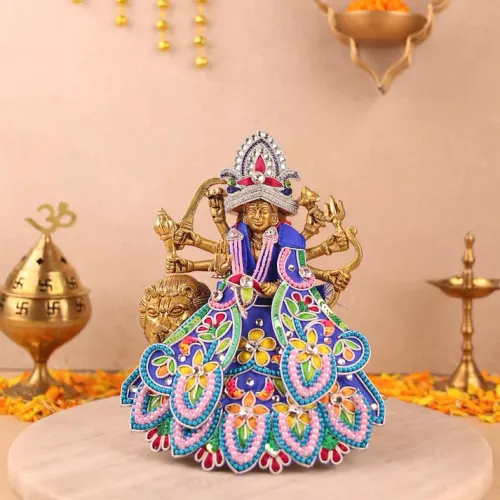

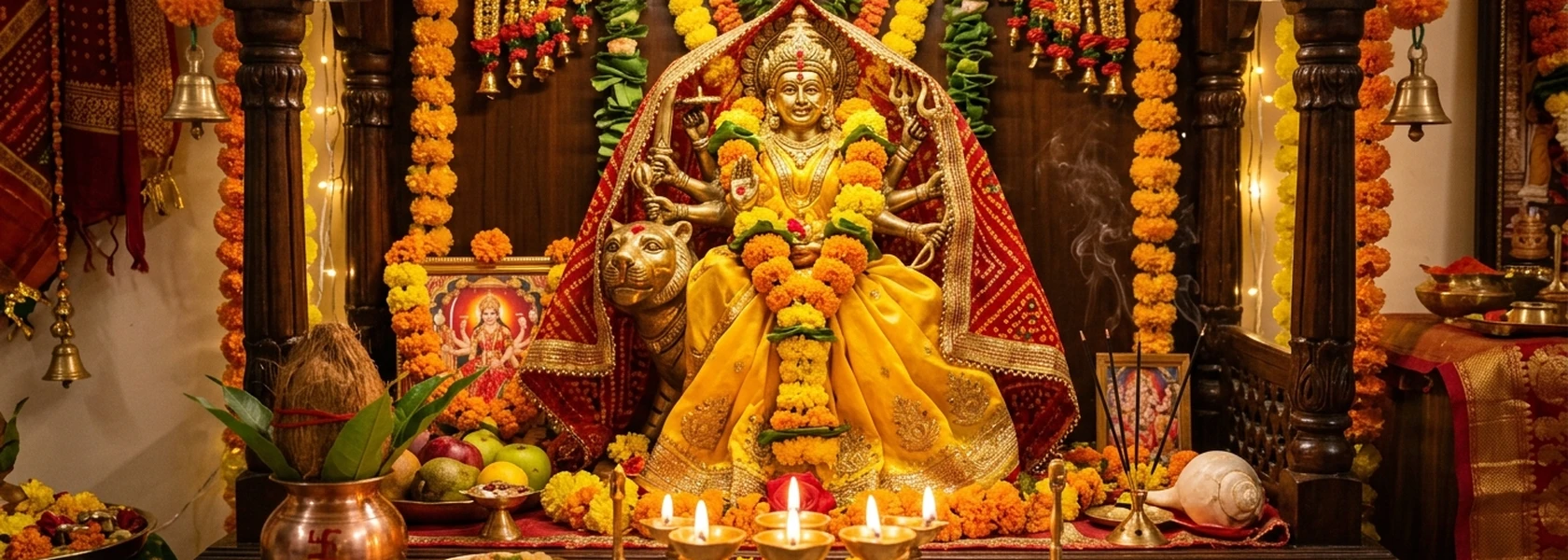
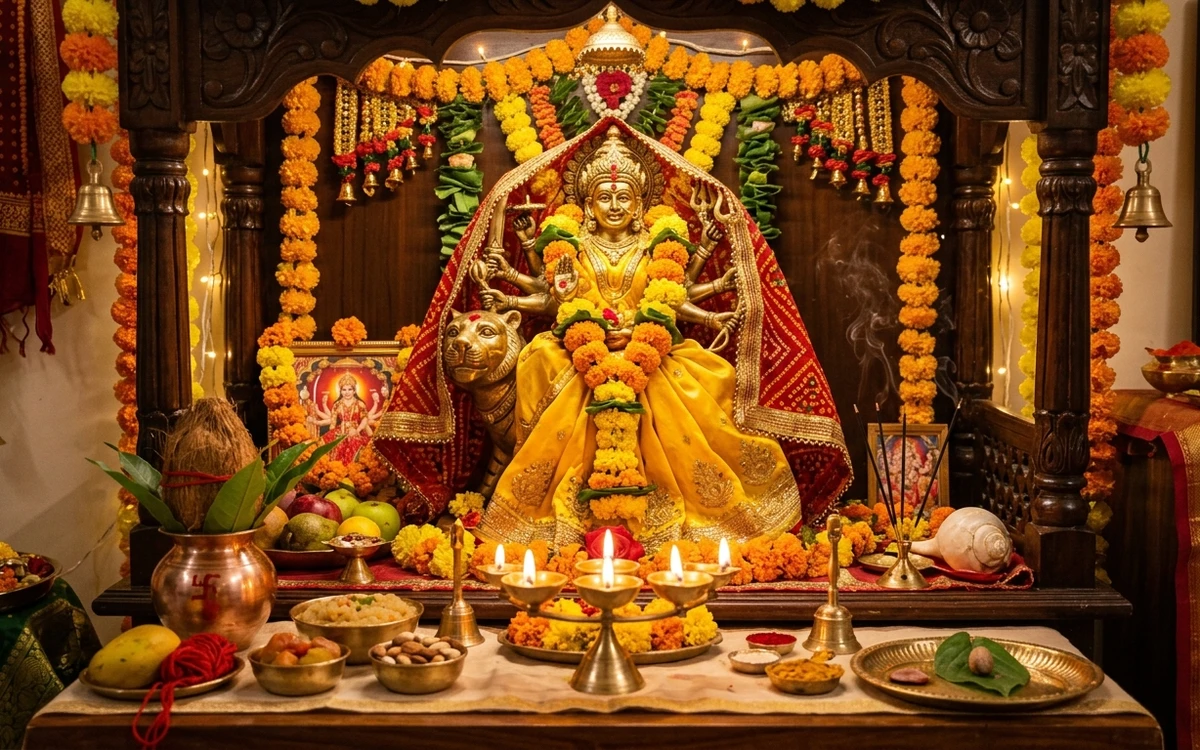
Dressing your home deity during Sharad Navratri brings deep devotional discipline to your daily puja. Devotees often ask about the right Navratri Mata Rani poshak colours for each morning of the festival. When you select each dress according to the specific swaroop of Goddess Durga worshipped that day, your altar reflects scriptural authenticity.
This guide walks you through the daily vastra traditions for all nine days of Navratri. You will find specific details on traditional fabrics, deity idol sizing, and ritual vastra offering procedures. Preparing your mandir with sacred garments from the Mata Rani Dress collection allows your family to observe every tithi with reverence and order.
Navratri Mata Rani Poshak Colours for All Nine Days
Every day of Navratri honors a distinct manifestation of the Goddess. The traditional colours assigned to each tithi align with the qualities of each manifestation described in the Devi Mahatmya and classical stotras.
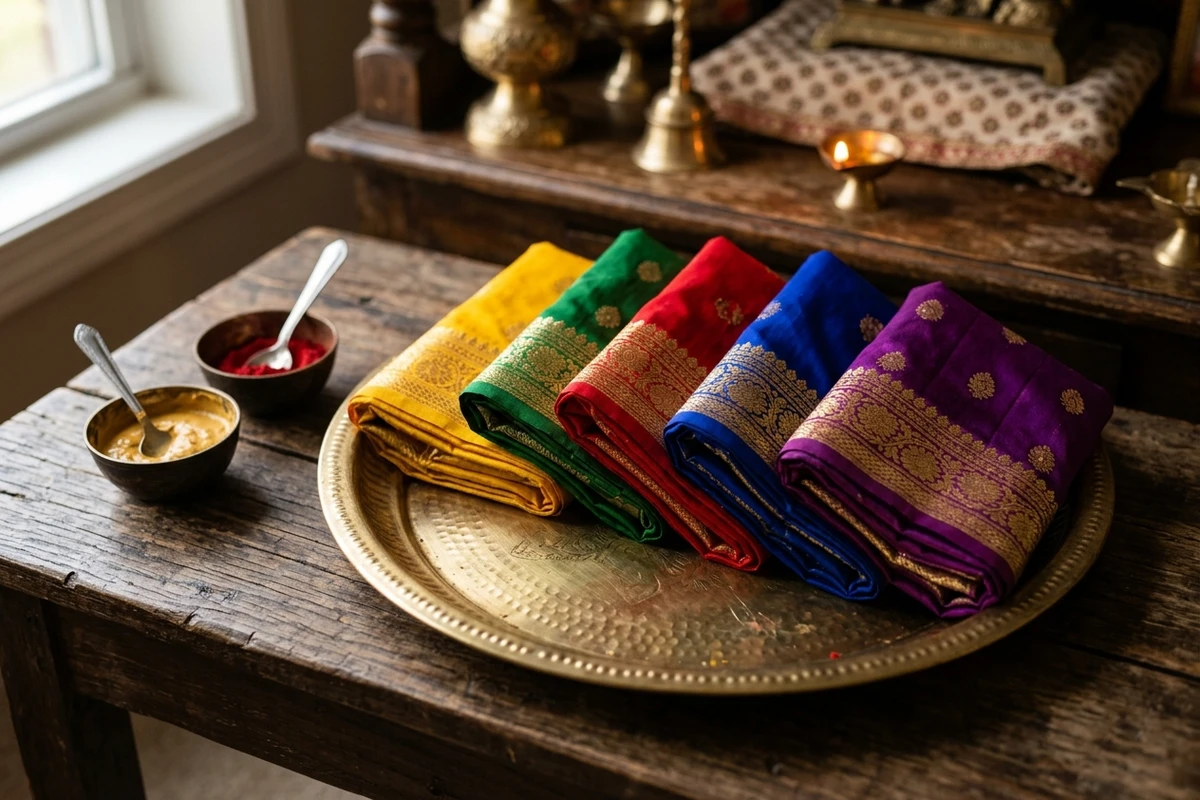
Day 1: Peeta (Yellow) for Maa Shailaputri
The first day of Navratri marks the arrival of Maa Shailaputri, the daughter of the Himalayas. Yellow represents warmth, dawn, and stable beginnings. Dressing the idol in a bright peeta vastra sets a serene tone for the Ghatasthapana rituals.
For small brass idols measuring between two and eight inches, a lightweight cotton option like the Kesari Bandhani Mata Rani Cotton Dress Set drapes cleanly without masking the form of the deity. The yellow Bandhani print complements freshly ground chandan paste applied during the morning sthapana.
Day 2: Harita (Green) for Maa Brahmacharini
On Dwitiya, devotees worship Maa Brahmacharini, who undertook intense tapasya in the forest. Her devotion reflects endurance and spiritual renewal, symbolized by forest green.
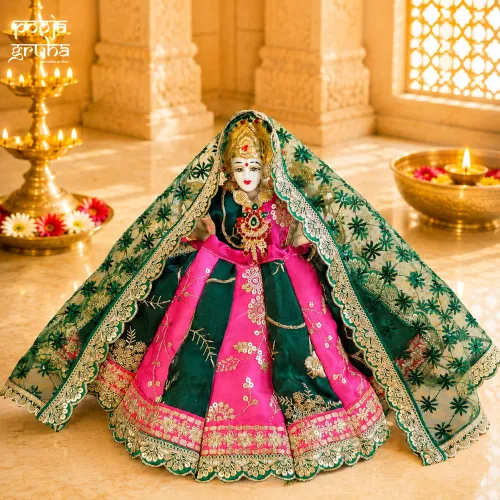
Choose deep green silk or cotton vastra on this day. The Divya Raas Green Lehenga Patka provides an authentic traditional drape. It includes tailored borders that sit neatly around stone or brass murtis during the extended recitation of the Brahmacharini stotra.
Day 3: Dhusara (Grey or Silver) for Maa Chandraghanta
Tritiya honors Maa Chandraghanta, who wears a crescent moon on her forehead and rides a tiger. Her energy is alert and protective. Ancient temple traditions suggest offering grey, ash, or silver-toned fabrics on this tithi.
If silver brocade is unavailable in your home temple, you can offer a muted stone-grey poshak accented with silver gota work. Ensure the vastra includes a dedicated patka so the waistband remains secure when you offer the morning panchamrit naivedya.
Day 4: Narangi (Orange) for Maa Kushmanda
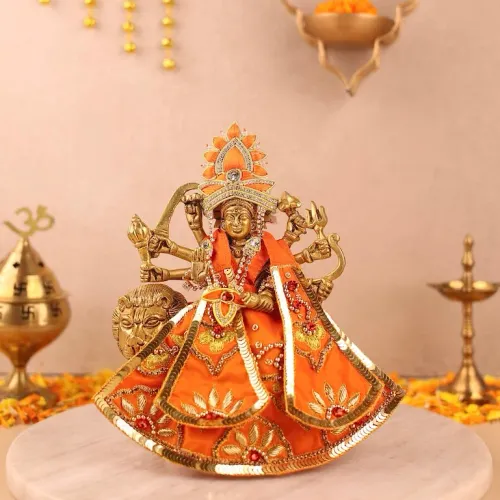
Maa Kushmanda created the cosmic universe with her radiant smile. Her dwelling place resides within the solar sphere, making radiant orange the prescribed colour for Chaturthi.
An orange lehenga set with golden borders mirrors the brilliance of the sun. Avoid synthetic fabrics with stiff plastic lining. Pure cotton or raw silk allows the idol to remain stable on the puja chowki without slipping.
Day 5: Shweta (White) for Maa Skandamata
Panchami belongs to Maa Skandamata, holding infant Lord Kartikeya on her lap. White signifies motherly protection and complete purity.
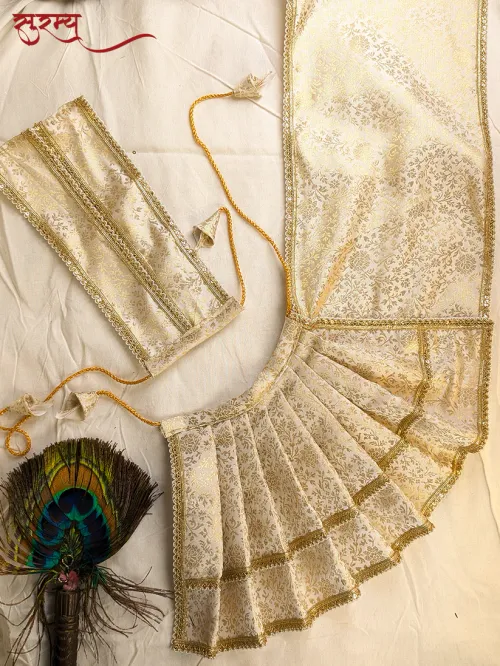
Dress Mata Rani in pristine white cotton or silver-bordered white silk. Pair the dress with fresh white jasmine flowers and a soft chandan tilak. Devotees who keep fasting on Panchami find that the simple white vastra creates a peaceful atmosphere during evening aarti.
Day 6: Rakta (Red) for Maa Katyayani
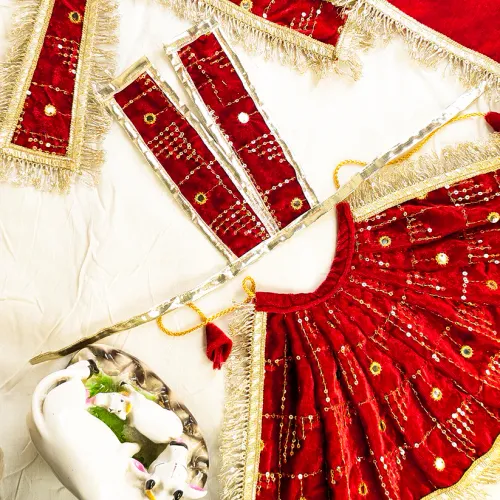
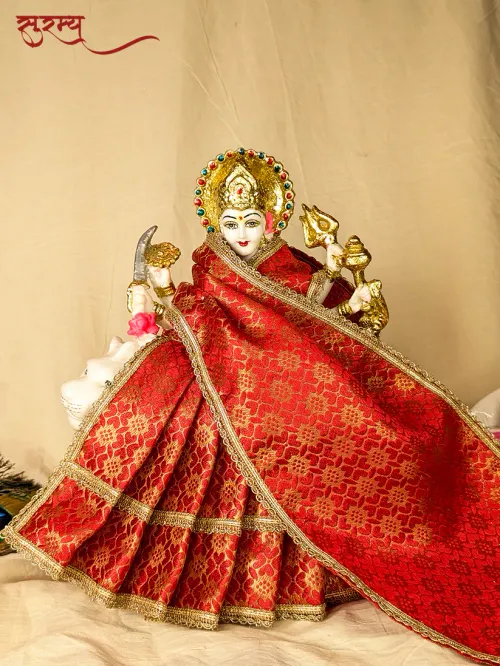
Shashti celebrates Maa Katyayani, the warrior goddess who destroyed Mahishasura. Red is the supreme colour of Shakti, auspiciousness, and spiritual power.
Offer a vibrant crimson or vermilion poshak adorned with traditional gota patti borders. Ensure the chunri drapes gently over the shoulders rather than crowding the hands of the idol, keeping her sacred weapons visible during the archana.
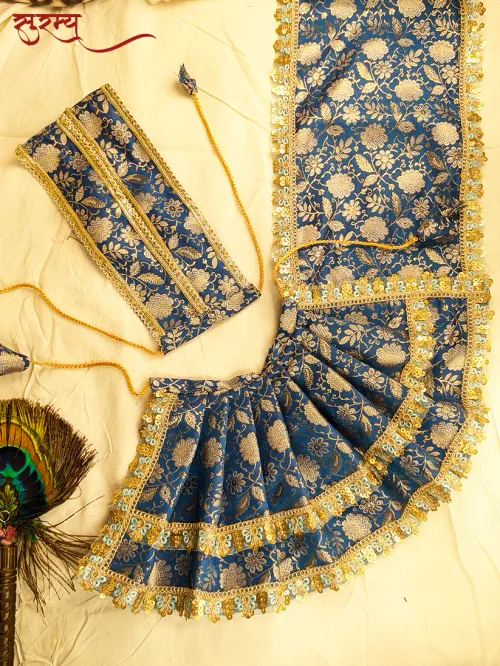
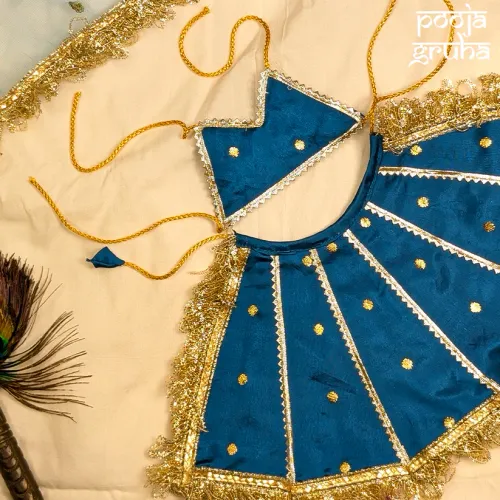
Day 7: Neela (Royal Blue) for Maa Kalaratri
Saptami marks the worship of Maa Kalaratri, the fierce night form who dispels fear and ignorance. Royal blue reflects the vast expanse of the midnight sky.
The Neel Pushpa Blue Silk Brocade Saree offers the ideal shade of deep royal blue for Saptami night. Its woven brocade motifs catch the lamplight during the midnight Nisha Puja, while the soft silk base rests flat against the idol pedestal.
Day 8: Gulabi (Pink) for Maa Mahagauri
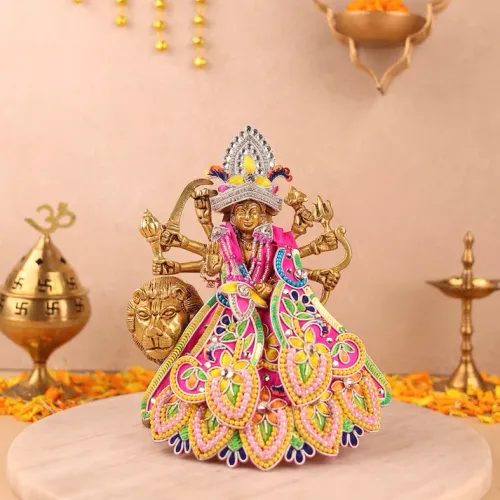
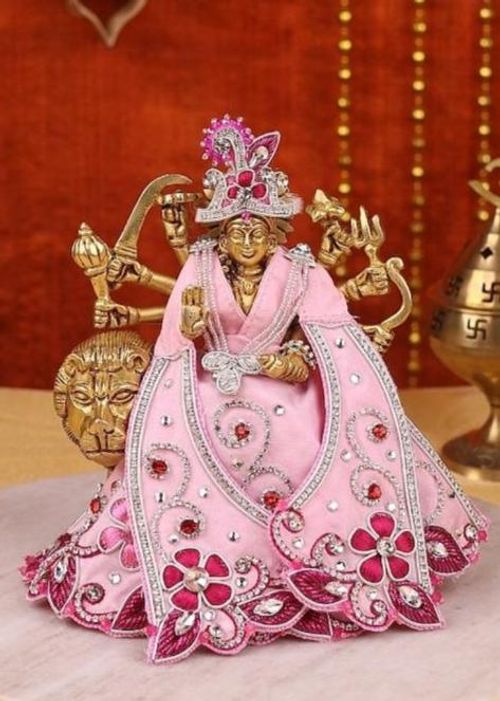
Durga Ashtami celebrates Maa Mahagauri, the compassionate mother who grants peace and fulfills prayers. Soft pink and rani tones honor her gentle presence.
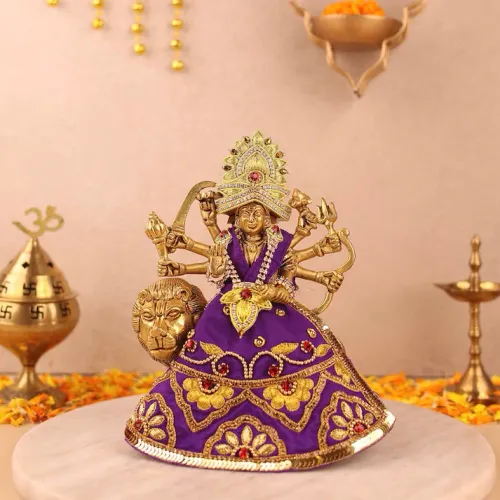
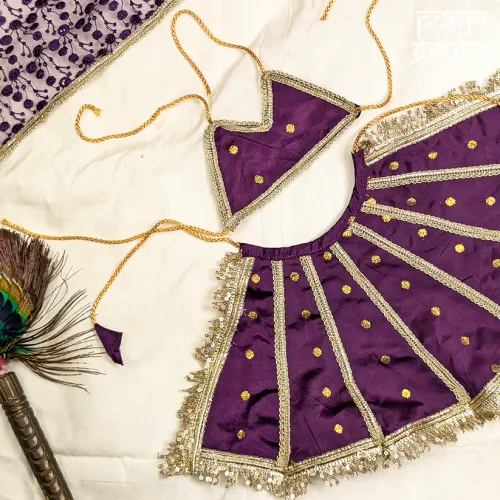
For large idols between ten and twenty-four inches, the Rajlaxmi Royal Purple Silk Navratri Dress or the Indradhanu Magenta Lehenga Patka creates a magnificent appearance during Kanya Pujan rituals. The natural fall of silk ensures the lehenga stays in place when young girls enter the home for the sacred feast.
Day 9: Baingani (Purple) for Maa Siddhidatri
Maha Navami culminates with Maa Siddhidatri, the giver of all spiritual siddhis and accomplishments. Deep purple and peacock hues symbolize spiritual completion and cosmic royalty.
A rich purple silk poshak with detailed zari embroidery crowns the completion of your Navratri anushthan. Offering this dress before the final Havan brings the nine days of worship to a reverent close.
Fabric Selection and Idol Sizing Guidelines
Selecting the right poshak requires checking the physical specifications of your home murti. Follow these exact guidelines when preparing your altar.
- Measure your idol from the top of the crown to the base of the lotus pedestal using a flexible tailor tape. For lehenga sets, measure from the waist to the lotus feet. A poshak that is too long will bunch up on the puja chowki, while an undersized dress leaves the sacred vigraha exposed.
- Avoid synthetic polyesters stiffened with heavy paper bukram. Stiff linings push small idols forward and can tip brass murtis over when incense blows nearby. Handcrafted silk, tussar, and pure cotton provide a natural drape that conforms smoothly to the contours of the deity.
- A traditional poshak offering must consist of three distinct pieces: the lehenga, the koti or blouse piece, and the sacred chunri. For Devi idols with distinct arms, the patka secures the waistline without covering the abhaya mudra.
Essential Navratri Puja Preparation Checklist
- Nine clean poshak sets washed or dry-cleaned, organized by daily colour
- Dedicated wooden chowki draped with fresh red altar cloth
- Two sets of silk chunris for sudden morning replacement
- Cotton rolls, gangajal, and soft muslin cloths for daily snan rituals
- Natural chandan paste, pure kumkum, and fragrant ashtagandha
- Silver or brass safety pins with rounded edges to secure loose folds
- Fresh floral malas sized specifically for your home idol dimensions
Step-by-Step Vastra Offering Ritual (Vastra Arpan Vidhi)
- Clean the puja altar with gangajal and light an authentic cow ghee diya.
- Perform the ritual snan of the brass or panchadhatu vigraha using clean warm water and gangajal. For clay or marble idols, perform symbolic snan by sprinkling water with a fresh mango leaf.
- Gently dry the sacred murti with a dedicated unbleached cotton towel.
- Apply chandan and kumkum tilak on the forehead and feet of the deity.
- Offer the inner vastra or koti first, fastening the back ties gently.
- Wrap the lehenga around the waist, smoothing the pleats outward along the pedestal.
- Drape the chunri over the head or across the left shoulder, ensuring the face remains unobscured.
- Chant the traditional vastra mantra: Om Sarvabhushana Bhushite Divyavastra Samanvite, Grihana Vastra Devi Tvam Mayabhaktya Niveditam.
- Offer fresh flowers and begin the daily stotra recitation.
Frequently Asked Questions
Can I dress Mata Rani in the same colour dress twice during Navratri?
Yes. If you do not have all nine distinct colours, red and yellow remain universally auspicious on any day of Navratri. Red honors Goddess Durga across all traditions, while yellow remains suitable for all morning prayers.
What should I do with previous years' Navratri poshaks?
You can store gently used poshaks in a dry, clean cotton pouch for daily worship throughout the year. If a poshak is worn out or torn, immerse it reverently in flowing river water or place it under the roots of a sacred peepal tree. Never dispose of deity clothing in regular household waste.
How do I choose the correct poshak size for a marble idol?
Measure the distance from the idol waist to the pedestal base. For marble murtis, choose one size larger than the exact measurement because marble statues typically have wider bases and deeper pedestals than brass vigrahas.
Can I offer black or brown vastra to Goddess Durga?
Traditional Sanatana Dharma puja vidhi strictly prohibits black, dark brown, and dull murky shades in Devi worship. Stick strictly to vibrant sattvic and rajasic tones like red, yellow, green, orange, white, and royal blue.