

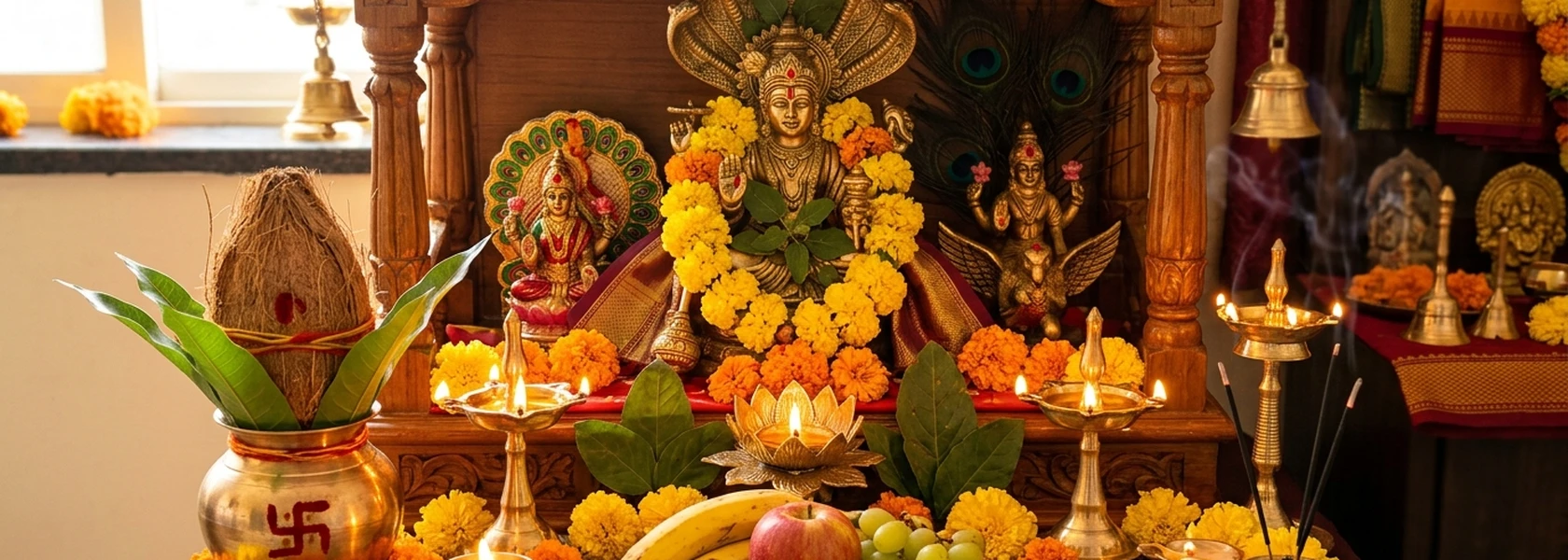
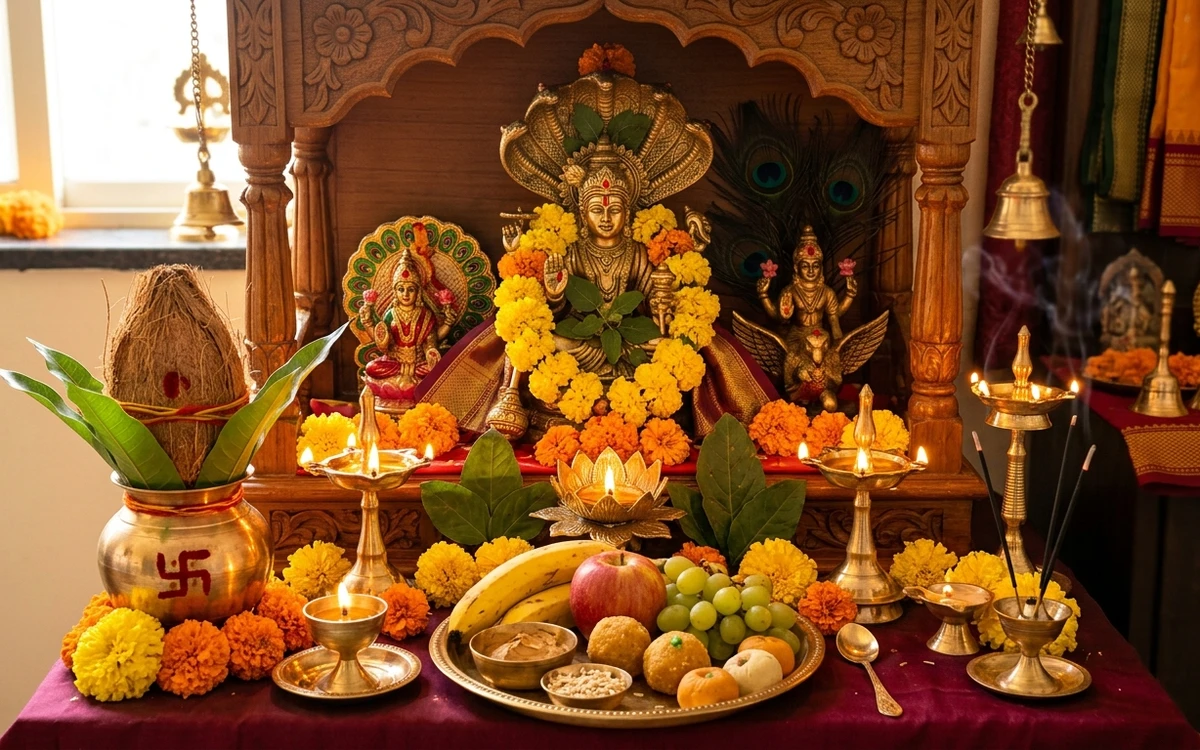
Papankusha Ekadashi falls on the eleventh lunar day of Shukla paksha in the month of Ashvina. Dedicated to Lord Vishnu, especially in his Padmanabha form, this sacred fast helps devotees direct their mind toward spiritual discipline and devotion. In 2026, the Vedic Panchang marks Papankusha Ekadashi on Thursday, October 22, under the Shatabhisha nakshatra. Following the traditional papankusha ekadashi puja vidhi helps households observe the fast with authenticity, sincerity, and peace.
The Sanskrit word Ankusha refers to the goad used by a mahout to guide an elephant. In the context of this vrata, it represents spiritual self-restraint. The ritual fast serves as an instrument to curb negative tendencies of mind, speech, and action. Devotees observe silence, practice charity, and meditate upon the divine lotus feet of Shri Hari. Preparing your household altar with care ensures you carry out each morning and evening prayer without distraction.
Spiritual Significance of Papankusha Ekadashi
The narrative of Papankusha Ekadashi appears in the Brahmavaivarta Purana during a dialogue between Lord Krishna and King Yudhishthira. Krishna explained that whoever seeks freedom from previous shortcomings and desires inner purification should fast on Ashvina Shukla Ekadashi. The observance cleanses mental clutter, encourages honest self-reflection, and grants spiritual clarity to the practitioner.
Scriptures praise Lord Padmanabha, the cosmic form of Vishnu from whose navel the lotus flower bloomed. Worshiping this deity on Papankusha Ekadashi invokes divine grace for the entire family. Devotees combine fasting with quiet japa, reading sacred texts, and performing selfless service. Even those who cannot maintain a strict waterless fast observe phalahar by consuming only fruits, milk, and water.
Ancient texts also commend generous dana (charity) on the following day of Dwadashi. Devotees offer grains, umbrellas, warm clothing, and drinking water vessels to seekers and cows. This custom balances fasting with social welfare, reminding devotees that spiritual discipline must always express itself in compassion toward others.
Panchang Timings and Muhurat for Papankusha Ekadashi 2026
Vedic traditions determine Ekadashi based on the Udaya Tithi, the lunar tithi prevailing at sunrise. Here are the panchang coordinates calculated for New Delhi for October 22, 2026.
| Panchang Attribute | Details for October 22, 2026 |
| Date and Day | October 22, 2026 (Guruwara / Thursday) |
| Tithi | Ekadashi (ends at 02:48 PM, then Dwadashi begins) |
| Paksha and Month | Shukla Paksha, Ashvina Month |
| Sunrise (New Delhi) | 06:26 AM |
| Sunset (New Delhi) | 05:45 PM |
| Nakshatra | Shatabhisha (ends at 08:49 PM) |
| Yoga | Vriddhi (ends at 11:39 PM) |
| Abhijit Muhurat | 11:42 AM to 12:28 PM |
| Morning Shubh Choghadiya | 06:26 AM to 07:50 AM |
| Afternoon Labh Choghadiya | 12:05 PM to 01:30 PM |
| Afternoon Amrit Choghadiya | 01:30 PM to 02:48 PM |
| Rahu Kalam (Avoid for new starts) | 01:30 PM to 02:55 PM |
| Dwadashi Parana Window (Oct 23) | 06:27 AM to 02:36 PM (After Sunrise on Oct 23) |
Because Ekadashi tithi is present at sunrise on October 22, devotees observe the fast throughout Thursday. The fast concludes on Dwadashi morning, Friday, October 23, 2026. Parana should take place after sunrise at 06:27 AM and before Dwadashi tithi ends at 02:36 PM. Devotees outside Delhi should consult local sunrise calculations for exact minute-level adjustments.
Essential Samagri for Papankusha Ekadashi Puja Vidhi
Arranging all required articles beforehand keeps your focus entirely on worship during the sacred morning hours. Families who prefer pre-assembled items can rely on complete pooja kits to secure pure essentials without having to hunt through multiple local shops.
- A clean wooden chowki (bajot) covered with fresh yellow silk or cotton fabric.
- Idol or picture frame of Lord Vishnu, Laddu Gopal, or a sacred Shaligram shila.
- Fresh yellow flowers, particularly marigold and yellow chrysanthemums.
- Fresh tulsi leaves and manjaris, plucked carefully on Dashami day before sunset.
- Pure cow ghee and cotton wicks for lighting morning and evening oil lamps.
- Panchamrit ingredients: raw cow milk, fresh curd, ghee, honey, and jaggery or sugar candy.
- Pure chandan (sandalwood paste), kumkum, turmeric powder, and unbroken raw akshat rice.
- Ganga jal stored in a clean copper or brass vessel for sprinkling and achamana.
- Seasonal fruits such as bananas, apples, and pomegranates along with soaked dry fruits.
- Natural dhoop sticks and camphor tablets for deep aradhana and concluding aarti.
When laying out your altar, a dedicated brass plate from the pooja thali collection helps keep roli, chandan, akshat, and bells orderly. Lighting premium natural incense like Sri Sri Chandan Dhoop Sticks creates a soothing sandalwood scent in the prayer room, helping the mind settle into meditation.
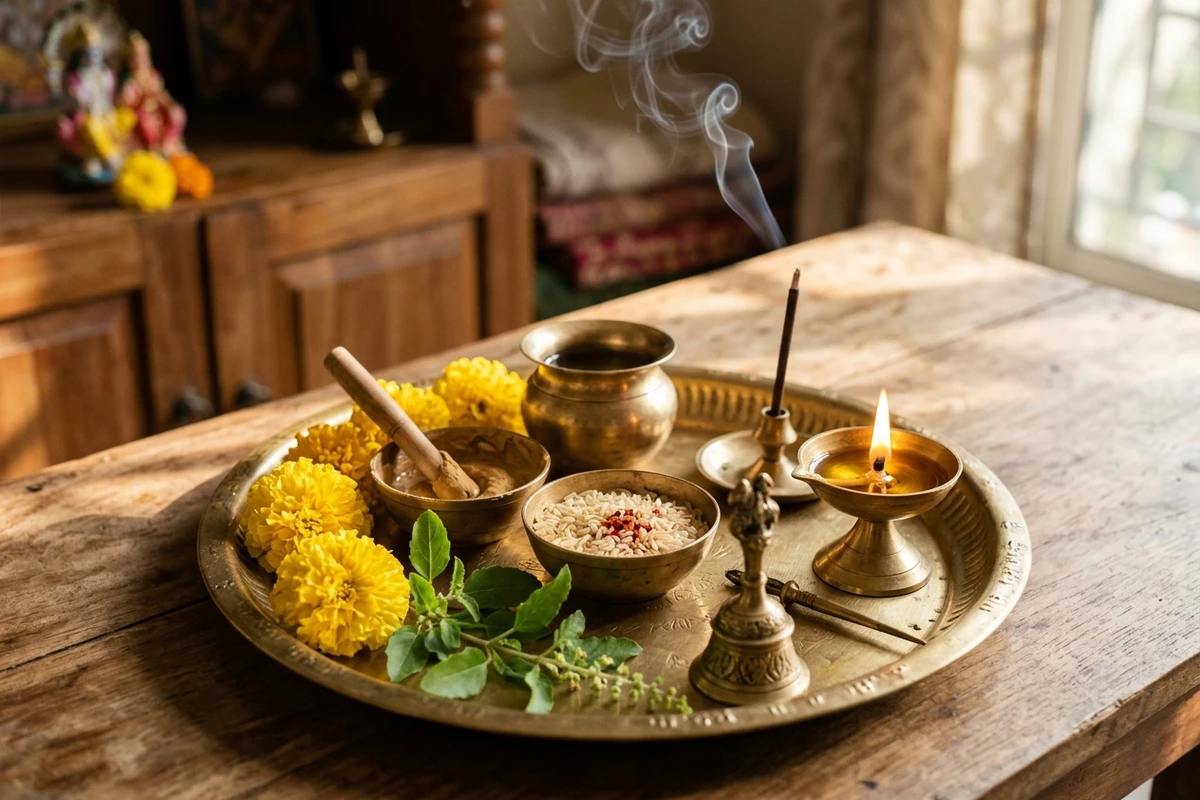
Step-by-Step Papankusha Ekadashi Puja Vidhi for Home Worship
Performing the puja with sincerity matters far more than elaborate grandeur. Follow these five sequential steps to carry out the vidhi in your home.
Step 1: Morning Cleansing and Sankalpa
Wake up during Brahma muhurat, at least an hour before sunrise. Bathe with clean water and add a few drops of sacred Ganga jal. Wear clean, unstitched or freshly washed clothes. Devotees traditionally wear yellow garments on Ekadashi as yellow represents the pitambara robes of Lord Vishnu.
Sit facing East or North on a clean woollen or kusha mat. Take water in your right palm from a brass spoon, add a grain of akshat and a small flower petal, and recite the Sankalpa: Mama sarva papa kshaya purvaka, Shri Padmanabha preeti kamarthe, Papankusha Ekadashi vratam aham karishye. This pledge affirms your resolve to spend the day in prayer, truthfulness, and mental calmness.
Step 2: Altar Setup and Lighting the Sacred Lamp
Wipe the wooden chowki thoroughly and spread a fresh yellow cloth over it. Place your idol of Shri Vishnu or picture of Lord Padmanabha in the centre. Set up brass oil lamps, such as the 4 Pc Brass Lotus Diya Oil Lamp Set, on either side of the deity to cast a steady golden flame over the altar.
Fill the lamps with pure cow ghee or sesame oil and insert clean cotton wicks. Light the lamps with devotion while reciting the Deepa Jyoti mantra: Deepam jyoti parabrahma deepam sarvatamopaham. The flame represents inner wakefulness, dispelling darkness and ignorance from the home.
Step 3: Shodashopachara Worship and Tulsi Archana
Perform the panchamrit snan for metallic idols by offering milk, curd, honey, sugar, and ghee in succession, followed by pure warm water. Dry the idol gently with a clean soft cloth. If worshiping a picture frame, offer symbolic drops of water with a flower petal.
Apply chandan paste to the forehead of the deity and offer raw akshat. Drape a yellow vastra or decorative poshak around the deity. Place fresh yellow marigold flowers at the feet of the Lord. Now offer tulsi leaves with reverence. Lord Vishnu does not accept any offering without tulsi on Ekadashi. Note that one must never pluck tulsi leaves on Ekadashi itself; gather them on Dashami afternoon or use naturally fallen leaves.
Step 4: Japa, Vrat Katha, and Evening Sandhya Aarti
Sit quietly and chant the sacred twelve-syllable mantra: Om Namo Bhagavate Vasudevaya using a tulsi japa mala. Complete at least one round (108 repetitions), or several rounds if time permits. Recite or listen to the Papankusha Ekadashi Vrat Katha with family members, reflecting on its moral teachings of patience and humility.
Offer naivedya consisting of seasonal fruits, soaked almonds, makhana kheer sweetened with rock sugar, and fresh coconut slices. As dusk settles, light earthen or brass lamps from the diya collection around the tulsi vrindavan and entrance door. Wave camphor aarti before the altar and share prasad among family members.
Step 5: Dwadashi Parana (Completing the Fast)
The merit of Ekadashi relies heavily on completing Parana within the prescribed window on Dwadashi. On Friday, October 23, 2026, wake up before sunrise, complete morning ablutions, and perform a brief morning prayer to Lord Vishnu. Offer fresh water, light a ghee lamp, and seek forgiveness for any shortcomings during the fast.
Before eating, offer food or food grains to a needy person or feed grass to a cow. Break your fast between 06:27 AM and 02:36 PM by sipping charnamrit followed by a simple satvik meal. Avoid spicy, pungent, or heavy fried items immediately after the fast so your digestion resumes smoothly.
Fasting Guidelines and Diet Table for Ekadashi
Traditional guidelines distinguish clearly between satvik phalahar foods suitable for fasts and ingredients prohibited on Ekadashi. The table below outlines these meal considerations.
| Category | Allowed Foods (Phalahar) | Strictly Avoided Items |
| Grains and Cereals | Singhara flour, Kuttu flour, Rajgira, Samak rice | Wheat, white rice, barley, oats, corn, maida |
| Legumes and Pulses | None (all pulses avoided on Ekadashi) | Moong dal, chana dal, toor dal, urad dal, rajma, chole |
| Vegetables | Potatoes, sweet potatoes, colocasia (arbi), pumpkin | Onion, garlic, mushrooms, brinjal, leafy greens |
| Dairy | Fresh cow milk, homemade curd, pure cow ghee, paneer | Packaged items containing emulsifiers or non-veg rennet |
| Spices and Salts | Sendha namak (rock salt), black pepper, cumin seeds | Table sea salt, red chilli powder, mustard seeds, hing |
| Sweeteners and Beverages | Rock sugar (mishri), natural honey, pure coconut water | Refined cane sugar syrups with chemical whiteners |
Frequently Asked Questions About Papankusha Ekadashi
What should one do if complete fasting is not possible due to health reasons?
Sanatana Dharma prioritizes physical health and duty. Children, pregnant women, the elderly, and those taking medicines can observe phalahar by eating fruits, boiled potatoes with sendha namak, and drinking milk. The focus must remain on devotional remembrance and truthfulness rather than physical deprivation.
Why are rice and grains strictly avoided on Ekadashi?
The Hari Bhakti Vilasa and Vishnu Purana record that the subtle remnants of negative karma seek shelter in food grains on the eleventh lunar day. From an Ayurvedic perspective, grains absorb substantial water and slow down digestion during changing lunar tidal rhythms. Consuming lighter food keeps the nervous system alert for meditation.
Can tulsi leaves be picked on Ekadashi morning for the puja?
Scriptures strictly prohibit plucking tulsi leaves on Ekadashi, Sundays, and during twilight. Always collect tulsi leaves gently on Dashami afternoon or use clean, unbruised leaves that have naturally fallen on the soil near the plant base.
What is the significance of the name Papankusha?
Papa translates to negative actions or spiritual blemishes, while Ankusha means a guiding goad. The name denotes that this fast acts as a sharp goad to rein in unrestrained senses and guide the devotee toward righteous conduct and liberation.