

A familiar ritual unfolds in countless households every evening. After the aarti bell rings, a child eagerly extends both hands for a sweet: a piece of ladoo, a soft peda, or a spoon of semolina halwa. Before the sweet touches their tongue, an elder gently reminds them to pause, fold their hands, and say thank you.
That sweet is prasad. To a young child, it looks like an ordinary dessert. To parents and grandparents, it serves as a gentle daily lesson in reverence, gratitude, and acknowledging that life gifts come from a higher source.
The Meaning of Prasad Beyond Food
In Sanskrit, prasad translates to divine grace or favor. It represents food, fruit, or water that a devotee first presents before the deity with sincere love, which is then distributed as a sanctified blessing.
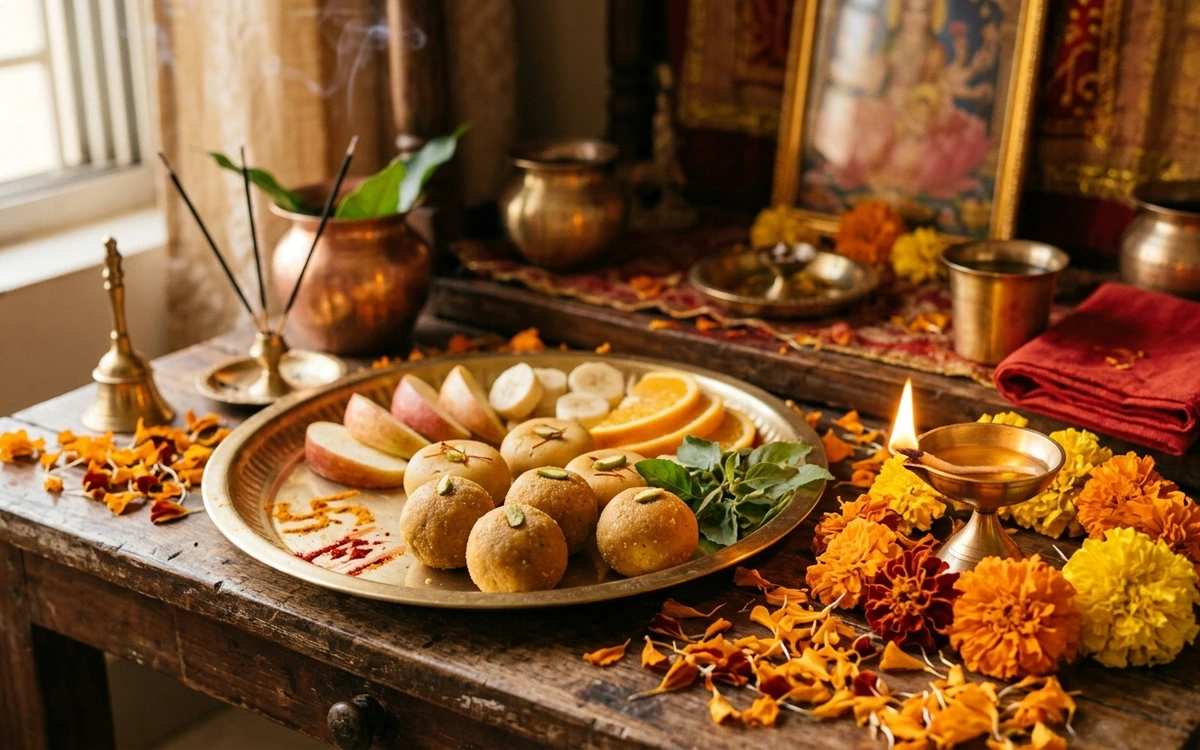
The ceremony does not suggest that the divine requires nourishment. Instead, presenting an offering is an exercise in surrender and thankfulness. Traditional offerings typically consist of pure, sattvic foods such as freshly prepared sweets, seasonal fruits, milk, or soaked grains. When children learn to place their offerings on a dedicated brass bhog thali, they understand that what we eat begins with gratitude rather than immediate gratification.
Pausing Before Receiving
Most children naturally approach food with immediate impulse. Prasad interrupts that impulse with an intentional pause.
Receiving prasad requires a child to extend both hands with palms cupped upward, bow slightly, and acknowledge the gift. Many families encourage children to recite a brief remembrance or thank Krishna before eating. That simple habit counters entitlement and cultivates mindfulness around daily meals. In an era filled with instant gratification and fast entertainment, this brief quiet moment teaches patient appreciation.
Devotional Stories That Bring Rituals to Life
Rituals without context can feel arbitrary to young minds, whereas stories provide meaning and emotional resonance. Bhakti traditions have long relied on storytelling to teach spiritual philosophy in accessible terms.
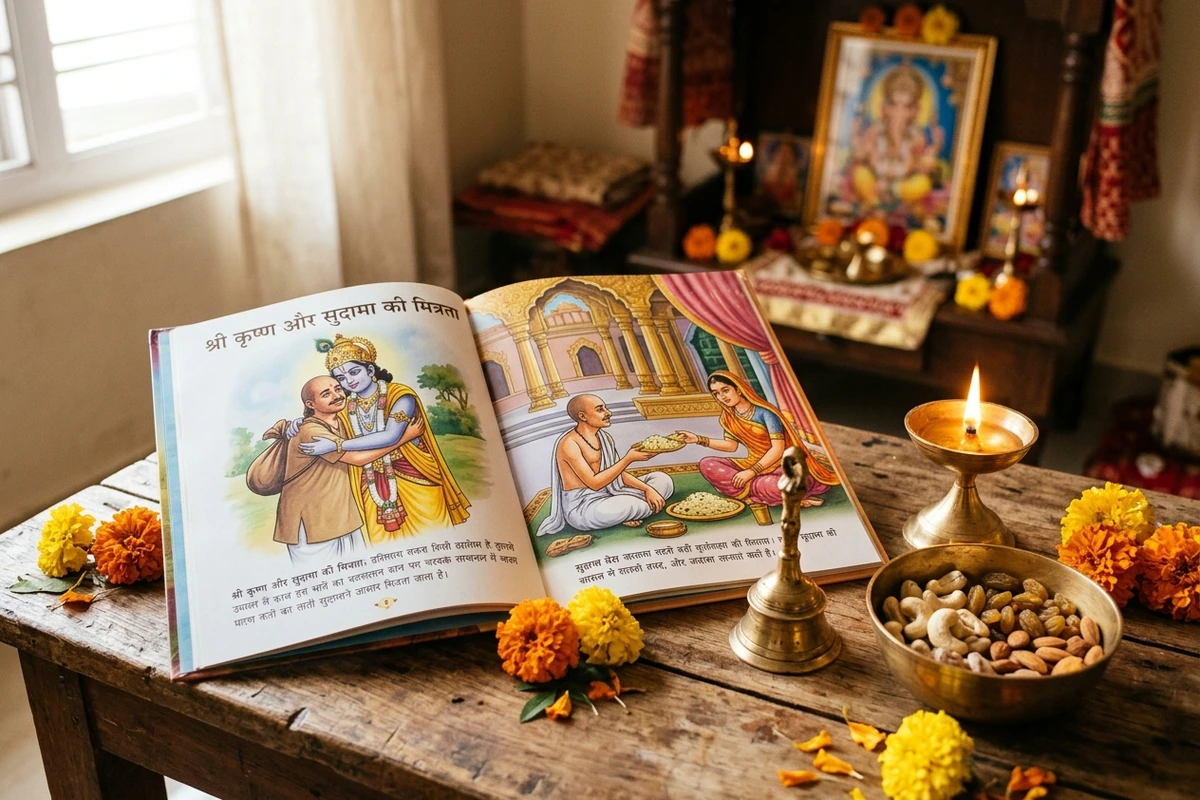
The story of Krishna and Sudama illustrates this principle clearly. Sudama visited his dear friend with only a modest pouch of beaten rice. Rather than judging the humble gift, Krishna accepted it with immense delight, honoring the genuine affection behind the offering. Children grasp the moral immediately: sincerity matters far more than material grandeur.
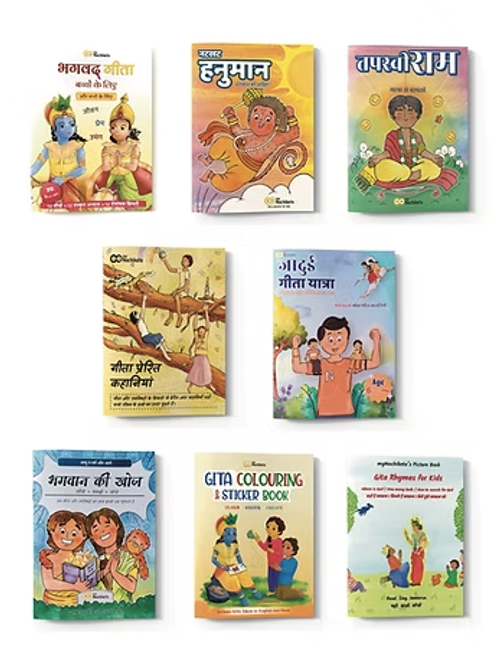
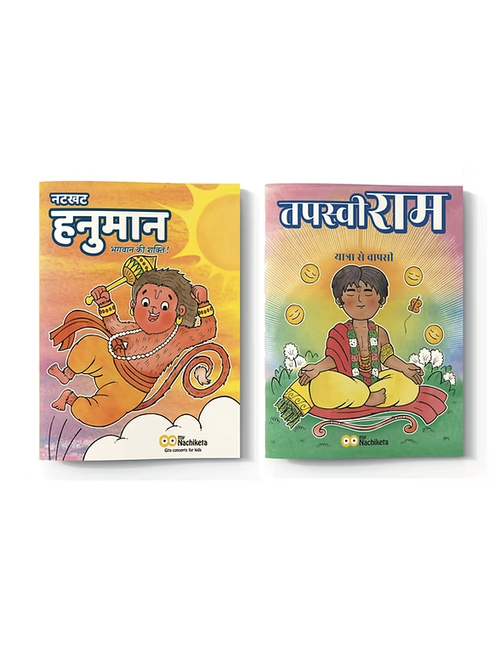
Sharing such narratives from illustrated devotional books during bedtime or evening prayer helps children connect abstract virtues with vivid, memorable characters. Parents can explore engaging volumes such as Gita spiritual stories that present timeless lessons through vibrant illustrations tailored for young readers.
The Habit of Sharing Blessings
In temple traditions and household worship alike, prasad is never consumed in isolation. Once offered, it is distributed among everyone present: family members, visitors, and neighbours.
This communal distribution conveys an essential truth: spiritual blessings are meant to be shared. In many regional traditions, children also learn to offer a small portion to sacred plants or birds before eating their own share. When parents encourage a child to walk around the room offering sweets to elders first, the child learns generosity as an instinctive social duty.
Creating a Devotional Rhythm at Home
You do not need elaborate ceremonies to build lasting values. Daily consistency carries far greater weight than occasional extravagance.
Simple, repeatable practices create a steady rhythm in the household:
- Lighting traditional brass diyas during sunrise or dusk.
- Involving children in arranging fresh flowers, tulsi leaves, and sliced fruits on the altar.
- Keeping basic pooja essentials organized so children can participate safely.
- Reading a five-minute bhakti story together before evening bedtime.
- Introducing younger toddlers to faith through gentle companions such as divine plush companions alongside family prayer.
Rituals That Become Lifelong Memories
Adults often recall their childhood spiritual experiences through sensory memories: the scent of burning sandalwood, the gentle chime of an aarti bell, and the sweet taste of temple prasad.
By weaving storytelling and mindful offerings into everyday family life, you give children a sense of cultural belonging and gratitude that endures far into adulthood.