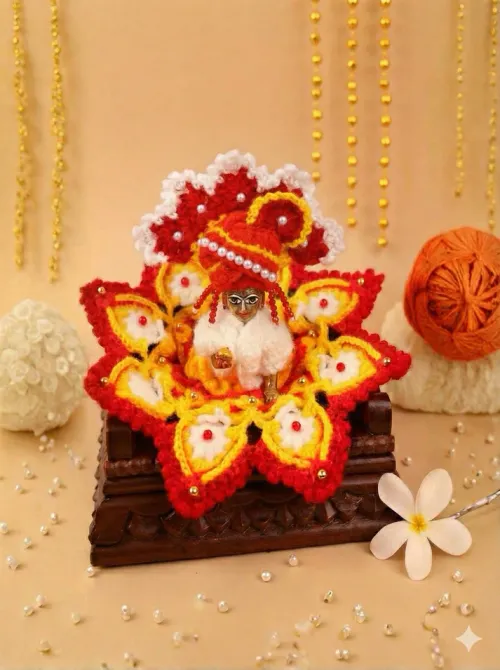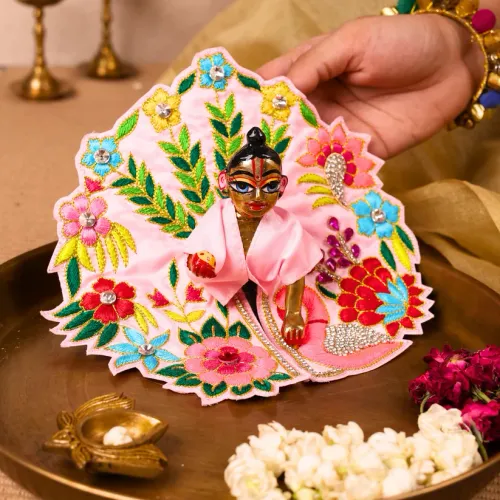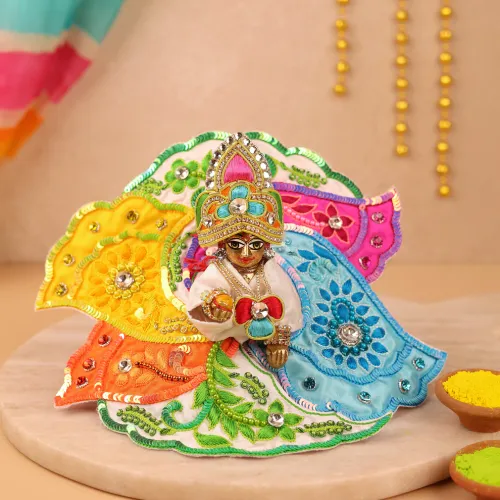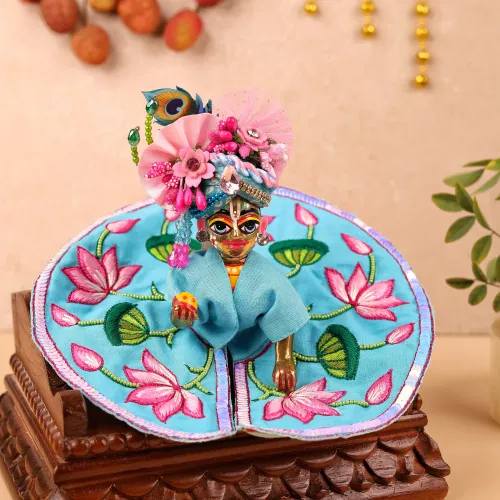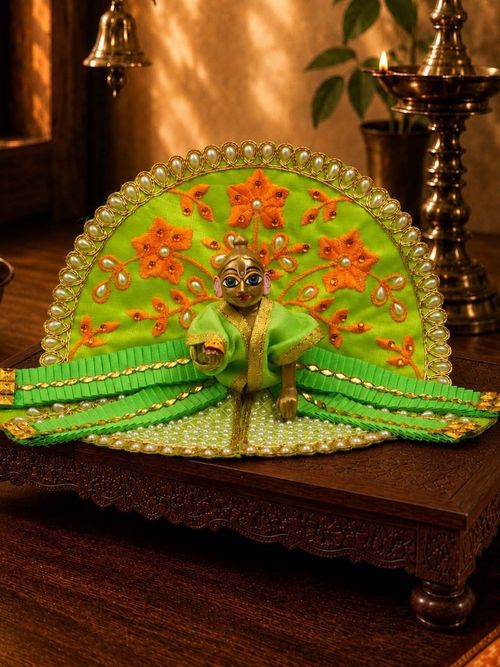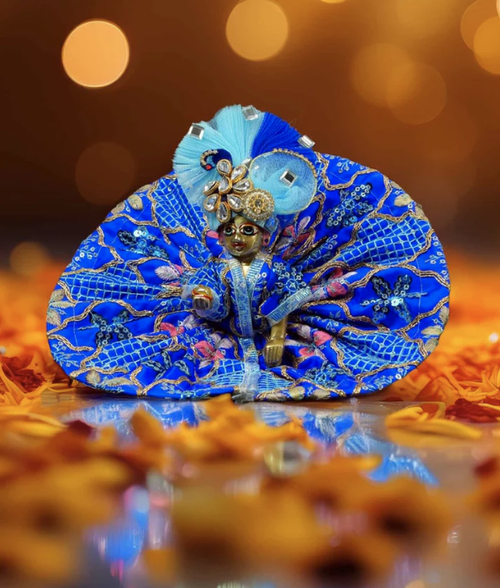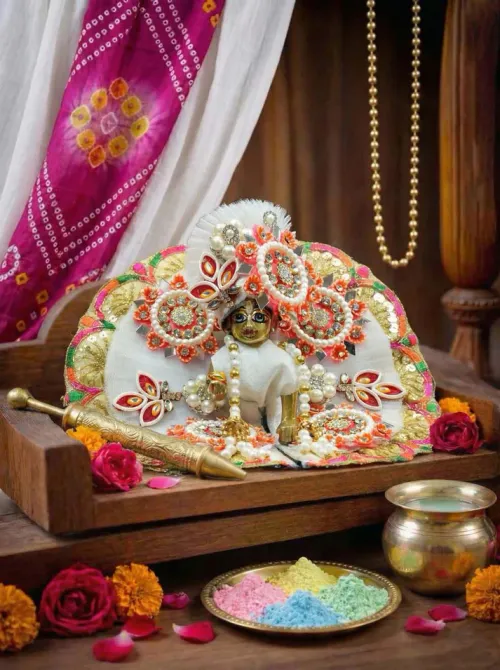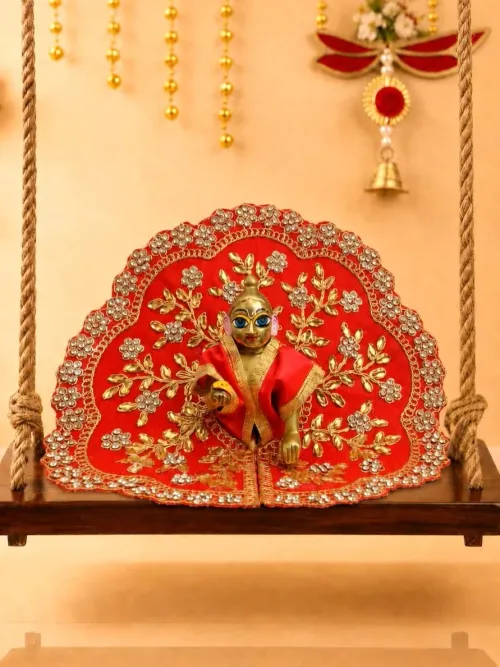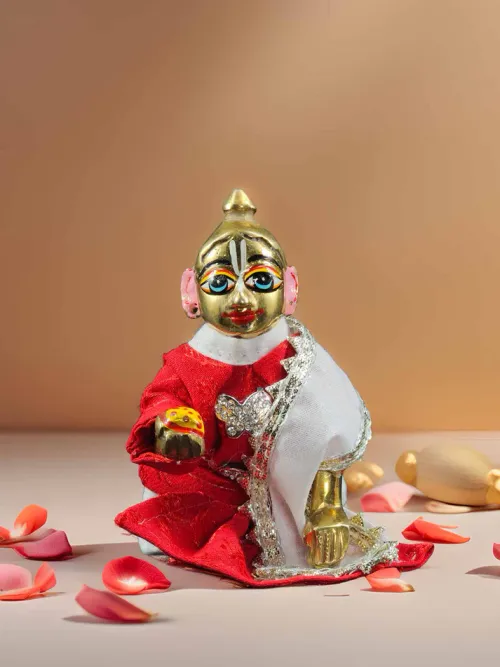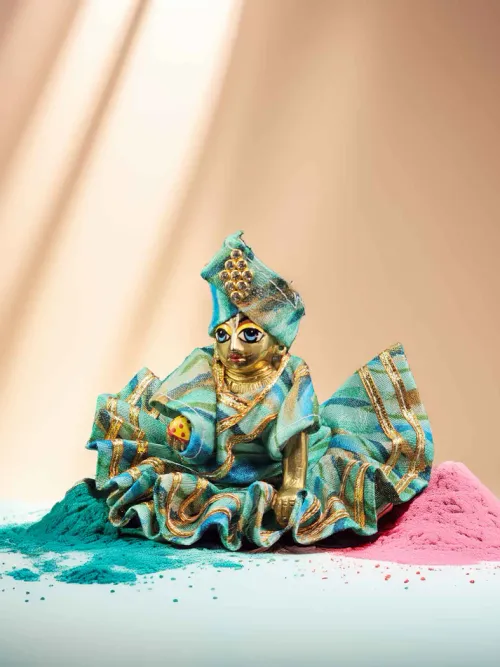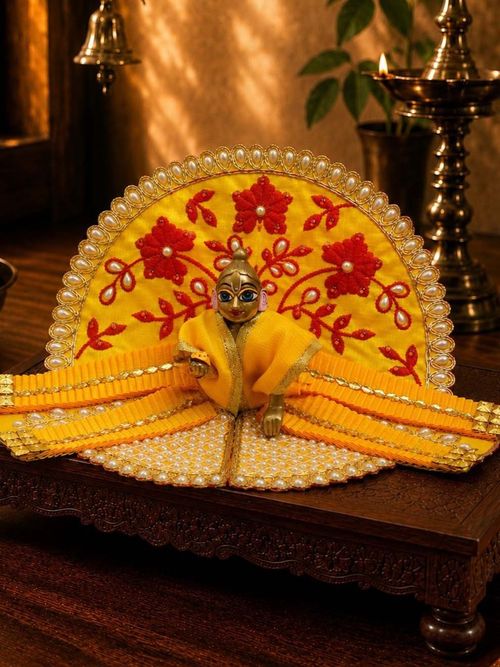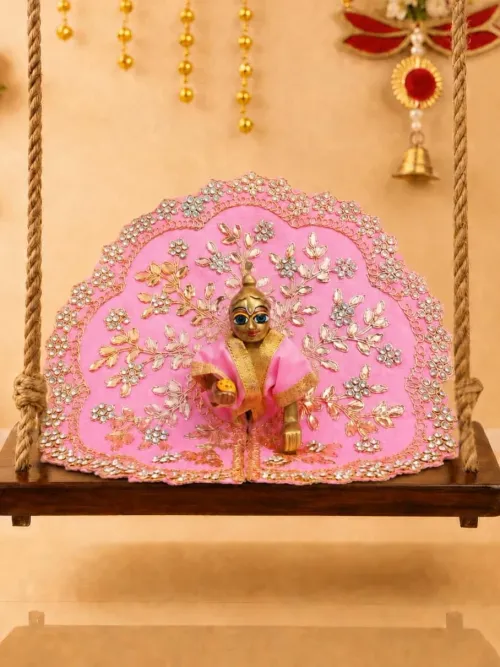

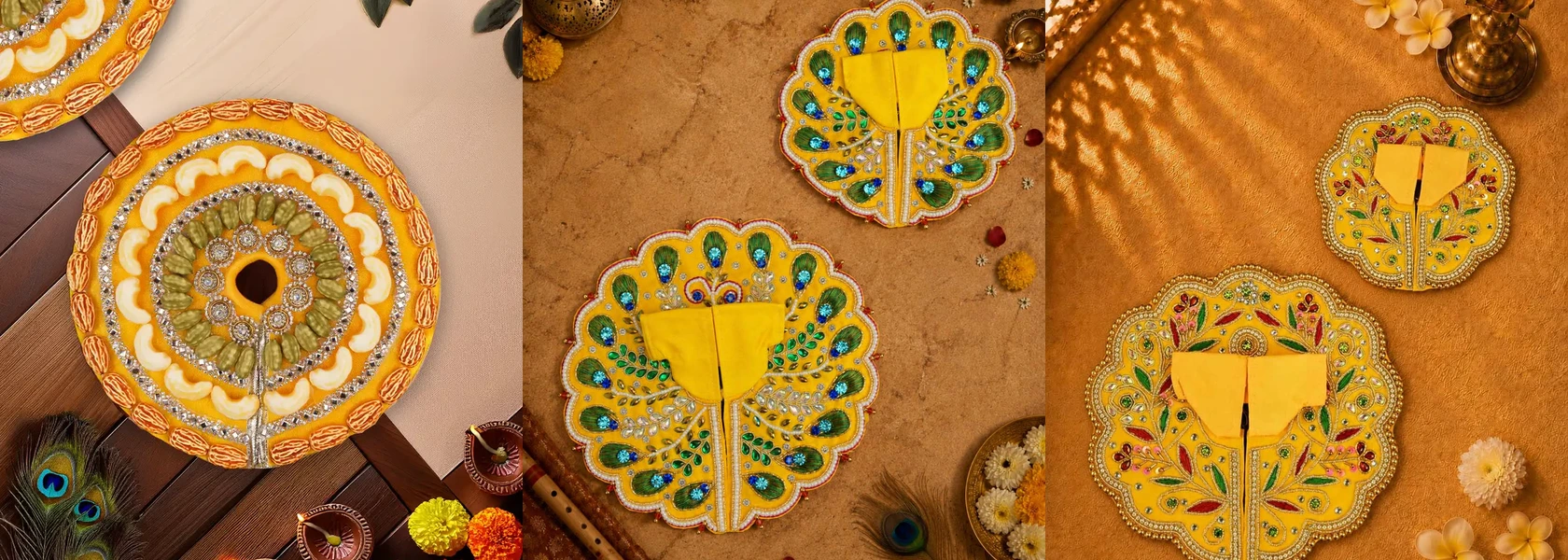
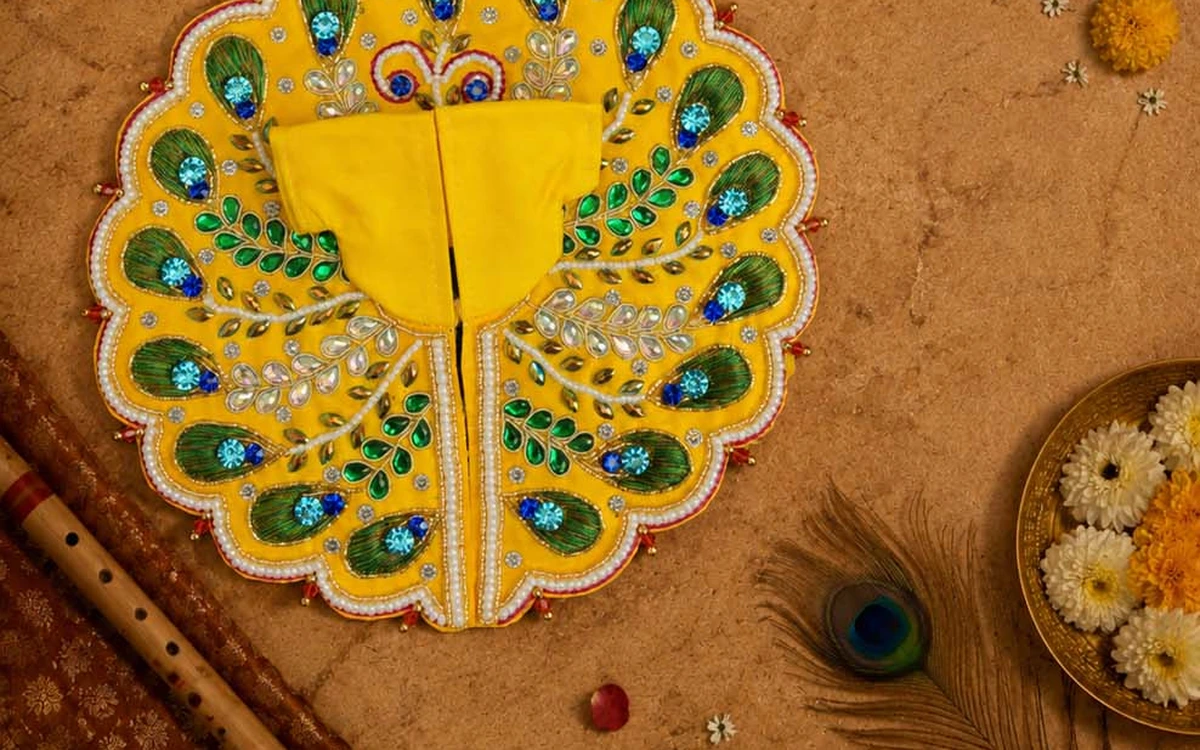
Every morning across thousands of temples and home sanctuaries, devotees begin the sacred ritual of shringar, the decorative dressing of deity idols. Central to this daily act of devotion is the selection of fresh, clean garments known as poshak. Behind these ornate robes lies a dedicated network of hereditary artisans who transform simple rolls of silk, velvet, and metallic thread into sacred offerings for the altar.
The Sacred Tradition of Vastra Seva
In Sanatan Dharma, offering fresh clothing to deities is classified as vastra seva, an essential part of the traditional sixteen-step worship known as Shodashopachara puja. Offering garments signifies reverence, hospitality, and personal devotion toward the divine presence manifest in the consecrated idol. Devotees select special colors and textures that align with daily worship schedules, seasonal changes, and temple calendars. You can explore our collection of handcrafted deity poshak designs created specifically for both daily worship and festive observances.
Artisan Centers: The Tailoring Guilds of Braj
Mathura and Vrindavan in Uttar Pradesh represent the primary centers for deity garment production in India. For centuries, specialized tailoring communities have flourished in the narrow lanes surrounding the historic temples of Braj. These craftspeople, often organized into multi-generational family workshops, pass down patterns, sizing systems, and needle techniques from parent to child.
Deity tailoring requires exact measurements that differ significantly from human garment production. Vigrahas, the sacred statues of deities, are cast in brass, ashtadhatu, marble, or carved in sacred wood. They do not bend or shift during dressing. Artisans must engineer dresses with circular flared cuts, open back panels, and durable soft ties that allow smooth dressing without placing mechanical stress on the deity idol or scratching its protective finish.
Materials and Traditional Needlework Techniques
The preparation of authentic deity garments begins with the careful selection of unblemished fabrics that satisfy standards of ritual purity. Silk, satin, chanderi, velvet, and pure cotton serve as primary grounds. Once tailors cut the base panels to size, skilled needleworkers execute traditional embroidery methods:
- Zari and Zardozi: Artisans couch metallic gold and silver threads onto velvet or silk, anchoring each metallic strand with fine cotton foundation stitches.
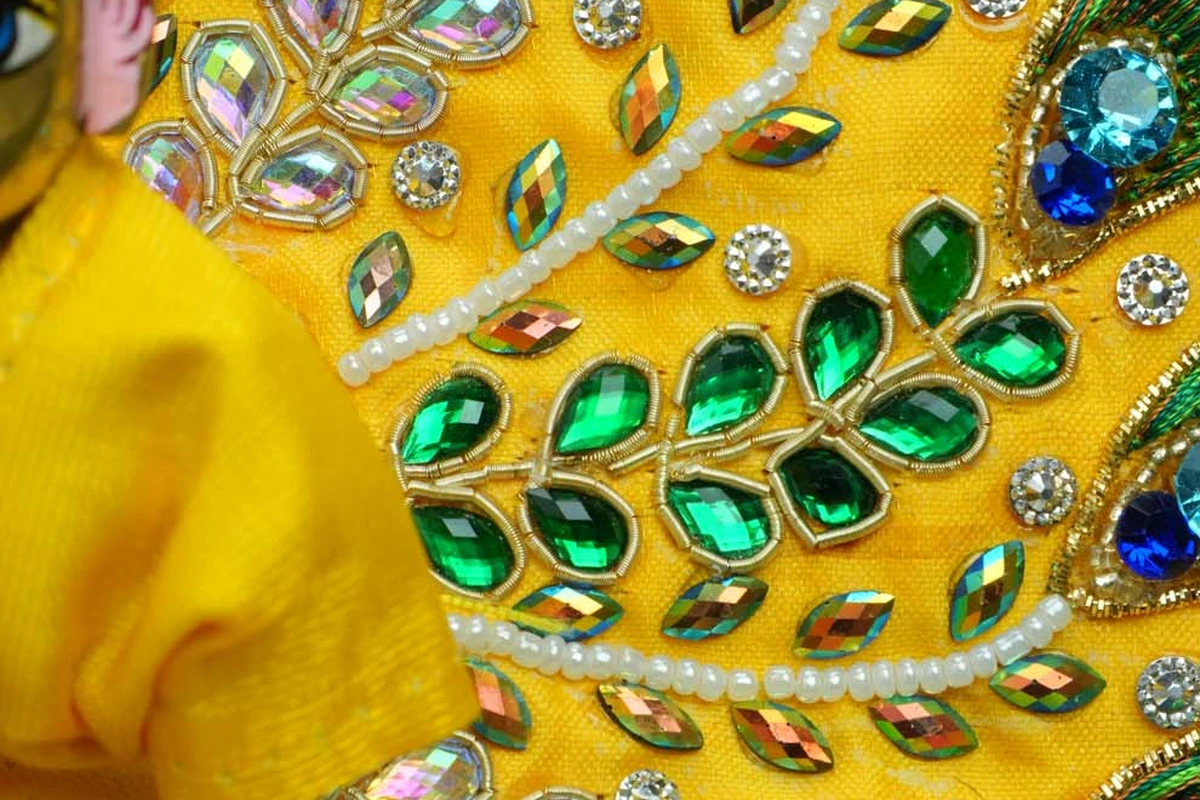
- Salma and Dabka Work: Flexible coiled metallic springs are cut into millimeter-scale segments and hand-threaded onto needles to build raised floral and peacock motifs.
- Moti and Stone Setting: Seed pearls, glass crystals, and colored stones are stitched individually along the perimeter borders to catch temple lamplight during aarti.
- Gota Patti Work: Narrow woven gold and silver ribbons are folded into diamond and leaf shapes before tailors appliqué them along garment hems.
Distinctive Attire Styles for Different Deities
Deity clothing styles vary according to scripture, temple tradition, and regional customs. Dedicated artisans specialize in distinct cuts and decorative motifs appropriate for specific forms of the divine.
For Bal Gopal and Laddu Gopal idols, artisans construct circular flared skirts accompanied by matching upper vests. Devotees frequently choose designs like the peacock feather zarri work poshak for festival days, or the sun-colored Shreeharini zari work poshak for Thursday pujas. For unique festive events like Janmashtami and Annakut, artisans also hand-assemble novelty creations such as the Kaju Badam Suvarna poshak, featuring dried fruit settings bordered by fine silver trim.
For female deities such as Lakshmi, Durga, and Radha Rani, artisans fashion complete three-piece ensembles consisting of a flared lehenga, a fitted choli, and an embroidered chunri or dupatta. Devotees dressing temple or home altars can select Mata Rani lehenga sets featuring scalloped borders and floral needlework designed specifically for Navratri and Friday worship.
Handcrafted Artistry Versus Industrial Production
Evaluating the structural differences between handmade artisan garments and mass-produced industrial items enables devotees to make informed choices for long-term shrine seva.
| Evaluation Factor | Traditional Handcrafted Poshak | Industrial Machine Garment |
| Base Fabric | Pure silk, velvet, chanderi, or combed cotton | Synthetic polyester blends and bonded paper linings |
| Embroidery Method | Hand-stitched zari, coiled salma, and hand-sewn beads | Glued plastic foil, glitter prints, and heat transfers |
| Durability in Seva | Retains structural integrity through daily washing and folding | Glitter and adhesive detach upon exposure to water or oils |
| Deity Protection | Smooth inner cotton lining prevents idol abrasion | Rough synthetic edges and exposed glue can mark brass surfaces |
| Artisan Livelihood | Sustains skilled hereditary craftspeople and family workshops | Produced in commercial garment assembly plants |
Care and Maintenance of Fine Altar Textiles
Preserving delicate handcrafted deity clothing requires systematic handling to prevent damage to metallic threads, natural dyes, and fine fabrics:
- Protect from moisture: Never submerge zari or velvet garments in water. Clean light spots using a dry soft brush or a slightly dampened cotton cloth.
- Store in natural cloth: Wrap each poshak individually in unbleached cotton muslin or acid-free paper to shield gold wire from oxidation and atmospheric humidity.
- Shield from direct flames: Position oil lamps, camphor burners, and incense sticks at a secure distance so floating embers do not singe delicate silk borders during aarti.
- Coordinate with matching ornaments: Pair the poshak with an appropriate deity mukut and pagdi sized accurately to protect idol headgear balance.
Sustaining a Living Sacred Tradition
Each handcrafted deity garment represents hours of concentrated focus, manual dexterity, and devotional heritage. When you welcome these garments into your shrine, you help preserve the historic craft communities of Mathura, Vrindavan, and sacred clusters across India, keeping an ancient devotional tradition alive for generations to come.