

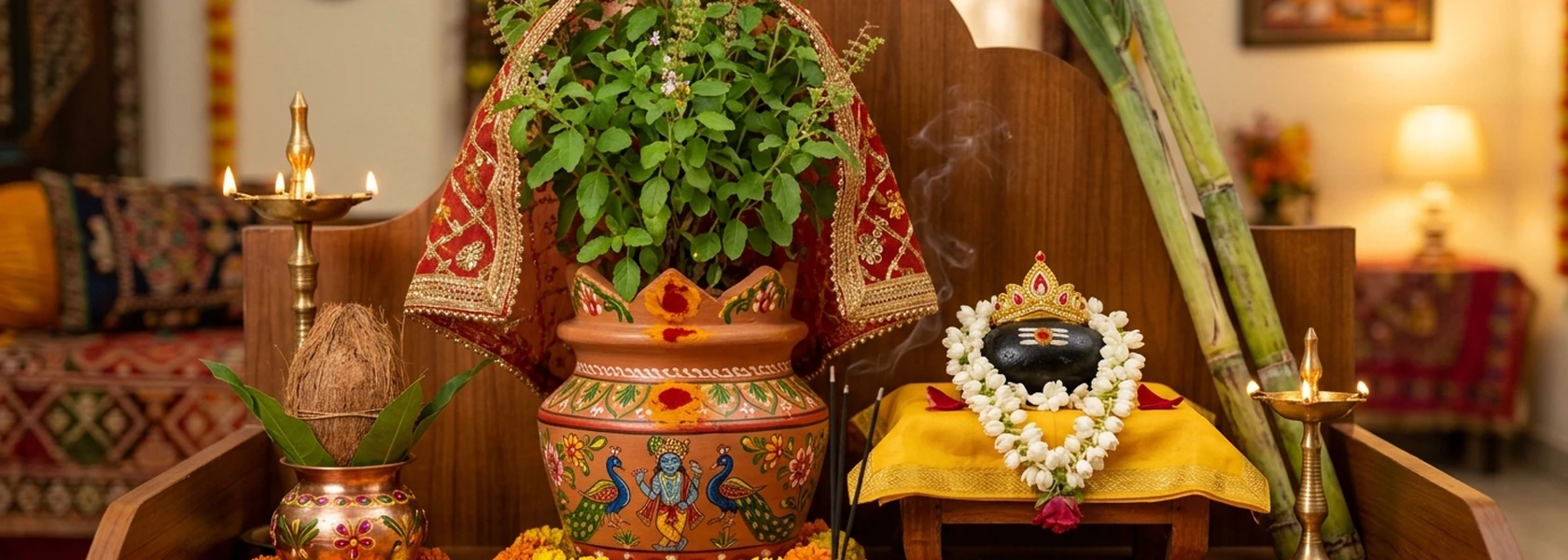
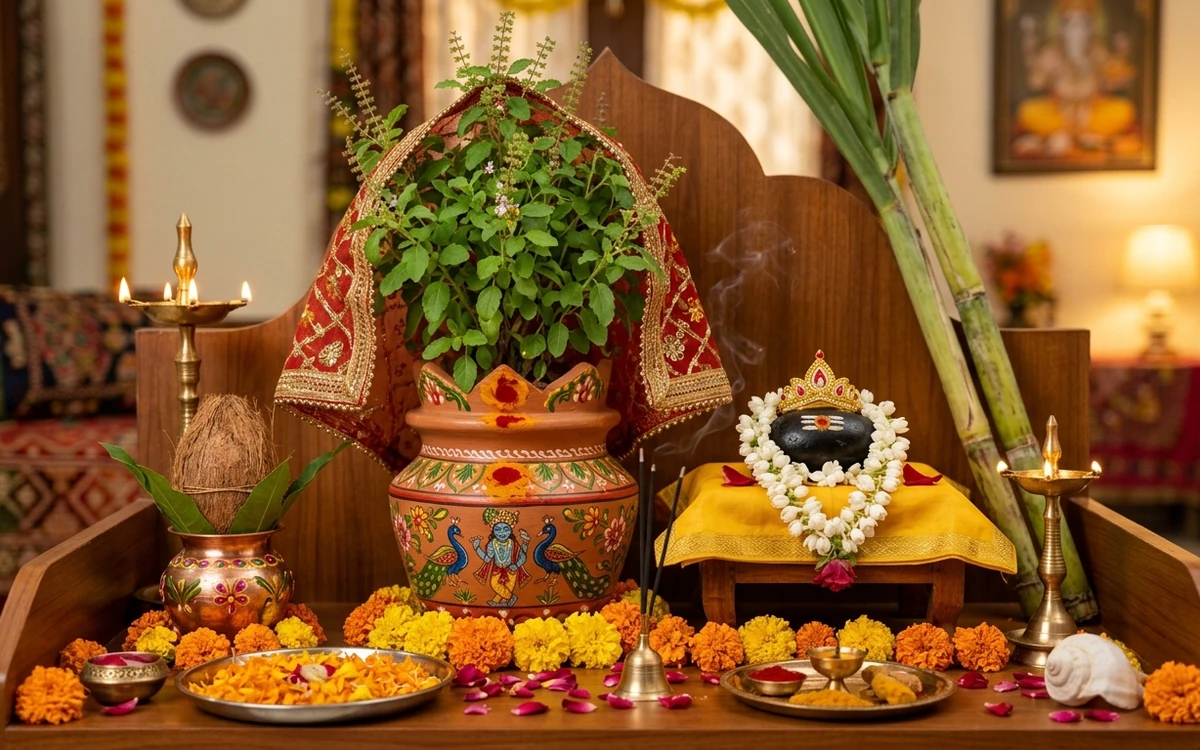
Tulsi Vivah marks the ceremonial marriage of the sacred Tulsi plant to Lord Vishnu in the form of the sacred Shaligram stone. Falling in the auspicious Hindu month of Kartika on Shukla Paksha Dwadashi tithi, this ritual signals the end of the four-month monsoon ascetic period known as Chaturmas and inaugurates the annual Hindu wedding season across India. In 2026, the Vedic Panchang marks Tulsi Vivah on Saturday, November 21, under the auspicious Revati nakshatra. Learning the traditional tulsi vivah puja vidhi allows you to conduct the sacred wedding ceremony in your home with clarity and devotion.
Indian households celebrate Tulsi Vivah with the joy of an actual family wedding. Families decorate the Tulsi Vrindavan pot as a bride with red silk chunri, bangles, and turmeric, while placing Lord Shaligram or Krishna on an altar opposite her. A makeshift sugarcane mandap surrounds the sacred altar. Preparing your ritual essentials well in advance allows everyone in your family to join the prayers with peaceful attention.
Spiritual Significance of Tulsi Vivah and Vrinda Katha
The Padma Purana and the Shiva Purana narrate the sacred history behind Tulsi Vivah through the story of Vrinda. Vrinda was a devoted worshipper of Lord Vishnu and the wife of the demon king Jalandhar. Jalandhar drew invincible military power from the chastity and piety of Vrinda. To end Jalandhar's tyranny and protect cosmic order, Lord Vishnu assumed the appearance of Jalandhar, which broke Vrinda's meditative focus. Jalandhar subsequently fell in battle against Lord Shiva.
Upon discovering the truth, Vrinda immolated herself in grief. Before doing so, she placed a curse upon Lord Vishnu to turn into a black stone, which manifested as the Shaligram stone found in the sacred Gandaki river of Nepal. Impressed by her unwavering devotion, Lord Vishnu granted Vrinda a boon. He decreed that she would manifest as the sacred Tulsi plant, and he would never accept any puja offering without a fresh Tulsi leaf. Lord Vishnu declared that he would marry her every year on Kartika Shukla Dwadashi.
For Hindu families, performing Tulsi Vivah brings the spiritual merit of performing Kanyadaan, the sacred gift of a daughter in marriage. Couples without daughters often perform the wedding ceremony with deep emotion to receive this scriptural blessing. Devotees believe the ceremony removes marital discord, brings harmony into households, and invites the divine presence of Lakshmi and Narayana.
Panchang Details and Muhurat for Tulsi Vivah 2026
Vedic tradition determines festival rituals according to the Udaya Tithi and evening Pradosh periods. The panchang data below comes directly from verified astronomical calculations for New Delhi for Saturday, November 21, 2026. Because sunrise and local transit timings vary across different regions of India, please check your city panchang before starting evening prayers.
| Panchang Attribute | Details for November 21, 2026 |
| Festival Date and Day | November 21, 2026 (Shaniwara / Saturday) |
| Tithi | Dwadashi (begins at 06:32 AM on Nov 21 and remains active until 04:57 AM on Nov 22) |
| Paksha and Lunar Month | Shukla Paksha, Kartika Month (Amanta and Purnimanta) |
| Nakshatra | Uttara Bhadrapada until 06:50 AM, then Revati nakshatra |
| Yoga | Siddhi Yoga until 02:30 AM next morning |
| Sunrise (New Delhi) | 06:48 AM IST |
| Sunset (New Delhi) | 05:25 PM IST |
| Abhijit Muhurat | 11:45 AM to 12:28 PM IST |
| Auspicious Morning Shubh Choghadiya | 08:07 AM to 09:27 AM IST |
| Auspicious Afternoon Labh Choghadiya | 01:26 PM to 02:46 PM IST |
| Auspicious Afternoon Amrit Choghadiya | 02:46 PM to 04:05 PM IST |
| Auspicious Evening Labh Choghadiya | 05:25 PM to 07:06 PM IST |
| Auspicious Night Shubh Choghadiya | 08:46 PM to 10:26 PM IST |
| Rahu Kalam (Inauspicious Window) | 09:27 AM to 10:47 AM IST |
Most households perform Tulsi Vivah during the evening twilight window between 05:25 PM and 07:06 PM under the Labh Choghadiya, or during the night Shubh window from 08:46 PM to 10:26 PM. Avoid beginning any sacred wedding rituals during Rahu Kalam from 09:27 AM to 10:47 AM.
Essential Samagri for Tulsi Vivah Puja Vidhi
Preparing every ritual item before sunset ensures that the ceremony unfolds without confusion. Devotees often use verified complete pooja kits to secure pure ingredients in a single convenient assortment.
- Healthy, mature Tulsi plant in a clean terracotta pot or home Vrindavan structure.
- Sacred Shaligram stone, Bal Gopal idol, or metal idol of Lord Vishnu.
- Four sugarcane stalks (ikshu) tied at the top to form a traditional wedding canopy over the altar.
- Red bridal chunri or saree with golden embroidery for adorning the Tulsi plant.
- Yellow silk pitambari cloth or dhoti for dressing Lord Shaligram or Krishna.
- Shringar items for Tulsi: vermilion (sindoor), red glass bangles, bindi, kajal, mehendi, and toe rings.
- Fresh floral garlands: one red rose garland for Tulsi and one yellow marigold garland for Shaligram.
- Yellow sacred thread (mouli or mangalsutra) and cotton wicks.
- Brass kalash filled with clean water, mango leaves, betel nut, coin, and a coconut wrapped in red thread.
- Pure raw cow milk, curd, honey, sugar, and cow ghee for preparing Panchamrit.
- Unbroken raw rice grains mixed with turmeric paste (yellow akshat) for showering during wedding chants.
- Traditional bhog prasad: sweet potato, water chestnuts (singhara), sugarcane pieces, amla fruits, berries (ber), radish, and satvik sweets.
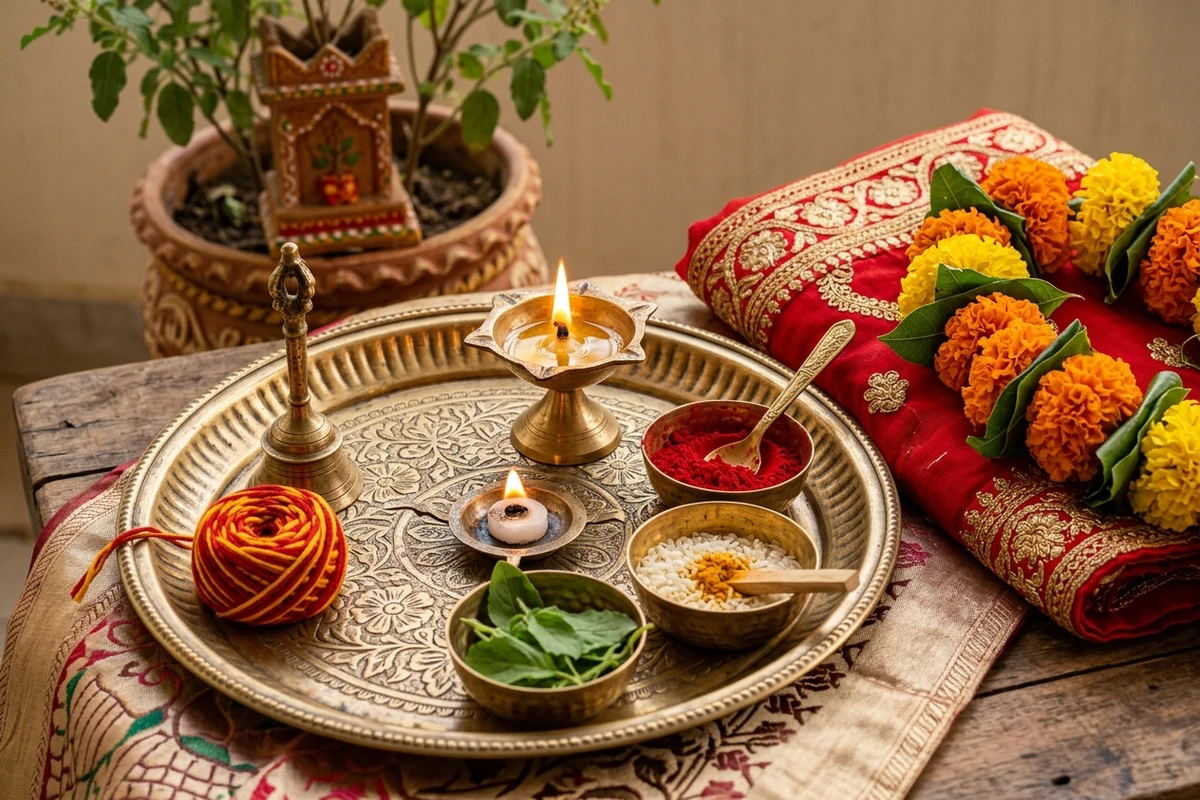
Arranging the yellow akshat, roli, chandan paste, and flowers on an engraved brass plate from the pooja thali collection creates a dignified presentation on your altar. For steady illumination around the sugarcane mandap, placing lamps from the 6 Pc Brass Lotus Diya Oil Lamp Set provides warm, balanced candlelight across the puja area.
Step-by-Step Tulsi Vivah Puja Vidhi for Home Worship
The traditional wedding rituals follow a clear chronological sequence modeled on classical Vedic marriage ceremonies. Follow these detailed steps to conduct the ritual in your home.
Step 1: Mandap Setup and Altar Decoration
Clean the puja room or courtyard thoroughly before dusk. Place the Tulsi pot on a clean wooden chowki covered with red cloth. Erect four fresh sugarcane stalks around the pot, tying their leafy tops together with yellow mouli thread to form a mandap. Decorate the base of the pot with rice flour rangoli, fresh marigold flowers, and mango leaves.
Set up a second wooden chowki directly opposite or next to the Tulsi plant, covered with yellow cloth. Place the Shaligram stone or Lord Krishna idol upon this chowki. Arrange glowing brass lamps from the diya collection around the perimeter of both chowkis to create a sanctified environment.
Step 2: Shringar and Shodashopachara Worship
Bathe the Shaligram stone with clean water and Panchamrit, dry it gently with a soft cotton cloth, and apply fragrant white sandalwood paste. Dress Lord Shaligram in a yellow pitambari cloth and offer a yellow marigold garland.
Next, dress the Tulsi plant in her red bridal chunri. Gently place red glass bangles on her branches, apply auspicious kumkum and sindoor on the pot and main stem, and offer mehendi and a red rose garland. Light fragrant Kalp Gugal Dhoop Cups to purify the atmosphere with resinous aroma while chanting the invocation: Om Tulasyai Namah, Om Vishnave Namah.
Step 3: Kanyadaan and Gathbandhan Ceremony
The head of the family, or a husband and wife acting as the bride's parents, conducts the Kanyadaan ritual. The devotee takes water, a betel nut, a coin, and yellow akshat in the right palm and recites the pledge of offering Tulsi Devi in marriage to Lord Vishnu for the spiritual welfare of the universe.
Hold a white or yellow cloth (antarpat) briefly between the Tulsi plant and Lord Shaligram while the family chants Mangalashtaka verses. Remove the cloth to symbolize the divine union. Perform the Gathbandhan by tying one end of Tulsi's red chunri to Shaligram's yellow pitambari cloth using a sacred yellow thread, placing a betel leaf, coin, and turmeric root in the knot.
Step 4: Mangalphera and Varmala Rituals
Gently lift the Shaligram stone or Lord Krishna idol in both hands and circumambulate the Tulsi plant clockwise four times to complete the sacred Mangalphera. During each round, family members shower yellow turmeric akshat and flower petals upon the divine pair while reciting wedding mantras.
After completing the pheras, exchange or drape small garlands between the two idols to complete the Varmala ceremony. Apply sindoor to the base of the Tulsi plant to symbolize her married status.
Step 5: Bhog Offering and Concluding Aarti
Offer the festive seasonal harvest to the deities as naivedya. The traditional Tulsi Vivah plate includes fresh sugarcane segments, raw water chestnuts, sweet potatoes, ber fruit, amla, radish, and satvik milk sweets. Do not offer onion, garlic, or cooked grains prepared with heavy spices.
Perform the final aarti using pure camphor from Sanatan Kapoor Dhoop Cups, revolving the glowing brass thali clockwise before the divine couple. Sing the traditional Tulsi Aarti: Jai Tulsi Mata and the Vishnu Aarti: Om Jai Jagdish Hare with devotion. Distribute the blessed prasad among family members and neighbors.
Regional Customs and Fasting Rules
Observances for Tulsi Vivah feature distinct cultural nuances across different states. In Maharashtra, the celebration extends from Kartika Shukla Dwadashi until Tripurari Purnima. Women gather for haldi-kumkum gatherings and prepare special roasted gram flour sweets. In Gujarat, devotees organize community wedding processions with dhol drums, carrying Lord Krishna's palanquin to the bride's house.
In South India, particularly Andhra Pradesh and Tamil Nadu, the festival is observed as Ksheerabdi Dwadashi or Chilku Dwadashi. Devotees light 365 cotton wicks soaked in ghee in front of the Tulsi plant to commemorate the churning of the cosmic ocean (Samudra Manthan) and the emergence of Goddess Lakshmi. Fasting devotees maintain a fruit and milk diet throughout the day, breaking their fast with satvik prasad only after the concluding evening aarti.
Frequently Asked Questions About Tulsi Vivah Puja Vidhi
Can Tulsi Vivah be performed without a Shaligram stone?
Yes. If you do not have a Shaligram shila, you can perform the wedding ceremony with a small brass or bronze idol of Lord Krishna, Laddu Gopal, or Lord Vishnu. Place the idol on the yellow chowki opposite the Tulsi plant and carry out the vidhi in the exact same manner.
Who should perform the Kanyadaan during the ceremony?
Traditionally, a married couple performs the Kanyadaan ritual together. However, an individual householder, whether husband, wife, or elder family member, can also perform the ritual. Scriptures note that any sincere devotee who performs the offering receives the divine blessings of Kanyadaan.
What should you do with the bridal chunri after the festival?
Keep the red bridal chunri on the Tulsi plant throughout the auspicious month of Kartika. Afterwards, you can store it respectfully in your home mandir, use it during future festival alankaar, or offer it at a local temple.
Can unmarried women or men perform Tulsi Vivah?
Yes. Devotees of all backgrounds can participate. Unmarried individuals often observe the fast and perform the puja to seek blessings for finding a virtuous and righteous life partner.