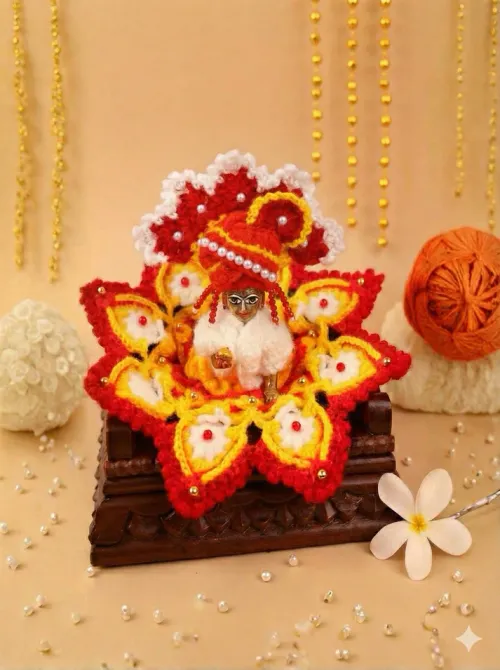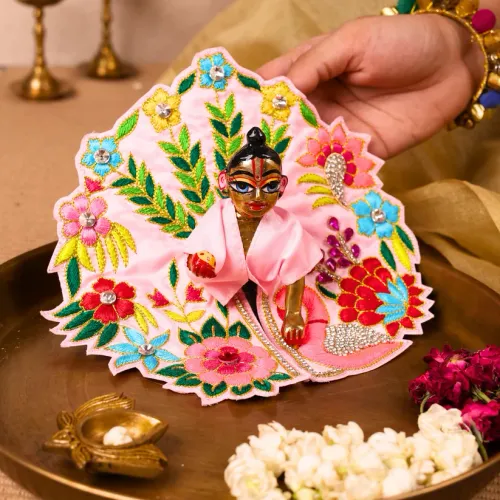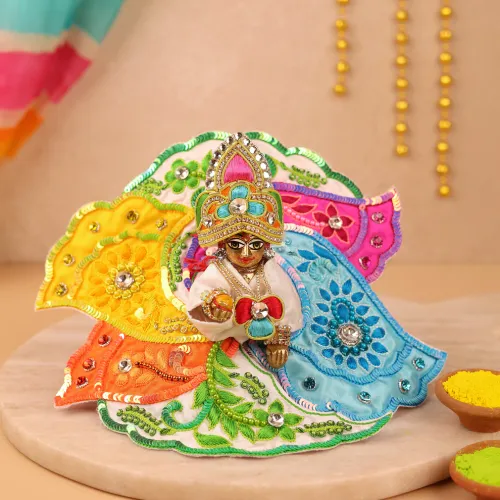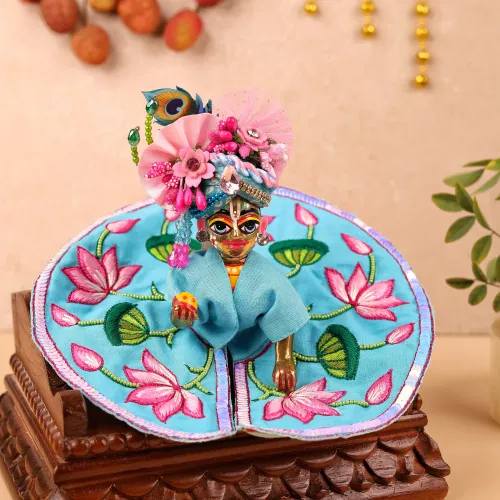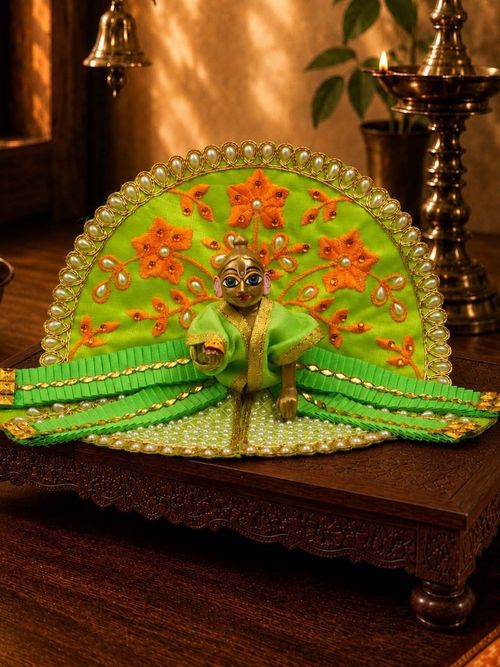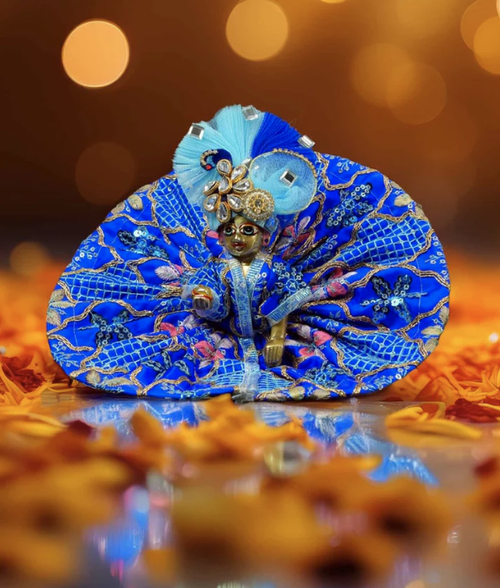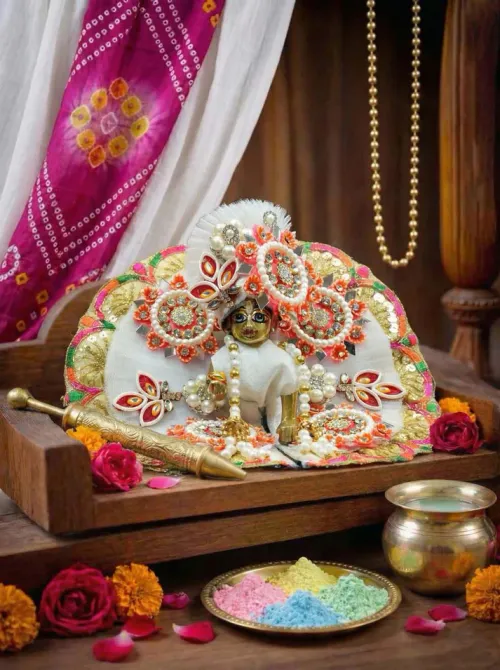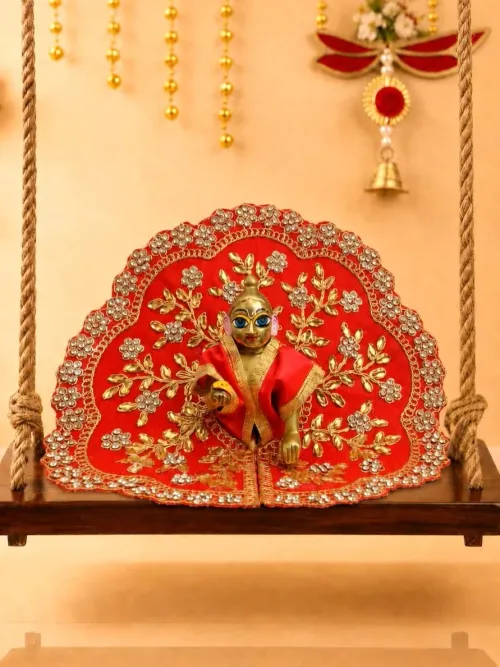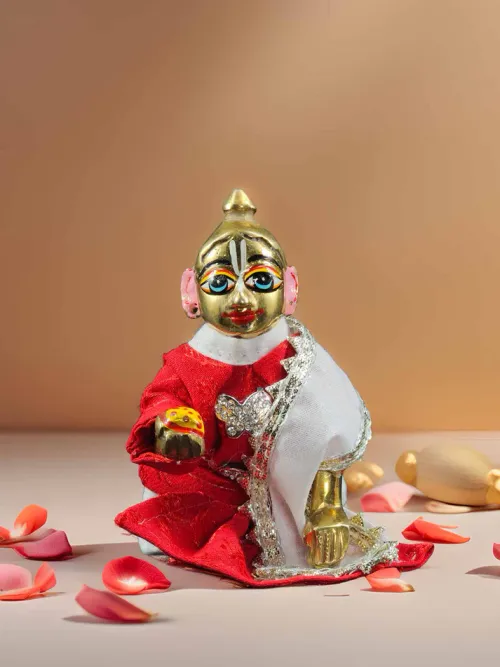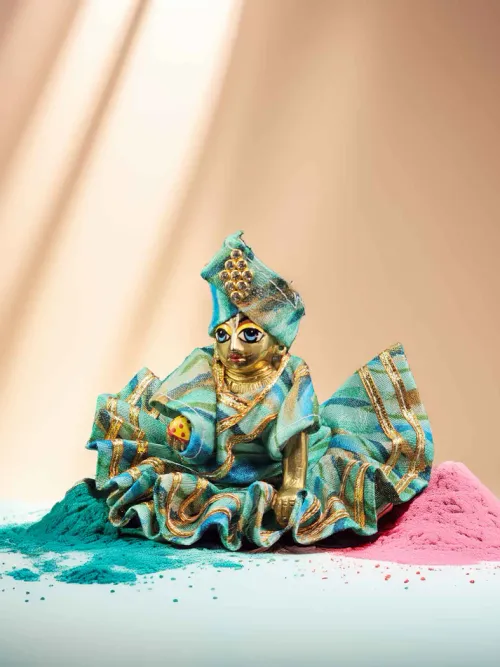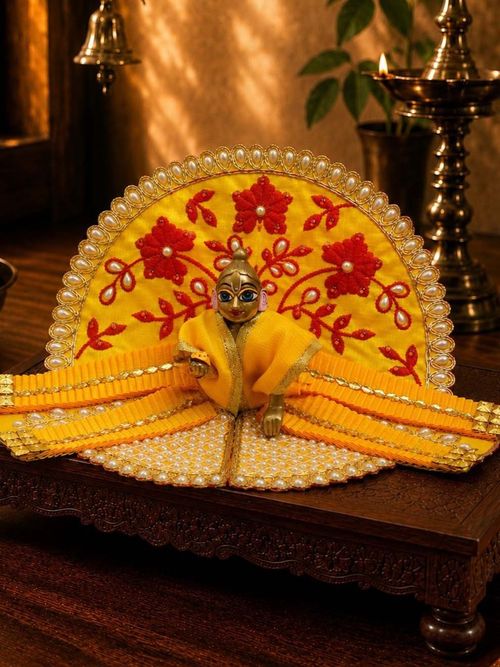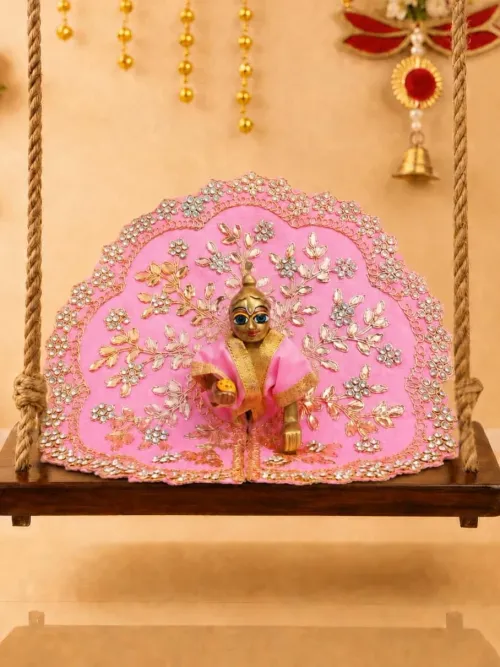

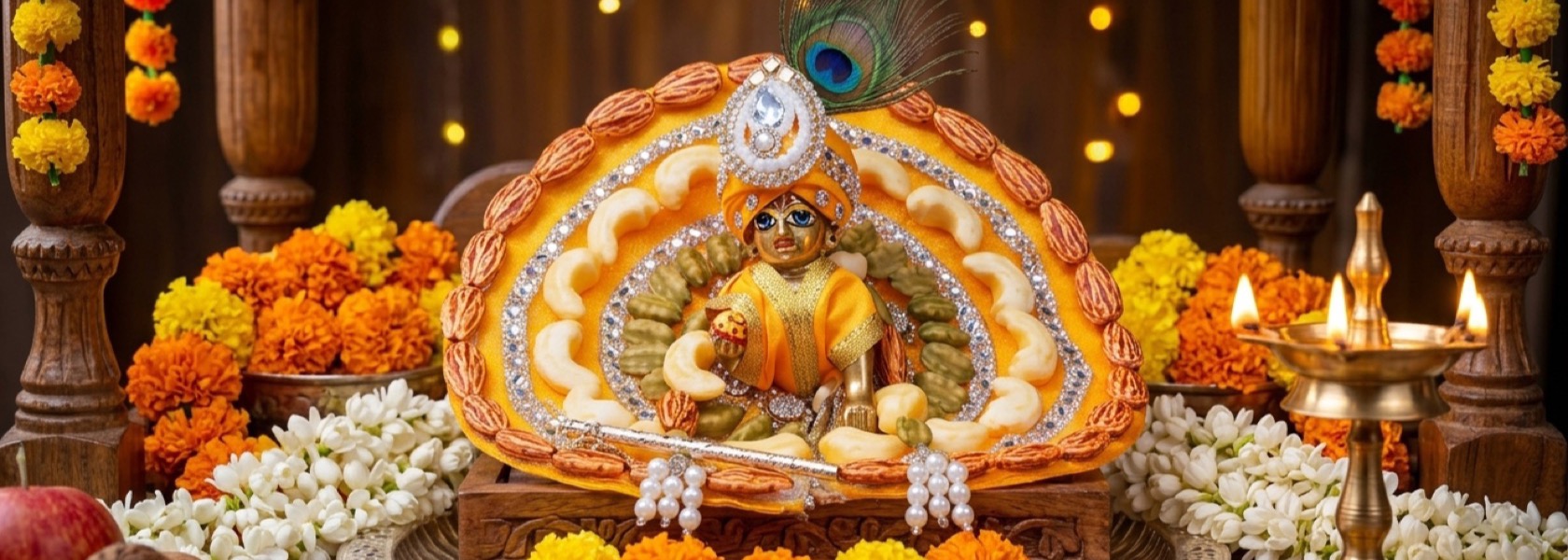
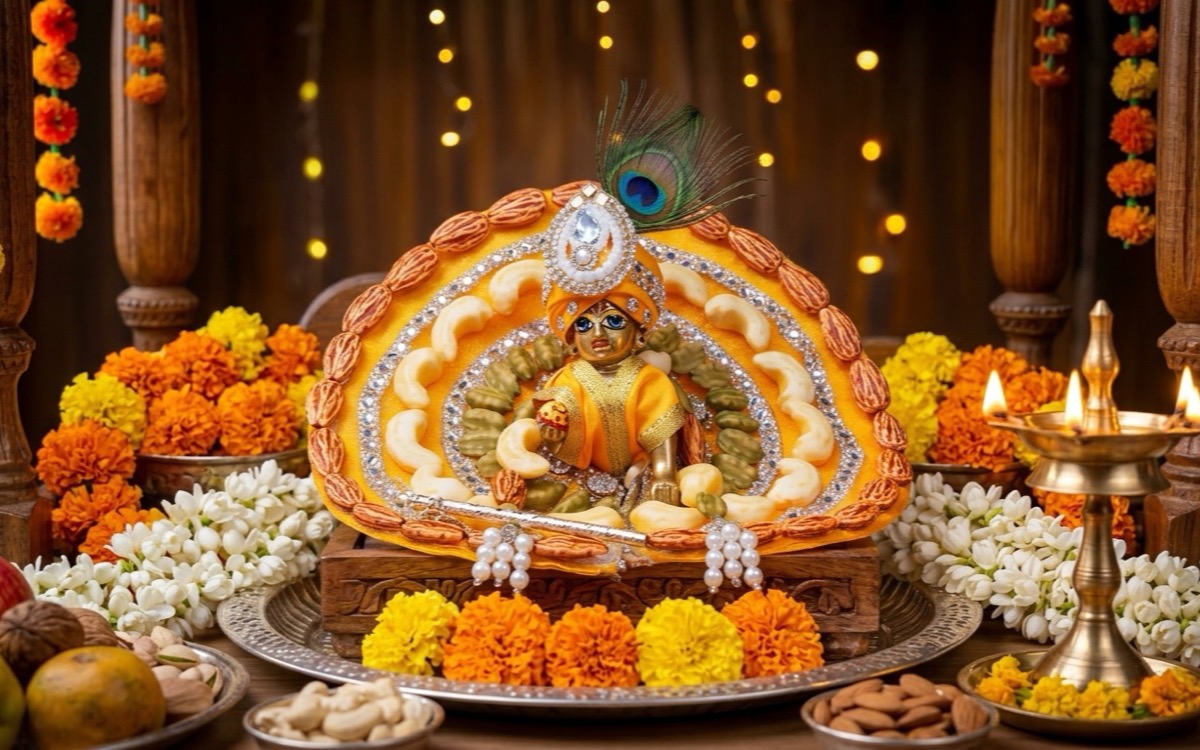
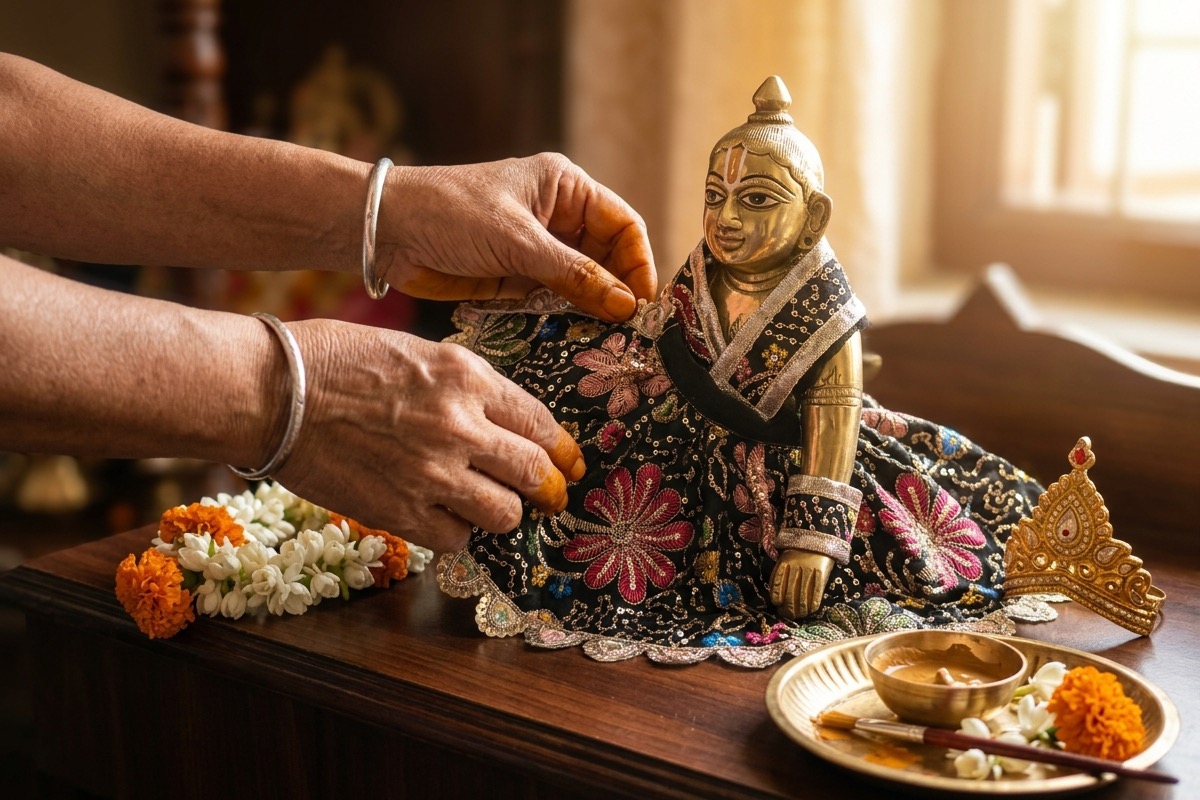
Across millions of Hindu homes, the morning begins with a sacred and intimate routine before the family altar. A brass lamp flickers softly, fragrant incense rises into the morning air, and a devotee carefully adjusts the folds of a silk garment upon a sacred murti. A tiny dupatta is smoothed, a crown is gently balanced, and fresh chandan paste is applied to the forehead. While an observer might see a simple ceremonial custom, practicing devotees recognize something far deeper. Dressing a consecrated deity is not a mere symbolic chore. It is an enduring expression of pure love, personal connection, and ancient seva.
In Vedic philosophy, consecrated sacred brass idols and murtis are never treated as inert statues or static artistic symbols. Once consecrated through sacred prana pratishtha, a murti becomes a living embodiment of the divine within the household. Devotees cultivate an active, reciprocal relationship with this sacred presence. You wake the deity with gentle morning chants, offer fresh water and sanctified food, and lovingly adorn the form in seasonal garments. Worship transforms from a dry obligation into a deeply personal sanctuary of affection and presence.
The Ancient Science and Devotion of Alankara Seva
The tradition of adorning the divine is known in Sanskrit as Alankara Seva. It forms one of the integral sixteen services of Shodashopachara puja, specifically through Vastra samarpanam (offering of clothing) and Bhushana samarpanam (offering of ornaments). Ancient Agamas and temple scriptures emphasize that beauty is an essential divine attribute. By offering the finest garments you can provide, you dedicate your creative energy, artistic care, and material resources back to their ultimate source.
Selecting traditional deity poshaks connects you directly to this unbroken devotional heritage. Whether dressing Bal Gopal in Mathura, Radha Raman in Vrindavan, or Durga in Bengal, sacred attire reflects both regional artistry and scriptural reverence. Devotees meticulously prepare seasonal fabrics: breathable pure cottons during warm summer months, radiant brocades for autumn festivals, and warm velvet robes when winter arrives. Each change of poshak acknowledges the living comfort of the deity you cherish.
Intricate Details: When Craftsmanship Becomes Prayer
The craftsmanship woven into devotional clothing carries its own spiritual resonance. Artisans across sacred pilgrimage towns like Mathura, Vrindavan, and Varanasi spend days hand-embroidering zari borders, stitching silk motifs, and embellishing garments with auspicious symbols. When a family selects a signature piece such as the Kaju Badam Suvarna poshak, they bring generations of artisan devotion into their home temple. Every sequin, bead, and gold thread reflects human devotion yearning to offer something magnificent to the divine.
Deity adornment extends beyond garments to harmonious headwear and jewelry. Pairing a poshak with ornate mukut and pagdi headwear, peacock feathers, pearl necklaces, and delicate flute ornaments creates a unified aesthetic vision. Similarly, during Navratri and Shakti festivals, dressing the Divine Mother in an auspicious Devi Pushp floral lehenga set invokes the fierce elegance and maternal grace of Maa Durga.
The Meditative Psychology of Daily Deity Seva
Modern life surrounds us with relentless speed, digital notifications, and fractured attention. Engaging in deity shringar each morning provides a profound psychological anchor. As your hands gently wrap a pleated dhoti or fasten a silk belt, your breathing slows. The mind naturally detaches from daily anxieties and anchors firmly in the present moment. Attention to detail becomes an accessible form of dhyana, or focused mindfulness.
Psychologists and spiritual masters agree that physical ritual grounds spiritual sentiment. Abstract devotion can easily become vague or forgotten amidst workday chaos. But the tangible duty of morning seva—waking the murti, bathing the form, choosing an outfit, and setting a consecrated aarti thali and ghanti for evening prayers—creates a steady rhythm of conscious spiritual discipline.
Core Principles of Daily Deity Adornment
| Seva Aspect | Devotional Practice | Spiritual Benefit |
| Fabric Selection | Soft cottons for summer, rich silks for festivals | Honors seasonal comfort and living deity presence |
| Color Harmony | Yellow for Krishna, red for Devi, green for Shravan | Channels specific devotional moods and festival energies |
| Alankara Shringar | Mukut, bansuri, malas, and chandan tilak | Cultivates deep aesthetic focus and inner meditative calm |
| Daily Consistency | Morning bathing followed by gentle evening shayan | Builds an enduring personal relationship with the divine |
How to Deepen Your Murti Seva at Home
- Approach your home altar with clean hands, a tranquil heart, and respectful silence.
- Select garments made from pure natural fibers such as cotton, raw silk, and linen for daily seva.
- Involve your children and family members in choosing festival colors to pass down living cultural traditions.
- Never treat poshak changing as a hasty domestic chore; view every fold as an offering of love.
Devotion does not require grand public fanfare or immense wealth. It flourishes in the quiet sanctity of everyday actions. When you pause each morning to dress your deity idol, you weave sacred remembrance directly into the fabric of daily life. The fabric you hold is simple silk, but the intention behind it is pure, transcendent love.