
Labh Panchami marks the concluding celebration of the Diwali festive cycle in Sanatana Dharma. Observed on the fifth day of the bright half of the lunar month of Kartika, this auspicious festival is also known as Saubhagya Panchami, Gyan Panchami, and Labh Pancham. Devotees dedicate this sacred day to Lord Ganesha, Goddess Lakshmi, and Lord Shiva. In business communities across Gujarat, Rajasthan, and western India, shopkeepers and traders reopen their establishments, start fresh financial accounts, and sanctify their ledgers on this tithi. Observing the authentic labh panchami puja vidhi invites divine grace, eliminates commercial obstacles, and establishes lasting peace in the household. In 2026, Labh Panchami falls on Saturday, November 14.
The Sanskrit word 'Labh' signifies genuine benefit, spiritual gain, and righteous profit, while 'Saubhagya' denotes enduring good fortune. On Diwali night, traders perform preliminary prayers to their account books during Sharda Pujan. Following Bhai Dooj, commercial activities pause for three days. Labh Panchami marks the formal, divinely blessed return to daily trade and intellectual pursuits. Families also conduct prayers at home to invoke knowledge and domestic harmony.
Spiritual Significance of Saubhagya Panchami, Lakshmi and Ganesha
Scriptural traditions revere Kartika Shukla Panchami as a sacred moment when divine energies shower benevolence upon truthful labor. The Brahma Purana highlights this tithi as an occasion when worshipping Lord Ganesha alongside Goddess Lakshmi cleanses financial debts and blesses enterprises with steady growth. Devotees write the sacred syllables 'Shubh' and 'Labh' in red vermilion on their doorframes and ledger covers to affirm that wealth must always remain anchored in righteousness.
In the Shaiva tradition, this date is observed as Saubhagya Panchami. Devotees worship Lord Shiva and Mother Parvati with bilva leaves, white flowers, and honey, praying for health, marital contentment, and family unity. Jain traditions celebrate this tithi as Gyan Panchami, worshipping holy scriptures, manuscript collections, and educational implements with sandalwood and fragrant flowers to dispel spiritual ignorance.
Unlike mundane business inaugurations, Chopda Pujan on Labh Pancham centers on surrender to divine order. Devotees acknowledge that commercial gains represent Lakshmi, the goddess of abundance, while prudent management represents Ganesha, the lord of wisdom. Worshipping both deities together ensures that earned wealth produces genuine peace rather than arrogance.
Panchang Timings and Auspicious Muhurat for Labh Panchami 2026
Vedic astrology prescribes performing Chopda Pujan and shop opening rituals during auspicious choghadiya and lagna periods. Below are the verified panchang coordinates calculated for New Delhi on Saturday, November 14, 2026.
| Panchang Element | Calendar Coordinate | Ritual Relevance |
| Date and Vaara | Saturday, November 14, 2026 (Shaniwara) | Auspicious day for opening accounts |
| Tithi | Panchami (ends at 11:24:30 PM IST) | Active throughout the entire day |
| Paksha and Month | Shukla Paksha, Kartika | Sacred autumn festive period |
| Nakshatra | Purva Ashadha (ends at 08:24:19 PM IST) | Favorable for enterprise and trade |
| Sunrise and Sunset | Sunrise: 06:42:31 AM IST | Sunset: 05:28:18 PM IST | Defines day and night ritual windows |
| Abhijit Muhurat | 11:43:53 AM to 12:26:56 PM IST | Highly auspicious midday puja window |
| Day Choghadiya (Shubh) | 08:03:15 AM to 09:23:58 AM IST | Ideal morning window for home puja |
| Day Choghadiya (Labh) | 01:26:08 PM to 02:46:51 PM IST | Primary afternoon window for ledger opening |
| Day Choghadiya (Amrit) | 02:46:51 PM to 04:07:34 PM IST | Auspicious window for trade transactions |
For business establishments and office altars, the Labh Choghadiya from 01:26 PM to 02:46 PM and the Abhijit Muhurat between 11:43 AM and 12:26 PM offer ideal periods for writing the initial entries in account books. For evening mandir prayers, the Labh night choghadiya runs from 05:28 PM to 07:07 PM.
Essential Samagri Checklist for Labh Panchami Puja Vidhi
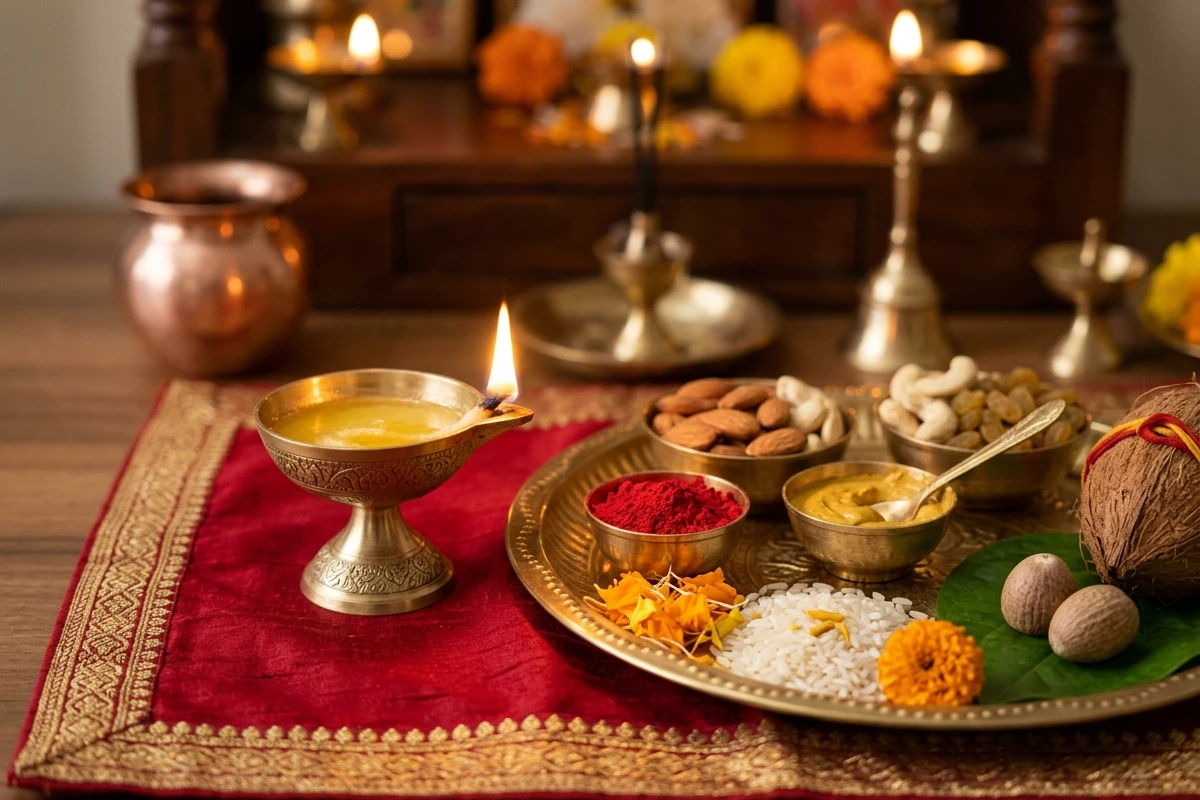
Conducting the ritual with complete focus requires assembling satvik puja samagri in advance. Worshippers prepare a clean wooden chauki, adorn it with fresh red or yellow silk cloth, and set up their altar with sacred implements.
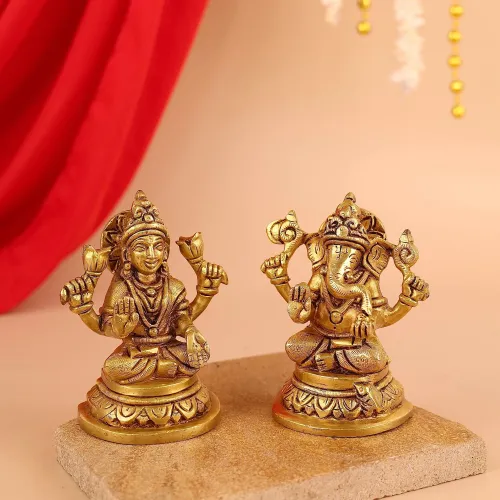
- A clean sanctified Laxmi-Ganesh Brass Idol placed centrally on the wooden chauki.
- A consecrated Pure Brass Pooja Diya filled with pure desi cow ghee and fresh cotton wicks.
- An Engraved Pure Brass Pooja Spoon and brass lota for achamana and Gangajal prokshana.
- A dedicated brass plate from the pooja thali collection to organize kumkum, chandan, unbroken akshat, and fresh yellow flowers.
- A traditional Shubh Labh Ganesh Ji Wall Hanging mounted near the office or shop entrance.
- Slow-burning fragrant incense sticks from the incense sticks collection to maintain altar purity.
- Fresh red ledger books (bahi-khata), cash registers, or digital devices intended for business accounting.
- A new red ink pen or wooden kalam for inscribing sacred mantras on the opening page.
- Pure red vermilion (roli), yellow turmeric powder, sandalwood paste, and sacred moli thread.
- Betel leaves (paan) with intact stems, whole areca nuts (supari), cloves, and green cardamom.
- Clean unbroken raw rice grains (akshat) mixed with a pinch of turmeric powder.
- Five seasonal fruits, dry fruits, fresh sweets such as motichoor laddus, and pure water.
Step-by-Step Labh Panchami Puja Vidhi and Chopda Pujan
The complete labh panchami puja vidhi brings spiritual sanctification into practical economic life. Devotees maintain inner calm and follow sequential Vedic steps during the auspicious morning or midday muhurat.
Morning Purification and Mandir Preparation
Begin the day early before sunrise. Take a purifying bath and wear clean traditional attire. Thoroughly clean the home temple, shop, or commercial premises. Sprinkle holy water mixed with Gangajal across the entrance, threshold, and workspace. Draw a traditional rangoli at the doorstep and tie fresh mango leaf torans on the door lintel to welcome positive vibrations.
Sankalpa and Altar Installation
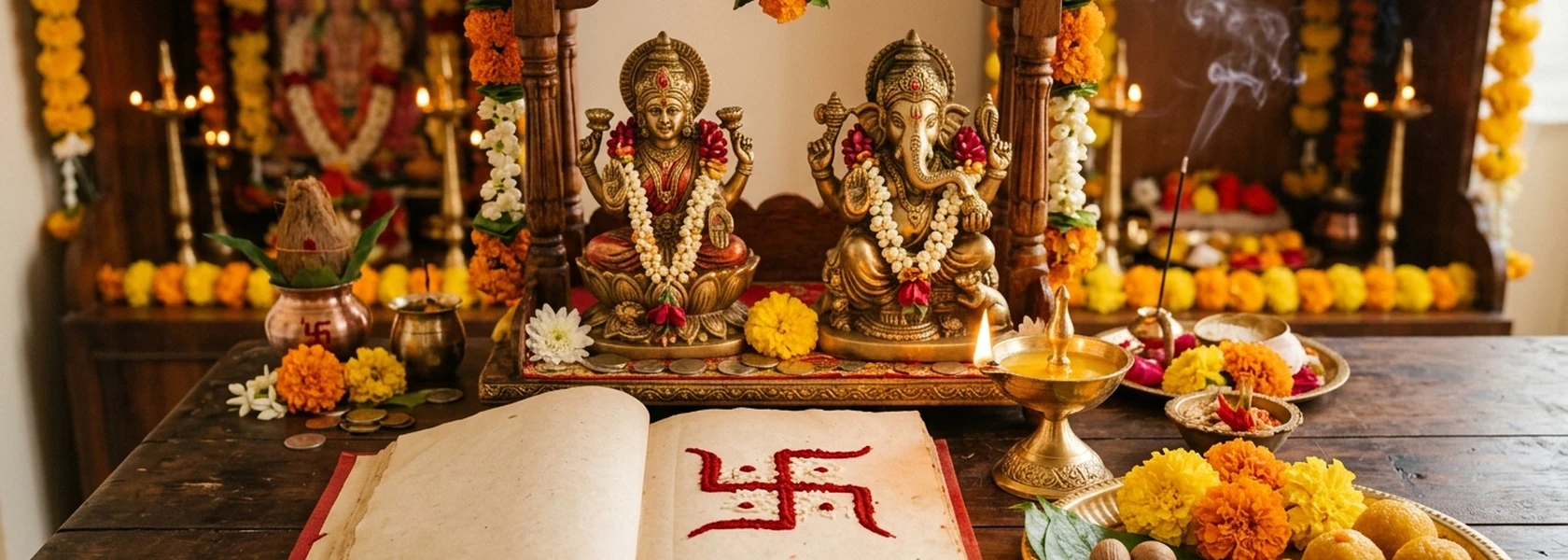
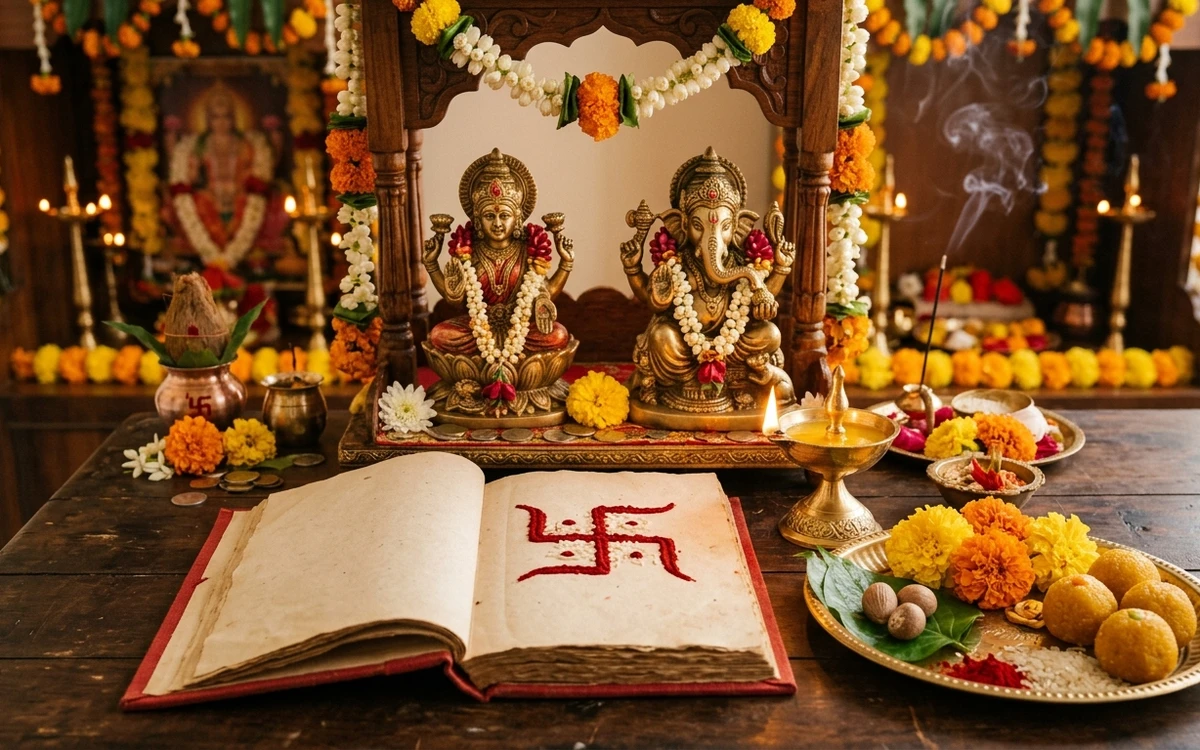
Place a sturdy wooden chowki in the north or east direction of the room. Spread a fresh red cloth over it. Gently seat the idols of Lord Ganesha and Goddess Lakshmi upon the chowki, positioning Ganesha to the right of Lakshmi. Light the brass ghee diya and place it to the right of the deities. Take water, unbroken rice grains, and a flower in your right palm using the brass spoon, chanting the sankalpa mantra while resolving to conduct your duties honestly and seek divine blessings.
Chopda Pujan and Ledger Consecration
Place your new account books, cash ledger, or billing laptop on a clean cloth directly in front of the deities. Using wet kumkum and an engraved spoon, draw a sacred Swastik symbol in the center of the first page. Write the auspicious words 'Shree Ganeshay Namah' at the top, followed by 'Shubh' on the left margin and 'Labh' on the right margin. Devotees also draw five lines with vermilion paste to represent wealth, wisdom, fortune, satisfaction, and righteousness.
Offer unbroken akshat, yellow marigold petals, and a whole betel nut upon the Swastik. Tie a strand of sacred moli around the ledger cover. Present the new pen to Lord Ganesha, reciting 'Om Gam Ganapataye Namaha' eleven times. Record the initial entry on the page, noting an auspicious invocation, your family name, and a pledge to conduct business with truthfulness and moral integrity.
Aarti, Mantra Japa and Prasad Distribution
Offer fresh naivedya of motichoor laddus, seasonal fruits, and jaggery to the deities. Offer paan leaves containing supari, clove, and cardamom. Rotate the brass aarti lamp clockwise in front of Lord Ganesha and Goddess Lakshmi while singing their traditional stutis. Chant the Lakshmi Beej Mantra 'Om Shreem Hreem Shreem Mahalakshmaye Namah' one hundred and eight times using a lotus seed rosary.
Conclude the puja by seeking forgiveness for inadvertent errors during the ritual. Bow before the consecrated account books and elders in the household. Distribute the blessed prasad among family members, business partners, staff, and visitors. Keep the ghee diya burning gently on the altar throughout the day.
Important Ritual Guidelines and Vastu Practices for Business
Devotees observe several traditional guidelines on Labh Pancham to preserve sanctity throughout the commercial year.
- Sit facing north or east while conducting the ritual and writing ledger entries.
- Place the accounts cash box or safe in the southwest zone facing north to align with Kubera.
- Ensure that the first commercial entry records an auspicious receipt rather than an expense.
- Maintain complete transparency in accounting books, avoiding untruthful entries.
- Treat business associates, employees, and customers with warmth and respect on reopening day.
- Avoid lending or borrowing money during the Rahu Kalam window on Labh Panchami.
Frequently Asked Questions About Labh Panchami Puja Vidhi
What is the core spiritual purpose of celebrating Labh Panchami?
Labh Panchami marks the auspicious day when traders reopen business and families seek the blessings of Lord Ganesha and Goddess Lakshmi for prosperity, intellect, and good fortune in the upcoming year.
Can devotees who do not run a business observe Labh Panchami at home?
Yes. Householders observe this festival as Saubhagya Panchami, worshipping Lord Shiva, Mother Parvati, and Goddess Lakshmi for domestic harmony, spiritual clarity, and family well-being.
What are the exact muhurat timings for Labh Panchami in 2026?
On Saturday, November 14, 2026, the morning Shubh Choghadiya runs from 08:03 AM to 09:23 AM IST, the Abhijit Muhurat occurs from 11:43 AM to 12:26 PM IST, and the afternoon Labh Choghadiya spans 01:26 PM to 02:46 PM IST.
What should be written on the first page of the new account book?
Inscribe a red kumkum Swastik in the center, write 'Shree Ganeshay Namah' across the top, record 'Shubh' and 'Labh' on the borders, and note an initial auspicious trade entry with a prayer for prosperity.