
Sankashti Chaturthi is an auspicious monthly observance dedicated to Lord Ganesha, revered across Sanatana Dharma as Vighnaharta, the remover of obstacles. The Sanskrit word Sankashti signifies deliverance from distress and hardships. Falling on the fourth day (Chaturthi tithi) of the waning Krishna Paksha each lunar month, this fast calls devotees to complete a day-long penance. When observed with sincerity, following the structured sankashti chaturthi puja vidhi purifies the mind, invites divine protection, and grants spiritual clarity to the household.
The Ganesha Purana and Bhavishya Purana describe Chaturthi tithi as the divine energy manifestation of Ganapati. In North and Western India, each monthly Sankashti carries an individual name associated with a distinct form of Ganesha and divine peetha. The observance falling in the holy Margashirsha month (or Kartika Amanta) is celebrated as Ganadhipa Sankashti Chaturthi. Devotees honor Lord Ganesha along with the Shiva Parivar, culminating their prayers in a sacred moon-sighting ritual after dusk.
What is the Authentic Sankashti Chaturthi Puja Vidhi?
The authentic Sankashti Chaturthi puja vidhi requires a day-long fast from sunrise, followed by dedicated Ganesha worship at dusk and offering arghya to Chandra Dev at moonrise. Devotees place a clean Lord Ganesha murti on a red cloth, offer twenty-one fresh durva blades, red flowers, and steamed modaks, chant the Ganesha Atharvashirsha, and break their fast only after sighting the moon.
- Morning Sankalpa: Rise during Brahma Muhurat, bathe, wear unstitched clean clothes, and declare your fasting vow facing east.
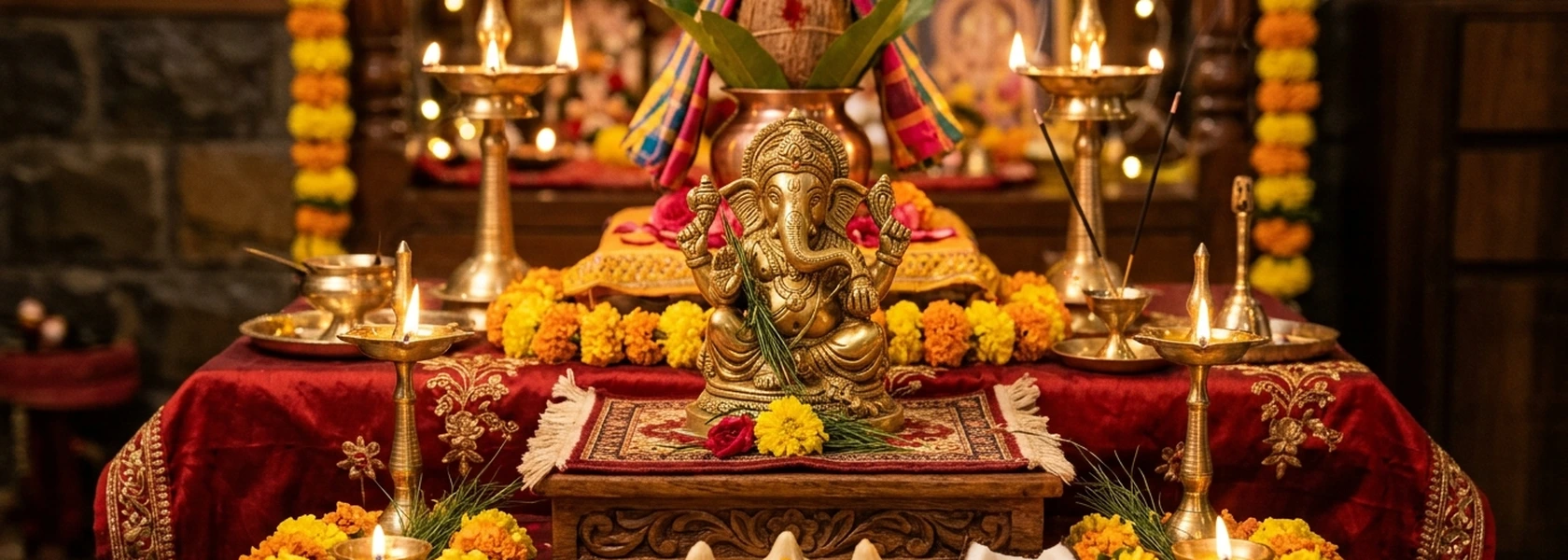
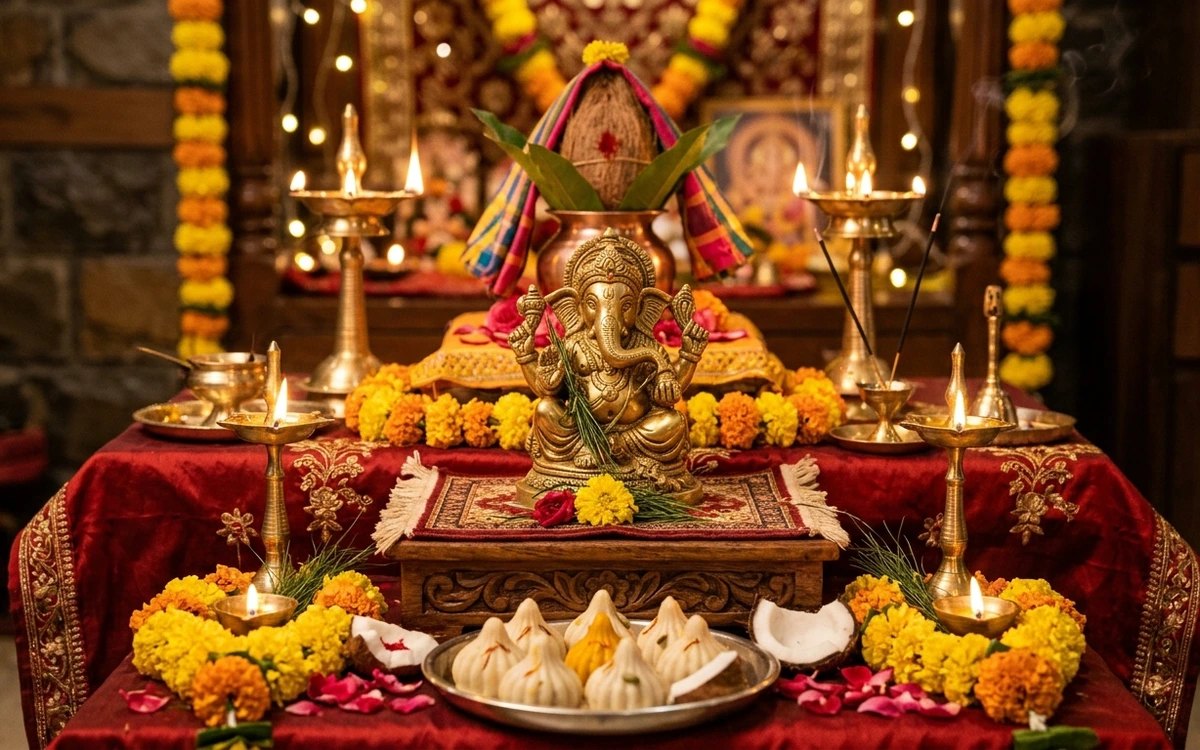
- Altar Setup: Clean the puja altar, set up a wooden chowki draped with fresh red silk cloth, and install your sacred murti using Lord Ganesha devotional essentials.
- Lighting the Lamp: Light a brass ghee diya and fragrant dhoop sticks to establish a pure, meditative atmosphere in your prayer room.
- Shodashopachara Worship: Bathe the deity with panchamrit and gangajal, apply red sandalwood paste (rakta chandan), and place unbroken akshat on the forehead.
- Durva Grass Offering: Present 21 blades of fresh, green durva grass in pairs of two, chanting the eleven sacred names of Ganapati.
- Naivedya Presentation: Offer freshly steamed modaks, motichoor laddus, seasonal fruits, and a betel leaf with supari and clove.
- Stotra Chanting and Aarti: Recite the Sankata Nashana Ganesha Stotram and perform the evening aarti with a camphor lamp and brass bell.
- Chandra Arghya and Parana: Sighting the rising moon, offer arghya from a silver or brass lota and break the day fast with satvik prasad.
Sankashti Chaturthi 2026 Date, Tithi and Panchang Timings
Understanding the precise Panchang tithi is vital for Sankashti Chaturthi because the fast concludes only upon sighting the moon. Unlike Vinayaka Chaturthi which centers around midday puja, Sankashti observance depends on whether Chaturthi tithi is active during moonrise. For Margashirsha Ganadhipa Sankashti Chaturthi in November 2026, astronomical coordinates confirm the exact timings below.
| Panchang Element | 2026 Details (New Delhi Coordinates) | Ritual Guidance |
| Observance Date | Friday, November 27, 2026 | Day fast begins at sunrise; concludes at moonrise |
| Day of the Week | Shukrawara (Friday) | Dedicated to Mahalakshmi and auspicious beginnings |
| Tithi Status | Tritiya transitioning into Krishna Chaturthi | Chaturthi prevails during evening moonrise window |
| Paksha | Krishna Paksha (Waning Moon) | The sacred fortnight of Ganesha Sankashti penance |
| Month (Amanta / Purnimanta) | Kartika (Amanta) / Margashirsha (Purnimanta) | Holy winter month auspicious for devotional vows |
| Nakshatra | Ardra Nakshatra | Ruled by Rudra; ideal for obstacle removal and tapas |
| Sunrise (New Delhi) | 06:52 AM IST | Holy bath, morning prayers, and formal vrat sankalpa |
| Sunset (New Delhi) | 05:24 PM IST | Marks the start of evening shodashopachara worship |
| Moonrise Timing | Approx. 08:45 PM IST | Check local city visibility for offering Chandra arghya |
| Fasting Rules | Nirjala or Phalahar (Water, milk, fruits) | Break fast only after completing the moon arghya vidhi |
If you reside outside Delhi, note that moonrise times vary by 20 to 45 minutes across eastern and western regions. Devotees in Kolkata witness moonrise earlier than those in Mumbai or Ahmedabad. Always consult your regional panchang before commencing evening prayers.
Complete Sankashti Chaturthi Samagri Checklist
A disciplined ritual requires clean, authentic samagri gathered before sunset. In Vedic tradition, metal implements made of brass, copper, or silver are preferred over synthetic alternatives because they hold sacred energy during mantra recitation.
- Sacred Deity: A consecrated brass or silver idol such as the Lord Ganesha Idol in German Silver with Thiruvachi, 6.2 cm, Silver.
- Altar Textiles: One square meter of unstitched pure red silk or cotton altar cloth for the chowki.
- Sacred Flora: Twenty-one clean blades of three-pronged durva grass, fresh red hibiscus flowers, and yellow marigolds.
- Panchamrit Ingredients: Cow milk, fresh yogurt, pure desi ghee, organic honey, and rock sugar (mishri).
- Tilak Offerings: Rakta chandan (red sandalwood paste), pure roli, sindoor, and unbroken white rice grains (akshat).
- Illumination: Sesame oil or cow ghee with hand-rolled cotton wicks and lamps from our traditional brass diya collection.
- Protective Lantern: For long-burning evening rituals, devotees place a Brass Table Diya with Borosilicate Glass Cover Lantern for Puja and Home Decor on the chowki.
- Kalash Setup: A small brass or copper lota filled with holy gangajal, topped with five mango leaves and a whole brown coconut.
- Sweet Offerings (Naivedya): Eleven or twenty-one freshly prepared steamed ukadiche modaks or besan laddus.
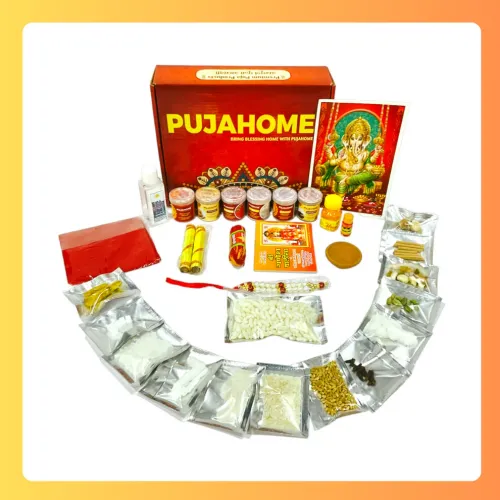
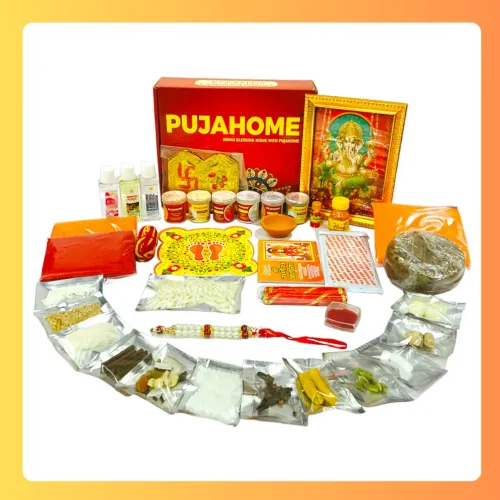
- Ready-to-Use Kits: Devotees balancing modern work schedules can select packaged sets from Ganesh Pooja Kits or use the complete All-in-One Pooja Kit with Lakshmi & Ganesh Idols, Brass Diya, Incense and Puja Samagri.
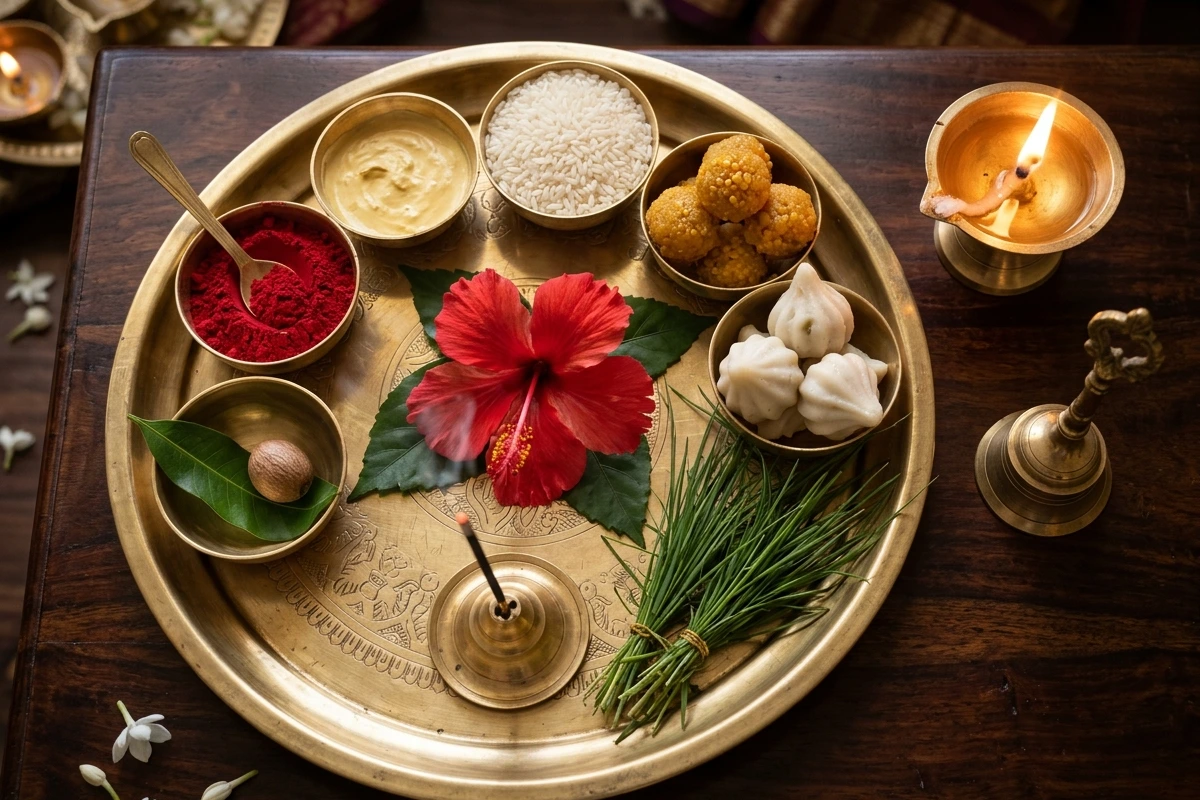
Why Durva Grass and Modaks Are Sacred to Lord Ganesha
Every element offered in the Ganesha puja holds profound scriptural meaning recorded in the Ganesha Purana. Devotees often wonder why simple blades of grass are valued above precious jewels when worshiping Ganapati.
According to ancient lore, a fiery demon named Analasura once tormented the cosmos by emitting destructive flames from his eyes. When the devas sought refuge, Lord Ganesha swallowed the demon whole to protect creation. However, swallowing Analasura generated intense burning heat within Ganesha's stomach. The devas tried cooling him with celestial waters, cold milk, and lotus garlands, yet the agonizing heat remained unquenched. Finally, eighty-eight thousand sages gathered and placed twenty-one blades of cooling green durva grass upon Ganesha's head. The burning sensation vanished immediately. Pleased by this humble offering, Lord Ganesha declared that whoever offers twenty-one blades of fresh durva with devotion earns his eternal blessings.
Vedic philosophy explains that the number twenty-one corresponds to the fundamental principles of cosmic creation: the five gross elements (earth, water, fire, air, ether), the five organs of sense (eyes, ears, nose, tongue, skin), the five organs of action (hands, feet, speech, elimination, generation), the five vital life breaths (prana, apana, vyana, udana, samana), and the human mind (manas). Offering twenty-one durva blades signifies surrendering all twenty-one faculties of body and consciousness to the supreme divinity.
Similarly, the modak carries deep spiritual symbolism. Its outer layer is plain, firm, and simple, while the inner core holds sweet, rich jaggery and grated coconut. Masters of Vedanta liken the modak to the spiritual journey: the external discipline of self-control seems austere, yet inside lies the sweet bliss of self-realization (ananda). On Sankashti Chaturthi, preparing modaks with pure ingredients is an act of love that gladdens the deity.
Chandra Arghya Vidhi: How to Break the Sankashti Fast
The defining feature of Sankashti Chaturthi is the evening Chandra Darshan and Arghya ritual. Unlike other lunar days where looking at the moon on Chaturthi is avoided due to the classic legend of moon's vanity, on Sankashti Chaturthi, seeing the moon and offering sacred water is mandatory to complete the fast.
Once the moon rises above the horizon, step outdoors or to an open terrace where the moon is clearly visible. Take a clean brass, copper, or silver lota. Fill it with fresh clean water, a few spoonfuls of raw cow milk, a pinch of red sandalwood powder, white akshat rice, and a fragrant white flower like jasmine or marigold.
Face the moon, raise the lota with both hands to eye level, and slowly pour the water in three uninterrupted streams onto a clean brass plate or clean ground. As the stream flows, chant the traditional Chandra arghya mantra:
Kshirasamudra Sambhutam Rohinipriya Keshavan | Grahana Arghyam Maya Dattam Rohinya Sahito Mama ||
After offering the arghya, bow deeply to Chandra Dev and seek forgiveness for any shortcomings in the day's discipline. Touch the sanctified water drops from the plate to your eyes and forehead. You may now return to the home altar, conclude your prayers, distribute modak prasad to your family, and partake of a satvik meal prepared with sendha namak (rock salt), sabudana, or kuttu flour.
Frequently Asked Questions About Sankashti Chaturthi
What foods can devotees consume during the Sankashti Chaturthi fast?
Devotees observing a partial fast (phalahar) can consume fresh fruits, milk, curd, tender coconut water, and unsalted nuts throughout the day. In the evening, after completing the moon arghya vidhi, eat simple satvik dishes prepared with sendha namak, buckwheat flour (kuttu), water chestnut flour (singhara), or sabudana khichdi. Strictly avoid onions, garlic, grains, lentils, and table salt.
How do you perform arghya if the moon is hidden behind heavy clouds?
If overcast skies or city smog obscure the moon, verify the exact calculated moonrise time from your local Panchang. When that minute arrives, face the eastern sky where the moon has risen, visualize Chandra Dev seated with Lord Ganesha in your mind's eye, and offer the arghya with full faith. Spiritual merit is determined by sincere bhav rather than weather conditions.
What distinguishes Vinayaka Chaturthi from Sankashti Chaturthi?
Vinayaka Chaturthi occurs during the waxing Shukla Paksha fortnight and centers on midday Madhyahna puja, celebrating the manifest divine glory of Ganesha without requiring a moon sighting. In contrast, Sankashti Chaturthi occurs during waning Krishna Paksha, requires fasting throughout the day, and concludes with an evening twilight Ganesha puja and moonrise arghya.
Can women observe the Sankashti Chaturthi fast during their menstrual cycle?
Women experiencing their menstrual cycle can maintain the mental fast and dietary restrictions of Sankashti Chaturthi. However, scriptural tradition advises against touching puja murtis, preparing naivedya, or lighting altar lamps directly. A family member can perform the physical rituals on their behalf while the devotee silently recites Ganesha nama mantras.
Why is the Ganesha Atharvashirsha recited on Sankashti Chaturthi?
The Ganapati Atharvashirsha, originating from the Atharva Veda, is the foremost Upanishadic hymn dedicated to Lord Ganesha. It identifies Ganesha as the supreme Brahman, the creator, sustainer, and destroyer of the cosmos. Chanting this sacred text on Sankashti Chaturthi purifies karmic debts, removes intellectual obstacles, and bestows calm focus.