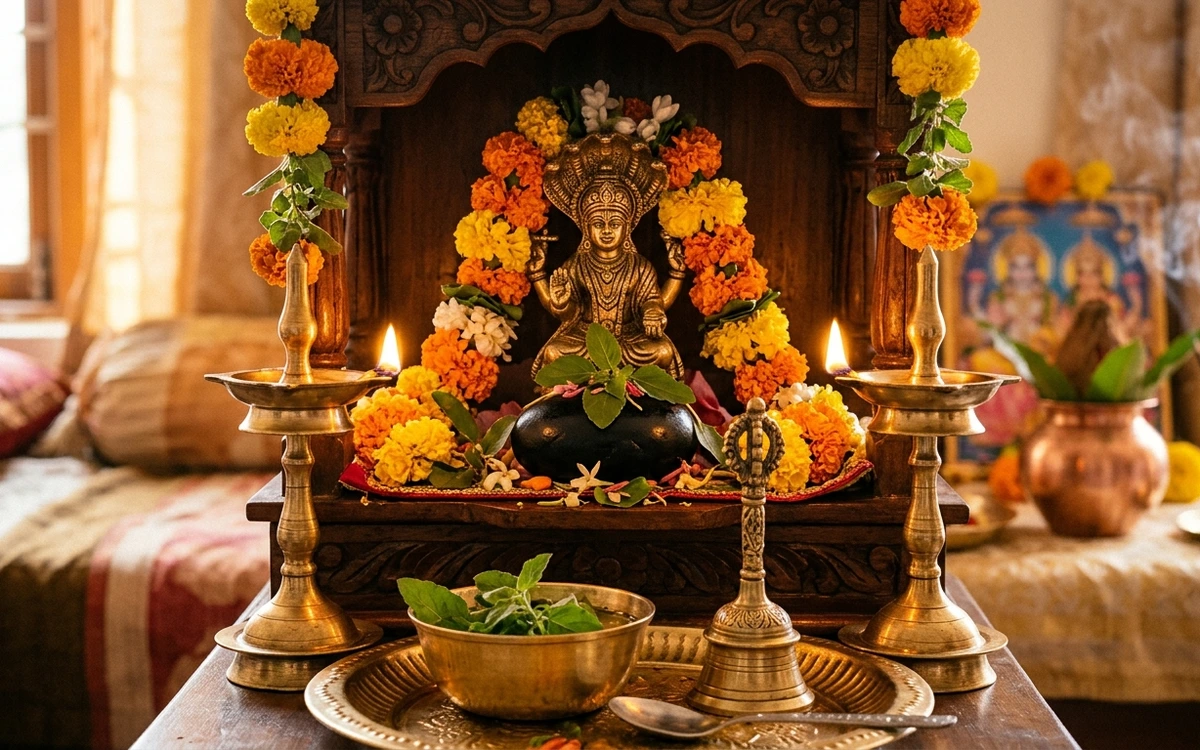
Utpanna Ekadashi holds a unique place among the twenty-four sacred Ekadashis of the Hindu calendar. Observed on the Krishna Paksha Ekadashi of Margashirsha month (or Kartika in the Amanta calendar system), this tithi marks the divine birth of Ekadashi Devi herself. According to traditional belief, observing the authentic utpanna ekadashi puja vidhi is the foundation for all subsequent Ekadashi vrats throughout the year. Devotees who wish to begin an annual Ekadashi fasting vow customarily start on this auspicious day. In 2026, Utpanna Ekadashi falls on Friday, December 4. Devotees across India observe upavasa, chant Vishnu mantras, and offer heartfelt domestic worship to seek spiritual clarity and peace.
The sacred narrative recorded in the Bhavishyottara Purana recounts that Lord Vishnu manifested a divine feminine energy from His body to subdue the demon Mura during the Satya Yuga. Pleased with her valor and devotion, Lord Vishnu named her Ekadashi and granted her the boon that anyone who honors her on this eleventh tithi will gain freedom from past sins and attain spiritual progress. Observing the day with truthfulness, charity, and disciplined prayer cleanses the home environment and anchors quiet faith in the household.
Significance of Utpanna Ekadashi Puja Vidhi in Hindu Tradition
In Sanatana Dharma, the mind and the senses correspond to the eleven faculties: five organs of action, five organs of perception, and the mind itself. Ekadashi represents mastery over these eleven faculties through mindful fasting and contemplation. Because Ekadashi Devi manifested on this day, Utpanna literally translates to 'arisen' or 'born'. Starting an Ekadashi fasting cycle on this tithi aligns your spiritual practice with the origin of the vrata itself.
Fasting on Utpanna Ekadashi is categorized by degrees of practice. Some devotees observe a strict waterless fast (Nirjala), while most householders follow a water-and-fruit fast (Phalahar). Devotees avoid grains, pulses, onion, and garlic. The spiritual focus remains centered on gratitude, humility, and remembrance of Lord Vishnu, avoiding idle gossip, anger, and distraction.
Panchang Timings for Utpanna Ekadashi 2026
Performing rituals in harmony with correct astronomical timings is essential in Vedic worship. Below are the verified panchang calculations for New Delhi on December 4, 2026. Local sunrise and sunset timings vary across cities, so devotees should adapt their schedule slightly based on regional panchang coordinates.
| Panchang Element | Details for Utpanna Ekadashi 2026 |
| Date | Friday, December 4, 2026 |
| Tithi | Ekadashi Tithi (ends at 11:45 PM IST on Dec 4) |
| Paksha | Krishna Paksha |
| Purnimanta Month | Margashirsha |
| Amanta Month | Kartika |
| Nakshatra | Hasta Nakshatra (until 10:22 AM IST), then Chitra |
| Sunrise (Delhi) | 06:58 AM IST |
| Sunset (Delhi) | 05:24 PM IST |
| Abhijit Muhurat | 11:50 AM to 12:32 PM IST |
| Auspicious Choghadiya | Labh: 08:16 AM to 09:34 AM | Amrit: 09:34 AM to 10:52 AM | Shubh: 12:11 PM to 01:29 PM IST |
| Parana (Fast Breaking) Window | Saturday, December 5, 2026: After sunrise from 06:59 AM IST onwards (Shubh Choghadiya: 08:17 AM to 09:35 AM IST) |
On Friday, December 4, the Ekadashi tithi is active throughout the entire daylight duration and concludes late at night at 11:45 PM IST. Devotees break their fast on Saturday morning, December 5, during the Dwadashi tithi window after performing morning prayers and offering food to Brahmins or those in need.
Essential Samagri Checklist for Utpanna Ekadashi Puja
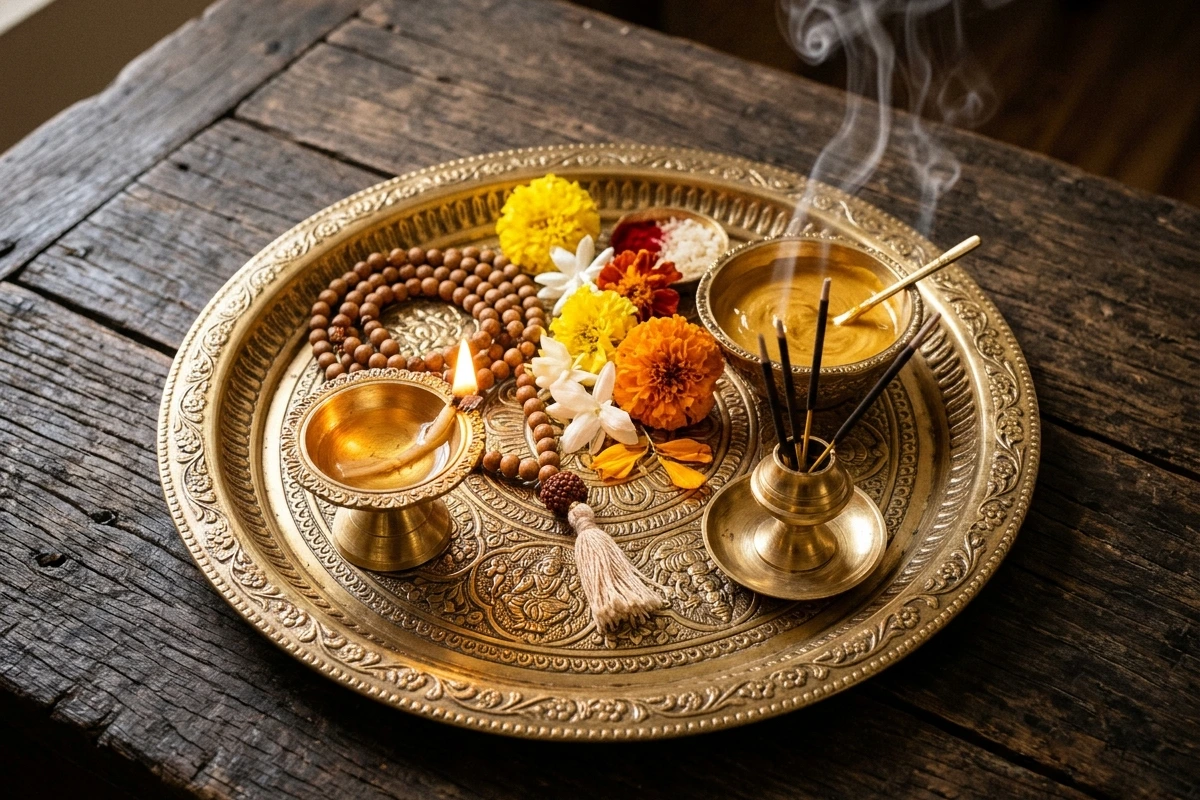
Arranging clean ritual utensils and pure samagri beforehand helps you maintain an uninterrupted, peaceful state of mind during worship. Devotees can explore verified sacred items in the Pooja Essentials collection on Bhaktibaazar to equip their home mandir. Below is the complete checklist required for the morning and evening rituals:
| Samagri Category | Required Items and Devotional Use |
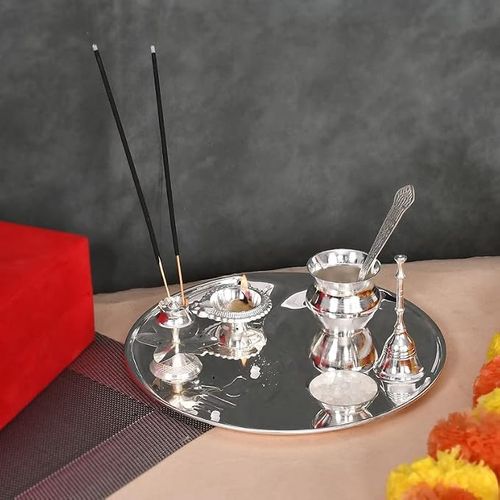
| Puja Thali & Vessels | An elegant set like the Jaipur Ace Silver Plated Tradational Pooja Thali Set of 7 Pieces with Royal Velvet Box to hold kumkum, chandan, akshat, and the achamani spoon |
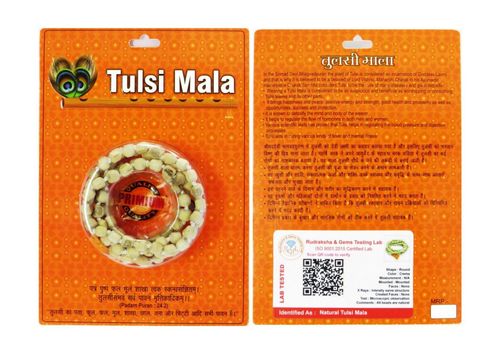
| Sacred Malas & Jap | A genuine 108-bead mala such as the Tulsi Mala Premium Quality for chanting the sacred Ashtakshara mantra Om Namo Bhagavate Vasudevaya |
| Dhoop & Fragrance | Pure herbal incense like Kesar Chandan Premium Dhoop Sticks to purify room air and create a peaceful atmosphere |
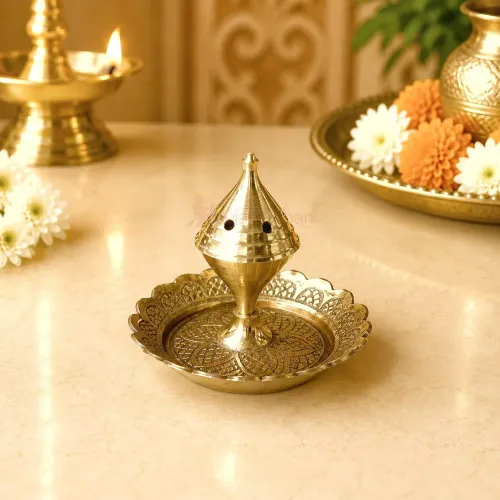
| Incense Holders | A dedicated stand such as the Engraved Pure Brass Agardan Incense Stick Holder with Ash Catcher Plate to keep ash safe and neat |
| Deepam & Ghee | Pure desi cow ghee, round cotton batti, and a clean brass diya for morning and evening aarti |
| Sacred Offerings | Fresh tulsi leaves (plucked the previous day), yellow flowers, seasonal fruits, bananas, soaked almonds, and rock candy (mishri) |
| Tilak & Adornment | Pure yellow chandan powder, gopi chandan, kumkum, and clean yellow cloth for the deity altar |
Step-by-Step Utpanna Ekadashi Puja Vidhi at Home
Worshiping Lord Vishnu and Ekadashi Devi at home involves simple, dignified steps grounded in Vedic purity. Householders do not require elaborate rituals. Sincere devotion, clean surroundings, and mindful chanting create a spiritually uplifting atmosphere.
1. Morning Snana and Sankalpa
Wake up early during the Brahma Muhurat (around 05:00 AM to 05:45 AM). Complete your morning bath. You may add a drop of sacred Gangajal to your bathwater. Wear clean, fresh garments; yellow or unstitched white attire is traditionally favored for Vishnu worship. Face East or North in your prayer area. Take clean water in your right hand with the ritual spoon, touch it to your heart, and pronounce your Sankalpa (solemn vow) to observe the Utpanna Ekadashi fast with peace, truthfulness, and faith.
2. Altar Preparation and Deity Sthapana
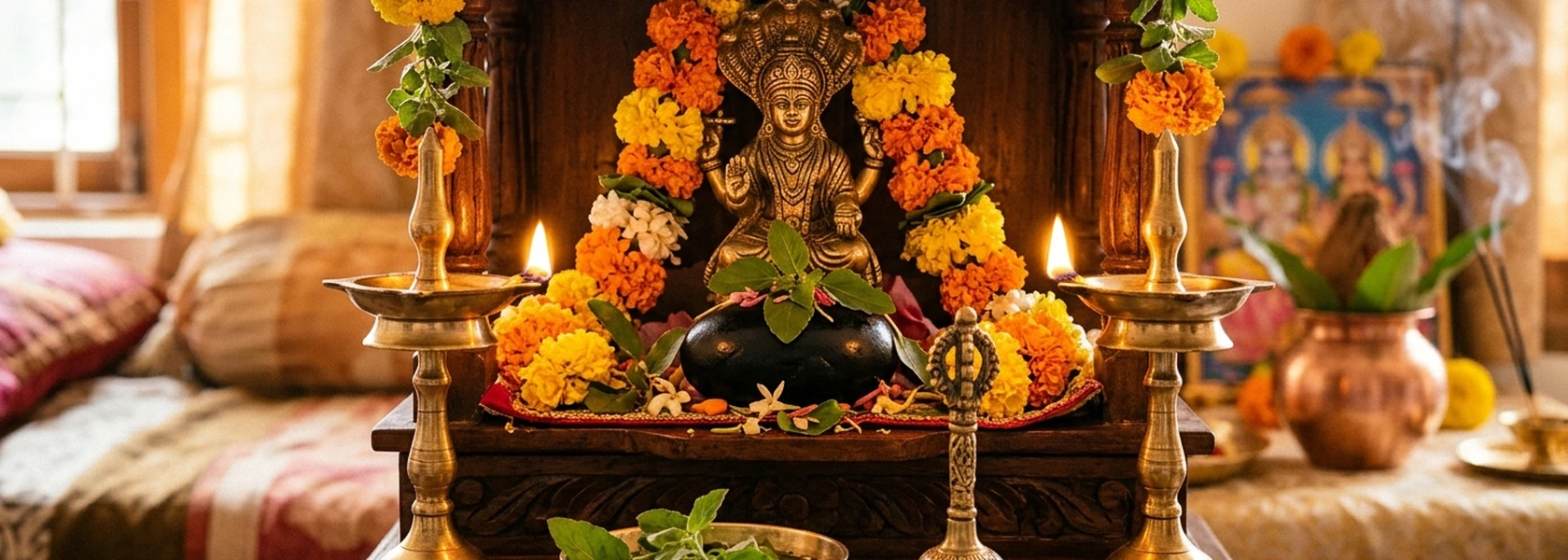
Clean your puja room and wipe the chowki (wooden altar stand). Spread a fresh yellow cloth across the altar. Place an idol or sacred image of Lord Vishnu, Shri Krishna, or Laddu Gopal Ji in the center. Light a brass diya filled with cow ghee on the right side of the deity and light fragrant dhoop sticks on the left side. The soft light of the ghee lamp and the subtle scent of sandalwood calm the wandering senses.
3. Panchamrit Snana and Tilak Arpan
If you have a metal murti or Shaligram shila, bathe the deity gently with panchamrit (a mixture of milk, curd, honey, ghee, and sugar), followed by clean Gangajal. Pat dry with a fresh soft cotton cloth. Anoint Lord Vishnu with fragrant yellow chandan paste and akshat. Offer fresh yellow marigolds and unbroken tulsi leaves at His lotus feet. Important rule: never pluck tulsi leaves on Ekadashi or Dwadashi day; always gather them carefully on Dashami afternoon.
4. Mantra Japa and Vrat Katha Path
Sit in a relaxed posture on a clean wool or kusha grass asana. Hold your tulsi japa mala inside a gomukhi bag. Chant the supreme Vishnu Ashtakshara mantra 108 times with steady, focused breathing:
- Maha Mantra: Om Namo Bhagavate Vasudevaya
- Vishnu Gayatri: Om Narayanaya Vidmahe Vasudevaya Dheemahi, Tanno Vishnu Prachodayaat
- Shanti Mantra: Shantakaram Bhujagashayanam Padmanabham Suresham, Vishwadharam Gaganasadrisham Meghavarnam Shubhangam
After completing your japa, read or listen to the sacred Utpanna Ekadashi Vrat Katha with your family members. Reflect on the story of Ekadashi Devi and how spiritual strength overcomes lower tendencies like lethargy and pride.
5. Naivedya Arpan and Evening Aarti
Offer pure sattvic naivedya to Lord Vishnu. Favorable offerings include seasonal fruits, bananas, makhana kheer prepared with milk and rock candy, or dry fruits. Remember that no Vishnu naivedya is complete without a tulsi leaf placed over the offering. In the evening, light another ghee lamp, wave the handheld aarti plate clockwise before the deity, ring the brass bell, and recite the Vishnu Aarti (Om Jai Jagdish Hare). Conclude by offering flowers and asking forgiveness for any unintentional errors during the ritual.
Rules for Observing the Utpanna Ekadashi Vrat
Adhering to traditional fasting discipline safeguards both the spiritual and physiological benefits of the observance. The following guidelines are observed by devotees:
- Strict prohibition on grains and beans: Do not consume rice, wheat, lentils, corn, or beans on Ekadashi. Grains are traditionally avoided on this tithi to give the digestive tract rest and keep the mind alert.
- Fasting diet options: If observing Phalahar, you may consume fresh fruits, milk, curd, nuts, water, and sabudana or buckwheat (kuttu) flour cooked with sendha namak (rock salt).
- Preserve calm speech: Avoid arguing, criticizing others, lying, or speaking harsh words. Ekadashi is a vrata of internal mental discipline as much as dietary moderation.
- Avoid sleeping during daylight: Traditional scriptures advise devotees to remain wakeful and active during the day on Ekadashi, spending spare moments reading scriptures or listening to bhajans.
- Charitable giving: Giving food, warm clothes, or devotional books to people in need on Ekadashi day brings great contentment and spiritual merit.
Parana Rules: How to Break the Fast on Dwadashi
The completion of an Ekadashi vrata depends entirely on breaking the fast at the correct time on the following day, known as Parana. In 2026, Dwadashi tithi falls on Saturday, December 5. Parana must be performed after sunrise while the Dwadashi tithi is still in effect.
On the morning of December 5, wake early, take a bath, and perform your regular morning puja before Lord Vishnu. Prepare a simple, wholesome sattvic meal. It is customary to feed a guest, a cow, or a needy person first. Then, break your fast by sipping charnamrit or Gangajal, followed by a simple meal. Completing Parana with gratitude concludes the Utpanna Ekadashi observance.
Frequently Asked Questions About Utpanna Ekadashi
Can beginners start their yearly Ekadashi fast on Utpanna Ekadashi?
Yes, Utpanna Ekadashi is considered the ideal day to start an annual fasting vow. Because Ekadashi Devi took birth on this date, starting your journey here is regarded as especially auspicious by Vedic scholars.
Why is eating rice prohibited on Ekadashi?
In Hindu tradition, a sacred lore explains that Maharshi Medha's energy entered food grains on this day. From an Ayurvedic perspective, rice retains high water content, which increases lethargy and disrupts mental focus during meditation on the eleventh lunar day.
What should one do if they cannot observe a full fast?
The elderly, expectant mothers, children, and people with medical conditions should never risk their physical wellbeing with strict fasting. You can observe the vrata by simply avoiding grains, eating light fruits and milk, and maintaining devoted contemplation.
Can tulsi leaves be plucked on Utpanna Ekadashi day?
No, plucking tulsi leaves on Ekadashi and Dwadashi is strictly avoided. Devotees pluck the required tulsi leaves on Dashami afternoon or use naturally fallen leaves washed with clean water.