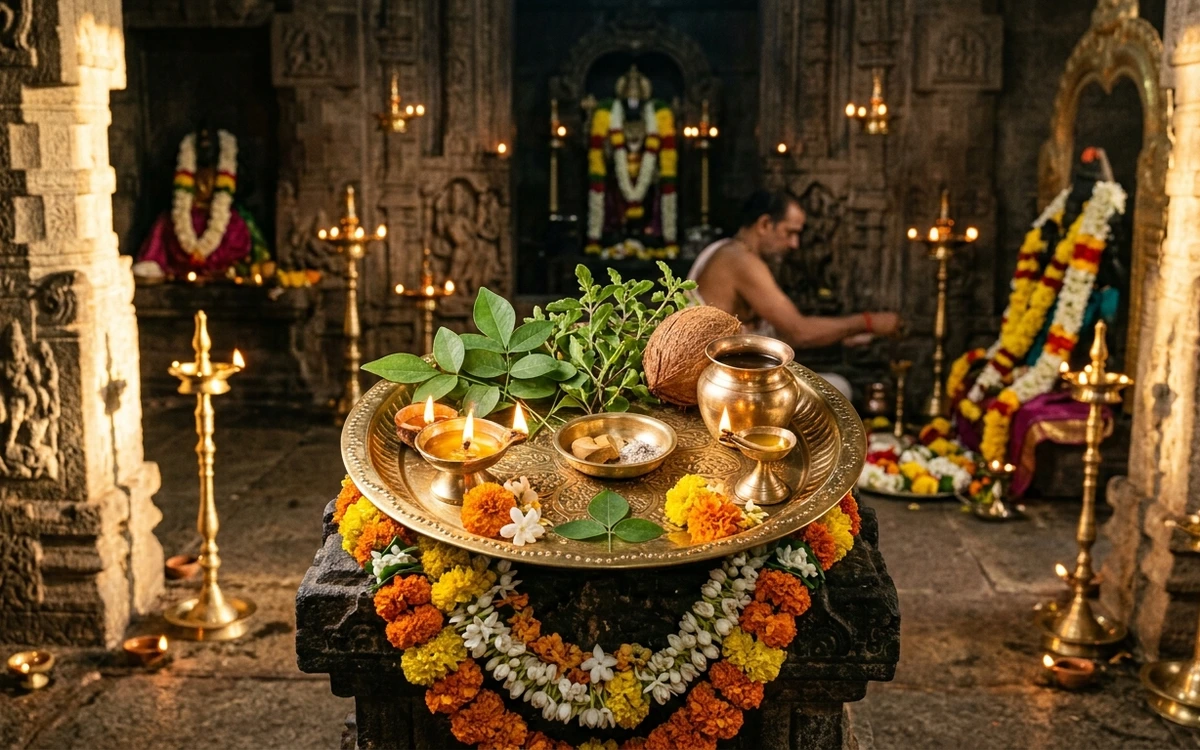
Vaikuntha Chaturdashi is one of the rarest and most revered festivals in the Vedic calendar, celebrating the supreme harmony between Lord Vishnu and Lord Shiva. Observed annually on the Chaturdashi tithi of Shukla Paksha in the month of Kartika, this auspicious day marks the divine meeting of Hari and Hara. Devotees across India perform the traditional vaikuntha chaturdashi puja vidhi to seek liberation, spiritual merit, and family harmony. In 2026, Vaikuntha Chaturdashi falls on Monday, November 23. This comprehensive guide details the sacred background, accurate panchang muhurat timings, complete samagri requirements, and clear step-by-step home puja rituals for this holy day.
Unlike most other Hindu observances where worship is directed toward a single deity, Vaikuntha Chaturdashi represents reciprocal devotion between Vishnu and Shiva. According to ancient Puranic records, this is the single day of the year when devotees offer sacred Tulsi leaves to Lord Shiva and fresh Bilva leaves to Lord Vishnu. Performing the rituals with sincerity clears past negative karmas and opens the doorway to Vaikuntha, the divine abode of peace.
Significance of Vaikuntha Chaturdashi and the Hari-Hara Union
The Kartik Mahatmya and the Shiva Purana describe the spiritual significance of this sacred festival. When Lord Vishnu rests during the four holy months of Chaturmas, Lord Shiva oversees the preservation of cosmic order. As Chaturmas nears its conclusion, Lord Vishnu awakens on Dev Uthani Ekadashi and visits Varanasi to pay his respects to Lord Shiva at Kashi Vishwanath. The reunion of the preserver and the transformer on Kartika Shukla Chaturdashi symbolizes that the divine supreme is one unified truth manifested in two sacred forms.
The Skanda Purana states that anyone who worships Lord Shiva and Lord Vishnu together on this day earns the merit equivalent to performing a thousand Ashwamedha yajnas. The festival also precedes Dev Deepawali, the festival of lights in Varanasi, creating a spiritually charged atmosphere where ghats and home altars are illuminated with clay and brass oil lamps.
The Legend of the Thousand Lotuses and Sudarshana Chakra
A central story of Vaikuntha Chaturdashi explains how Lord Vishnu received the Sudarshana Chakra. Ancient lore recounts that Lord Vishnu arrived at the Manikarnika Ghat in Kashi to worship Lord Shiva with one thousand lotus flowers. Vishnu chanted the thousand holy names of Shiva, offering one fragrant lotus with each sacred name.
To test Vishnu's unyielding devotion, Lord Shiva secretly removed one lotus from the basket. When Vishnu reached the final name, he found only nine hundred and ninety-nine lotuses. Known as Kamalnayan, or the lotus-eyed Lord, Vishnu immediately prepared to pluck out one of his own eyes to complete the promised thousand offerings. Pleased by this matchless surrender, Lord Shiva manifested before him, restored the offering, and bestowed upon Vishnu the radiant Sudarshana Chakra, the invincible wheel of cosmic protection.
Auspicious Muhurat and Tithi for Vaikuntha Chaturdashi Puja Vidhi 2026
Accurate panchang calculations for New Delhi establish the precise timings for observing the vaikuntha chaturdashi puja vidhi in 2026. The Chaturdashi tithi commences during the daytime and extends into the late evening hours of November 23, making both the morning Arunodaya hours and the evening Nishita Kaal suitable for devotional observances.
| Panchang Element | Details for Vaikuntha Chaturdashi 2026 |
| Date | Monday, November 23, 2026 |
| Tithi | Kartika Shukla Chaturdashi (ends at 11:42 PM IST) |
| Day (Vaara) | Somawara (Monday, dedicated to Lord Shiva) |
| Sunrise | 06:49 AM IST |
| Sunset | 05:25 PM IST |
| Nakshatra | Bharani (ends at 02:02 AM, Nov 24) |
| Yoga | Variyana (ends at 07:58 PM IST) |
| Abhijit Muhurat | 11:46 AM to 12:28 PM IST |
| Auspicious Puja Hours | Early morning Arunodaya and Evening / Nishita Kaal |
Because sunrise occurs at 06:49 AM IST and sunset takes place at 05:25 PM IST, devotees begin their day with an early sacred bath and conclude with midnight aarti and deepdan. In major temple towns like Varanasi and Ujjain, the primary sanctum rituals take place during Nishita Kaal when Shiva and Vishnu murtis exchange floral garlands and sacred leaves.
Complete Vaikuntha Chaturdashi Puja Samagri Checklist
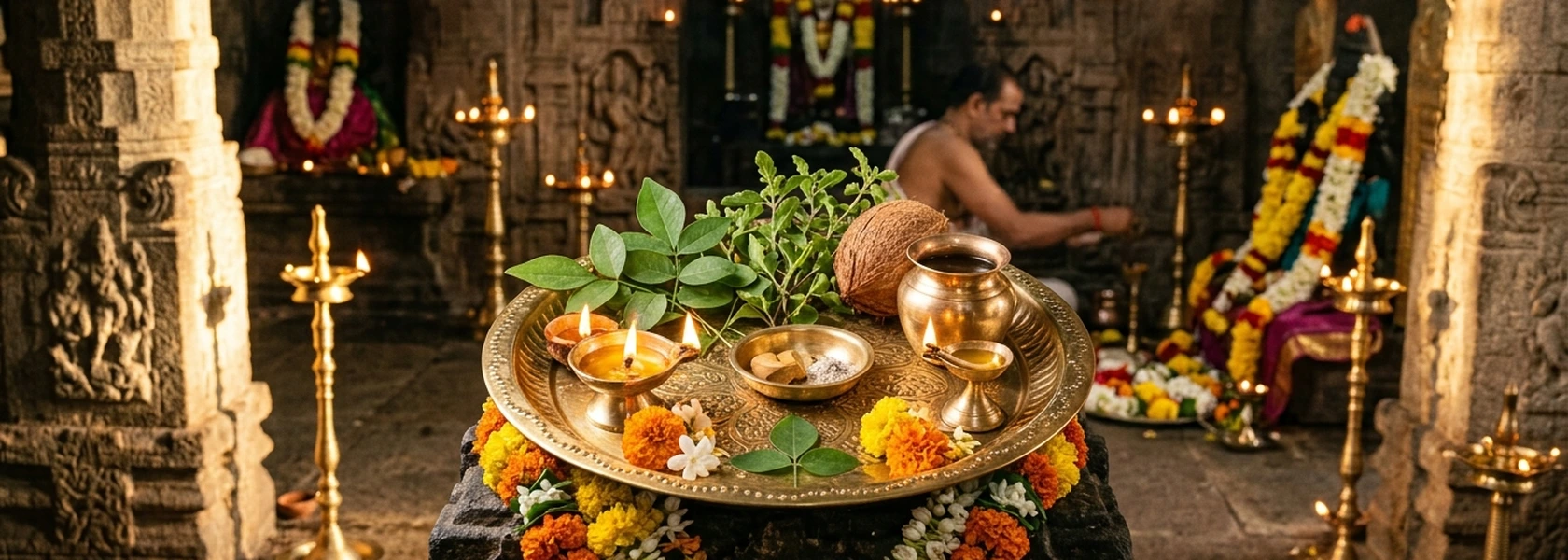
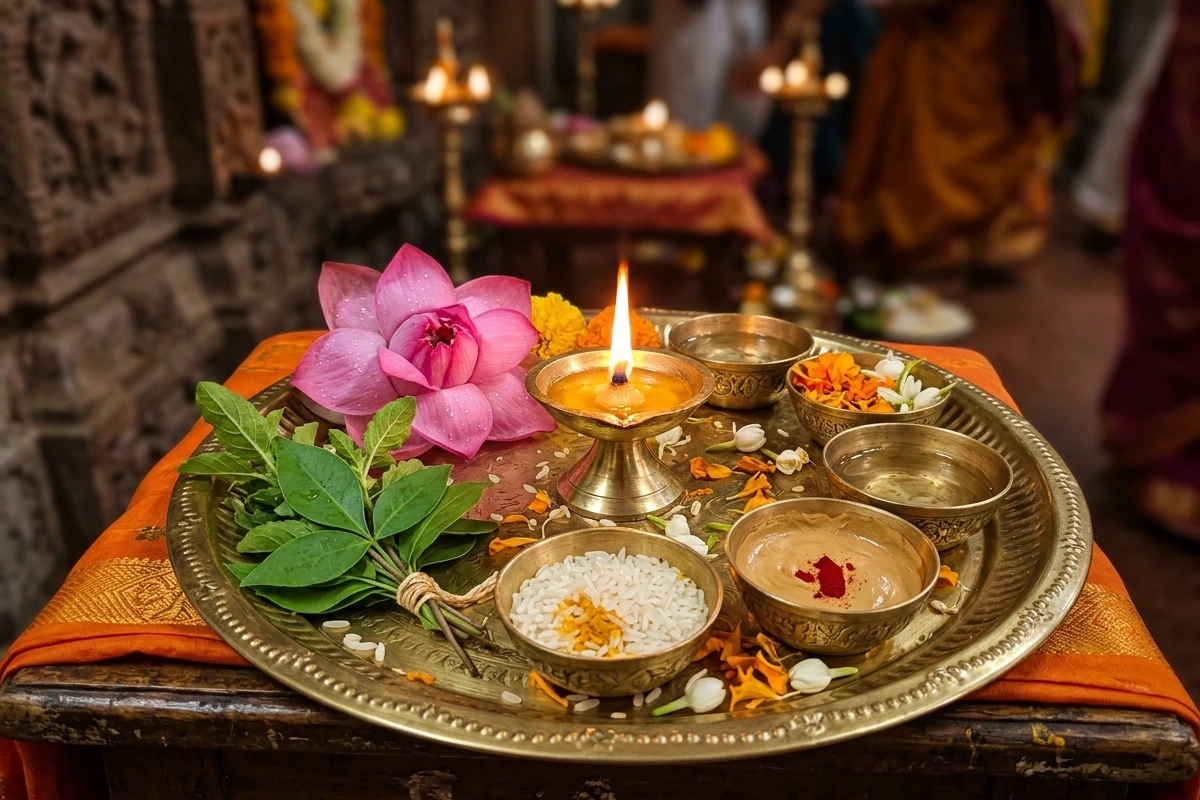
Assembling clean, pure ritual ingredients beforehand ensures an undisturbed and meditative prayer experience. Devotees browse verified items in Pooja Essentials or arrange their offerings on an engraved brass plate. Here is your essential checklist:
- Fresh green Bilva (bel) leaves with unbroken trifoliate leaves, washed with clean water
- Fresh green Tulsi leaves and manjaris picked respectfully before sunset
- Fresh pink or white lotus flowers (kamal phool) or fresh marigold and jasmine garlands
- Pure cow ghee and clean round cotton wicks for lighting fourteen sacred lamps
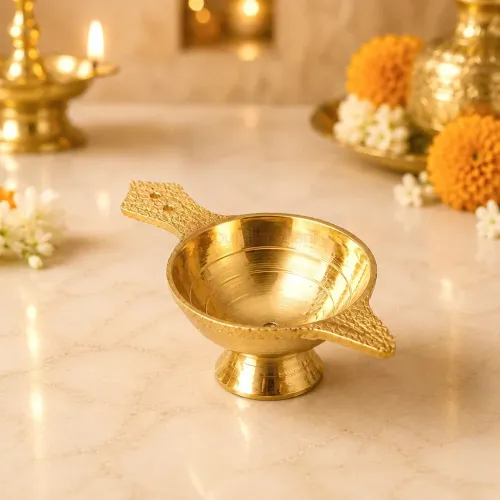
- A traditional Pure Brass Pooja Diya | Traditional Handmade Brass Oil Lamp for Home Temple, Aarti & Daily Worship for the central sanctum altar
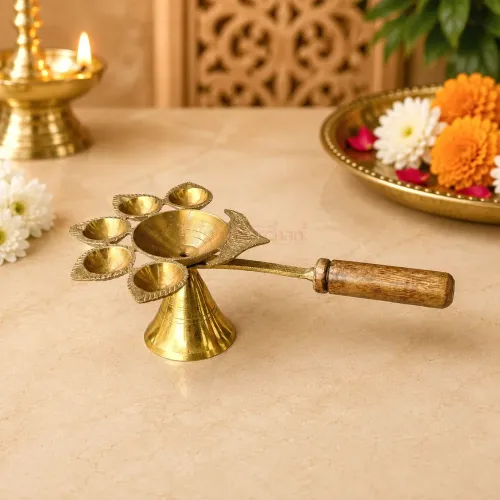
- A five-faced Pure Brass Panch Aarti Diya with Wooden Handle, 5 Face Oil Lamp for Home Temple & Daily Worship for performing the concluding joint aarti
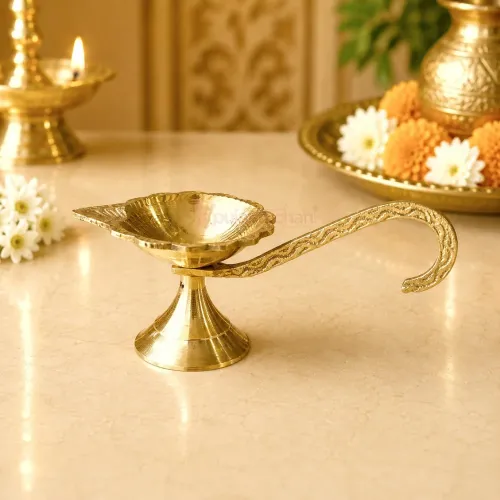
- A handheld Pure Brass Handheld Pooja Diya with Long Handle | Leaf-Shaped Aarti Oil Lamp for Home Temple & Daily Worship for safe circumambulation and deepdan
- Slow-burning aromatic Kasturi Natural Premium Dhoop Sticks (Pack of 4) to purify the prayer atmosphere
- Purifying sambrani loban cups for cleansing sacred spaces
- Sacred white sandalwood paste (chandan) for Lord Shiva and yellow chandan for Lord Vishnu
- Pure roli kumkum, unbroken raw rice grains (akshat), and sacred vibhuti
- Gangajal in a clean brass lota for abhishek and sprinkling purification
- Panchamrit prepared from raw milk, curd, honey, ghee, and raw sugar
- Fresh seasonal fruits, dry fruits, makhana kheer, and yellow sweets like peda or laddu
Step-by-Step Vaikuntha Chaturdashi Puja Vidhi at Home
You can perform the vaikuntha chaturdashi puja vidhi with complete devotion at your home temple. Follow these orderly stages from morning preparation through the night rituals.
Morning Arunodaya Snan and Temple Preparation
- Wake before sunrise around 05:30 AM IST. Take a bath with clean water mixed with a few drops of Gangajal while reciting sacred river mantras.
- Wear clean, unstitched or traditional clothing. Yellow or white garments are ideal for this sacred day.
- Thoroughly clean your home mandir and place a wooden chowki covered with a fresh yellow or red altar cloth.
- Place idols or framed pictures of Lord Shiva (or a Shiva Lingam) and Lord Vishnu side by side in the center.
- Light a pure brass ghee lamp and fragrant dhoop sticks to invoke positive spiritual energy.
- Take water, unbroken akshat, and a flower in your right palm to take Sankalpa, stating your name, gotra, location, and intent to observe Vaikuntha Chaturdashi vrat.
Evening and Nishita Kaal Hari-Hara Worship Steps
- In the evening after sunset, light fourteen ghee diyas to honor the Chaturdashi tithi and place them at the home temple, main entrance, and Tulsi plant.
- Bathe the Shiva Lingam and the Shaligram or Vishnu murti with Gangajal, followed by sacred Panchamrit, and finally rinse with clean fragrant water.
- Gently dry the deities with clean cotton cloths and place them back on their seats.
- Apply fragrant white chandan and vibhuti to Lord Shiva. Apply yellow chandan and roli tilak to Lord Vishnu.
- Perform the signature leaf exchange: offer clean, whole Bilva leaves to Lord Vishnu with devotion, and offer fresh green Tulsi leaves to Lord Shiva.
- Present pink lotus blossoms, fresh marigold garlands, and unbroken akshat rice to both deities.
- Offer pure incense smoke using natural kasturi dhoop sticks or sambrani cups around the altar.
- Present sweet naivedya including makhana kheer, fresh fruits, soaked raisins, and jaggery.
- Chant the sacred Vishnu Sahasranama and the Shiva Ashtakam or Om Namah Shivaya with deep concentration.
- Perform the concluding aarti using a five-faced brass diya, ringing a bell to conclude the worship peacefully.
- Distribute the sweet prasad among all family members and keep the ghee lamp burning through the night.
Key Rules for Offering Tulsi and Bel Patra on Vaikuntha Chaturdashi
Under ordinary circumstances in Hindu ritual worship, Tulsi is strictly prohibited in Shiva worship, and Bel patra is reserved exclusively for Shiva. Vaikuntha Chaturdashi is the sole exception where this scriptural rule is overturned. Understanding this sacred exception enriches your spiritual awareness:
- Offering Tulsi to Lord Shiva on this day signifies Shiva's deep love for Vishnu. Shiva accepts what is dearest to Vishnu as a mark of supreme friendship.
- Offering Bilva leaves to Lord Vishnu signifies Vishnu's acceptance of Shiva's favorite sacred offering, showing complete absence of duality.
- Ensure that all Bilva leaves are trifoliate, completely intact, and free of insect holes or cuts before offering.
- Pluck Tulsi leaves only during daylight hours preceding the festival, never after sunset or on Ekadashi.
- Maintain a calm, devotional mindset during the leaf exchange, remembering that both Hari and Hara reside within each other's hearts.
Frequently Asked Questions About Vaikuntha Chaturdashi Puja Vidhi
What is the exact date for Vaikuntha Chaturdashi in 2026?
In 2026, Vaikuntha Chaturdashi is observed on Monday, November 23. The Chaturdashi tithi of Kartika Shukla Paksha remains active until 11:42 PM IST, with sunrise at 06:49 AM IST and sunset at 05:25 PM IST in New Delhi.
Why do devotees light fourteen diyas on Vaikuntha Chaturdashi?
Fourteen diyas are lit to mark the fourteenth tithi of the lunar cycle. The lamps illuminate the path of ancestors, dispel darkness, and express gratitude for divine blessings across the fourteen planetary realms described in Vedic cosmology.
Can I perform the puja at home if I do not have a Shiva Lingam?
Yes. If you do not possess a consecrated Shiva Lingam, you can place a picture or idol of Lord Shiva alongside Lord Vishnu. You can also form a temporary Parthiv Shivling out of clean clay or offer flowers to Shiva mentally with equal devotion.
Is fasting mandatory on Vaikuntha Chaturdashi?
Fasting is a voluntary spiritual observance. Devotees who observe the vrat abstain from grains and consume only fruits, milk, and water during the day, breaking the fast after performing the night Hari-Hara puja and aarti.
What is the significance of Arunodaya Snan on this day?
Arunodaya refers to the pre-dawn twilight period just before sunrise. Taking a ritual bath in a sacred river or with clean water mixed with Gangajal during Arunodaya is believed to wash away negative influences and grant physical and mental clarity.